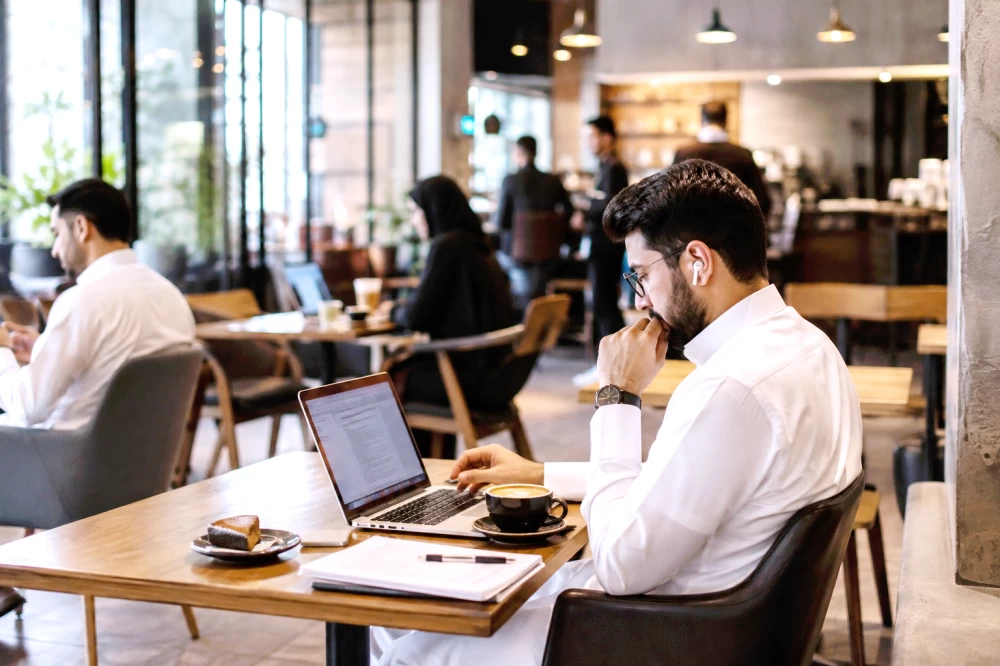
أخذ مشهد الحواسيب المحمولة على طاولات المقاهي مكانه في الحياة اليومية، بالتزامن مع انتشار أنماط العمل المرن واتساع مساحة الوظائف التي يمكن إنجازها خارج المكتب. وبين فنجان قهوة واجتماع عبر الإنترنت، تحولت بعض المقاهي عملياً إلى مكاتب مؤقتة، في ظاهرة تستحق قراءة تتجاوز صورتها الجذابة.
جاذبية المقهى تبدأ من قدرته على كسر روتين المكان الواحد. فالعامل يجد أمامه بيئة مختلفة، وخدمة إنترنت، ومساحة تسمح بإنجاز بعض المهام وسط حركة اجتماعية خفيفة. وقد يمنح وجود الآخرين شعوراً بالحيوية، خصوصاً لمن يعملون بصورة مستقلة أو يقضون ساعات طويلة بعيداً عن زملاء العمل.
لكن الصورة تحمل وجهاً آخر. فالمقهى صُمم أساساً لاستقبال الزبائن، وليس ليكون مكتباً مفتوحاً لساعات طويلة. الضوضاء والمحادثات وحركة الدخول والخروج قد تتحول من عناصر تمنح المكان حيوية إلى مصادر متكررة لتشتيت الانتباه، خصوصاً في الأعمال التي تحتاج إلى تركيز عميق أو اجتماعات تتطلب قدراً من الخصوصية.
وتظهر أيضاً معادلة اقتصادية مختلفة؛ فالجلوس المتكرر يرتبط بطلب المشروبات أو الوجبات، ما يجعل تكلفة «المكتب البديل» تتراكم بمرور الوقت. وفي المقابل، يواجه المقهى تحدياً في الموازنة بين الزبون الذي يستخدم الطاولة فترة قصيرة، وآخر يحولها إلى محطة عمل لساعات.
المسألة إذن تتجاوز المفاضلة بين المكتب والمقهى إلى طبيعة المهمة نفسها. بعض الأعمال تستفيد من تغيير الأجواء، فيما تحتاج مهام أخرى إلى الهدوء والخصوصية والاستقرار.
ومع استمرار العمل المرن، تبدو المقاهي جزءاً من خريطة جديدة لبيئات العمل، لكن نجاح التجربة يظل مرتبطاً بالاستخدام المتوازن؛ فالمقهى قد يكون مساحة جيدة لإنجاز مهمة أو كسر الروتين، لكنه لا يقدم بالضرورة جميع مقومات المكتب.
The scene of laptops on café tables has found its place in daily life, coinciding with the spread of flexible work patterns and the expansion of jobs that can be accomplished outside the office. Between a cup of coffee and an online meeting, some cafés have practically transformed into temporary offices, in a phenomenon that deserves a reading that goes beyond its attractive image.
The appeal of the café begins with its ability to break the monotony of a single place. The worker finds themselves in a different environment, with internet service and space that allows for completing some tasks amidst light social activity. The presence of others can provide a sense of vitality, especially for those working independently or spending long hours away from colleagues.
However, the picture has another side. The café was primarily designed to serve customers, not to be an open office for long hours. The noise, conversations, and the comings and goings can shift from elements that give the place vitality to recurring sources of distraction, especially in tasks that require deep focus or meetings that demand a degree of privacy.
A different economic equation also emerges; repeated sitting is linked to ordering drinks or meals, which makes the cost of the "alternative office" accumulate over time. Conversely, the café faces the challenge of balancing between the customer who uses the table for a short period and another who turns it into a workstation for hours.
Thus, the issue goes beyond the preference between the office and the café to the nature of the task itself. Some tasks benefit from a change of scenery, while others require calm, privacy, and stability.
As flexible work continues, cafés seem to be part of a new map of work environments, but the success of the experience remains tied to balanced usage; the café may be a good space for completing a task or breaking the routine, but it does not necessarily provide all the components of an office.