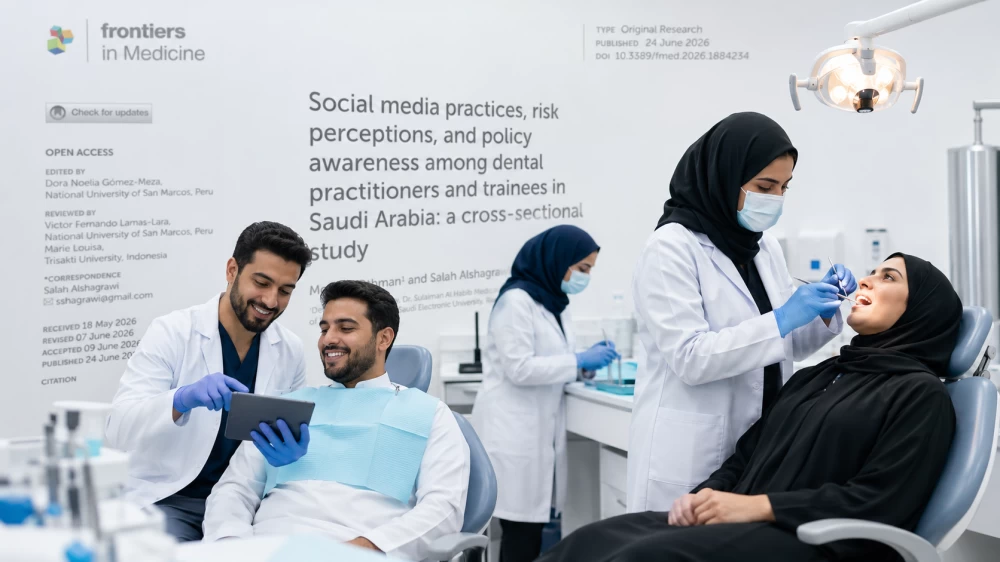
كشفت دراسة علمية حديثة عن فجوة رقمية في ممارسات أطباء الأسنان ومتدربيهم في السعودية، إذ أظهرت انتشارًا واسعًا لاستخدام المنصات الاجتماعية لأغراض مهنية، مقابل انخفاض حاد في الوعي بالمخاطر والسياسات المنظمة والتدريب الرسمي.
وأظهرت نتائج الدراسةأن (إنستغرام) يتصدر المنصات المستخدمة بين المشاركين بنسبة 70.6%، يليه (إكس) بنسبة 62.0%، ثم (سناب شات) بنسبة 53.7%. كما أفاد 33.7% باستخدام المنصات يوميًا لأغراض مهنية، في حين سجلت الدراسة اتجاهات إيجابية نحو دور المنصات في تحسين التواصل المهني بمتوسط 3.91 من 5، وتحسين المهارات السريرية بمتوسط 3.90 من 5.
الدراسة، المنشورة 24 يونيو 2026، في مجلة (فرونتيرز في الطب)، شملت 326 من ممارسي ومتدربي طب الأسنان في السعودية، عبر استبيان إلكتروني جُمعت بياناته خلال الفترة من 15 فبراير إلى 15 مارس 2025. وضمت العينة 174 امرأة بنسبة 53.4%، و152 رجلًا بنسبة 46.6%، بمتوسط عمر بلغ 30.5 عام.
وجاء طلاب البكالوريوس في مقدمة المشاركين بنسبة 42.9%، تلاهم الاختصاصيون والاستشاريون بنسبة 29.8%، ثم أطباء الأسنان العامون بنسبة 17.8%، فيما شكل أطباء الامتياز 5.8%، والمقيمون في الدراسات العليا 3.7%. وتوزعت العينة جغرافيًا بين مكة بنسبة 64.4%، والرياض 25.8%، ومناطق أخرى 9.8%.
ورغم هذا الحضور المهني الواسع، سجلت الدراسة انخفاضًا واضحًا في إدراك المخاطر؛ إذ بلغ متوسط مؤشر إدراك المخاطر 2.88 من 5، وبلغت نسبة من حققوا مستوى مرتفعًا في إدراك المخاطر 2.5% فقط؛ أي ثمانية مشاركين من أصل 326. وشملت بنود الخطر أثر المنشورات الشخصية في ثقة الجمهور، والمسؤولية القانونية للمنشأة الصحية، وتأثير اكتشاف المريض لحساب الممارس، ومراجعة أصحاب العمل للحسابات قبل التوظيف.
وفي جانب السياسات، أظهرت الدراسة أن 38.0% فقط يعرفون إرشادات منظمة الصحة العالمية، و25.2% يعرفون إرشادات اليونسكو، و35.9% يعرفون سياسات وزارة الصحة المتعلقة بالصحة الإلكترونية أو الاستخدام الرقمي. وعلى مستوى بيئة العمل، أفاد 20.6% فقط بوجود سياسة واضحة للمنصات الاجتماعية في جهاتهم، فيما تلقى 4.6% فقط تدريبًا رسميًا على هذه السياسات.
وتظهر الفجوة بوضوح بين المراحل المهنية؛ إذ بلغ الوعي المرتفع بالسياسات 9.3% بين طلاب البكالوريوس، و6.5% بين أطباء الامتياز والمقيمين، مقابل 50.0% لدى أطباء الأسنان العامين، و56.7% لدى الاختصاصيين والاستشاريين. وبعد التحليل الإحصائي، بقيت سنوات الخبرة العامل المستقل الأبرز؛ إذ كان أصحاب خبرة خمس سنوات فأكثر أقل عرضة لانخفاض الوعي بالسياسات بنسبة أرجحية معدلة بلغت 0.41.
وفي ملف الصور والمحتوى السريري، أفاد 61.3% بأنهم يحصلون دائمًا على موافقة المرضى قبل مشاركة صور تعريفية، بينما أقر 19.0% بأن ذلك يحدث أحيانًا أو نادرًا أو أبدًا. كما أظهرت النتائج أن 22.1% نشروا صورًا لزملاء داخل بيئات سريرية، بينما شاهد 77.6% هذا النوع من المحتوى على المنصات.
وتضع الدراسة ملف (المهنية الرقمية) أمام مؤسسات التعليم الصحي والجهات المشغلة، خصوصًا أن طب الأسنان يعتمد بصورة متزايدة على الصور، عرض الحالات، التواصل مع المرضى، وتسويق الخدمات التجميلية. وتوصي النتائج بتضمين المهنية الرقمية في مناهج طب الأسنان، وتكثيف التدريب على الخصوصية، موافقة المرضى، حدود النصيحة الطبية، والسياسات المنظمة للنشر المهني.
A recent scientific study revealed a digital gap in the practices of dentists and their trainees in Saudi Arabia, showing a widespread use of social media platforms for professional purposes, contrasted with a sharp decline in awareness of risks, regulatory policies, and formal training.
The study results indicated that Instagram is the most used platform among participants at 70.6%, followed by X at 62.0%, and Snapchat at 53.7%. Additionally, 33.7% reported using the platforms daily for professional purposes, while the study recorded positive trends regarding the role of platforms in improving professional communication with an average score of 3.91 out of 5, and enhancing clinical skills with an average score of 3.90 out of 5.
The study, published on June 24, 2026, in the journal Frontiers in Medicine, included 326 dental practitioners and trainees in Saudi Arabia, with data collected through an electronic questionnaire from February 15 to March 15, 2025. The sample comprised 174 women (53.4%) and 152 men (46.6%), with an average age of 30.5 years.
Bachelor's degree students made up the majority of participants at 42.9%, followed by specialists and consultants at 29.8%, then general dentists at 17.8%, while interns accounted for 5.8%, and residents in postgraduate studies for 3.7%. Geographically, the sample was distributed with 64.4% from Mecca, 25.8% from Riyadh, and 9.8% from other regions.
Despite this wide professional presence, the study recorded a clear decline in risk awareness; the average risk perception index was 2.88 out of 5, with only 2.5% achieving a high level of risk awareness—just eight participants out of 326. Risk items included the impact of personal posts on public trust, the legal responsibility of the healthcare facility, the effect of patients discovering the practitioner's account, and employers reviewing accounts before hiring.
Regarding policies, the study showed that only 38.0% are aware of WHO guidelines, 25.2% are aware of UNESCO guidelines, and 35.9% are aware of the Ministry of Health's policies related to e-health or digital use. In terms of the work environment, only 20.6% reported having a clear social media policy in their organizations, while only 4.6% received formal training on these policies.
The gap is clearly evident across professional stages; high awareness of policies was 9.3% among bachelor's students, 6.5% among interns and residents, compared to 50.0% among general dentists, and 56.7% among specialists and consultants. After statistical analysis, years of experience remained the most significant independent factor; those with five years or more of experience were less likely to have low policy awareness, with an adjusted odds ratio of 0.41.
In the area of images and clinical content, 61.3% reported always obtaining patient consent before sharing identifying images, while 19.0% acknowledged that this happens sometimes, rarely, or never. The results also showed that 22.1% posted images of colleagues in clinical settings, while 77.6% viewed this type of content on the platforms.
The study places the issue of "digital professionalism" before health education institutions and operating entities, especially as dentistry increasingly relies on images, case presentations, communication with patients, and marketing cosmetic services. The results recommend incorporating digital professionalism into dental curricula and intensifying training on privacy, patient consent, boundaries of medical advice, and policies regulating professional publication.