أعلنت وزارة السياحة والآثار المصرية عن اكتشاف أثري جديد في منطقة جبل الطير بمحافظة المنيا، حيث نجحت بعثة تابعة للمجلس الأعلى للآثار في الكشف عن مقبرتين نادرتين ترجعان إلى العصر العتيق، إلى جانب مجموعة من الدفنات الأثرية التي تمتد فتراتها الزمنية إلى عصور ما قبل الأسرات وحتى العصر المتأخر.
ووصف وزير السياحة والآثار شريف فتحي الاكتشاف بأنه خطوة مهمة تضيف معطيات جديدة إلى سجل الحضارة المصرية القديمة، مؤكداً أن نتائجه تفتح آفاقاً أوسع لفهم تطور العمارة الجنائزية وأساليب الدفن التي شهدتها مصر عبر آلاف السنين.
وبحسب المجلس الأعلى للآثار، تتميز المقبرتان بتصميم معماري استثنائي، إذ تمثل إحداهما نموذجاً فريداً وغير مألوف، فيما جاءت الثانية مطابقة لها تقريباً مع احتفاظها بحالة حفظ مميزة. كما أظهرت الدراسات الأولية وجود تشابه واضح بين تخطيطهما المعماري ومقبرة الملك دن في أبيدوس، ما يعزز القيمة التاريخية لمنطقة جبل الطير ويؤكد استخدامها كجبانة رئيسية خلال عصور متعاقبة.
وكشفت أعمال الدراسة أن المقبرة الأولى شُيدت وفق أسلوب هندسي يعتمد على جدران عريضة عند القاعدة تتناقص سماكتها تدريجياً كلما ارتفع البناء، وهو ما يرجح أنه يمثل إحدى المراحل المبكرة للتطور المعماري الذي مهد لاحقاً لظهور فكرة الهرم المدرج ثم الأهرامات الكاملة.
ورغم تعرض أجزاء من المقبرة الأولى لأعمال تحجير قديمة بهدف استخراج الأحجار، فإن البقايا المعمارية ما زالت تحتفظ بأدلة مهمة على أساليب البناء المستخدمة آنذاك، من بينها آثار تقطيع الأحجار ودعامات خشبية ضخمة استُخدمت لتدعيم الجدران. أما المقبرة الثانية، فقد نجت من أعمال التحجير، ما ساهم في الحفاظ على مكوناتها الأصلية بصورة شبه كاملة.
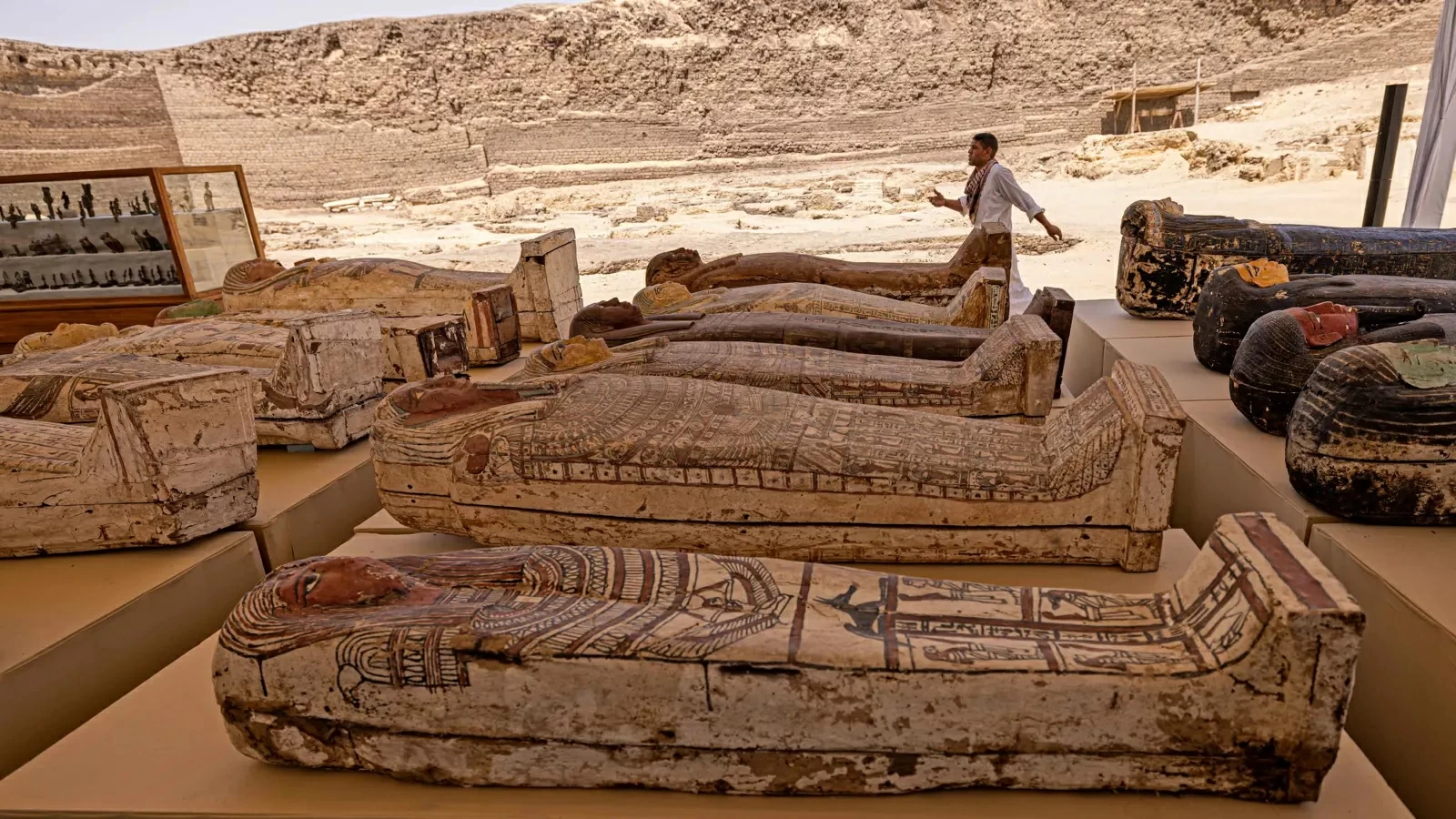
كما أسفرت الحفائر عن العثور على دفنات وآثار جنائزية متنوعة، بينها بقايا بشرية فردية وجماعية عُثر على بعضها داخل توابيت خشبية متحللة، إضافة إلى أوانٍ فخارية ذات حواف سوداء تعود إلى فترتي نقادة الثانية والثالثة، فضلاً عن بقايا حصير نباتي استخدم في عمليات الدفن.
The Egyptian Ministry of Tourism and Antiquities announced a new archaeological discovery in the Mount al-Tair area of Minya Governorate, where a mission from the Supreme Council of Antiquities succeeded in uncovering two rare tombs dating back to the ancient era, along with a collection of archaeological burials that extend from pre-dynastic times to the late period.
Tourism and Antiquities Minister Sherif Fathy described the discovery as an important step that adds new data to the record of ancient Egyptian civilization, emphasizing that its results open wider horizons for understanding the development of funerary architecture and burial methods that Egypt witnessed over thousands of years.
According to the Supreme Council of Antiquities, the two tombs are distinguished by exceptional architectural design, with one representing a unique and unusual model, while the second is almost identical to it, retaining a remarkable state of preservation. Preliminary studies also showed a clear similarity between their architectural layout and the tomb of King Den in Abydos, which enhances the historical value of the Mount al-Tair area and confirms its use as a major burial ground during successive eras.
The study revealed that the first tomb was constructed using an engineering style based on wide walls at the base that gradually decrease in thickness as the structure rises, which suggests that it represents one of the early stages of architectural development that later paved the way for the emergence of the stepped pyramid idea and then the complete pyramids.
Although parts of the first tomb have been subjected to ancient quarrying activities aimed at extracting stones, the architectural remains still retain important evidence of the construction methods used at that time, including traces of stone cutting and massive wooden supports used to reinforce the walls. The second tomb, however, survived the quarrying activities, which contributed to the preservation of its original components almost intact.
The excavations also resulted in the discovery of various burials and funerary artifacts, including individual and collective human remains, some of which were found inside decayed wooden coffins, in addition to pottery vessels with black rims dating back to the Naqada II and III periods, as well as remains of plant matting used in burial practices.