«في ظل التطورات المتلاحقة التي يشهدها عالمنا اليوم، لم تعد التقنية الحديثة مجرد أداة وركيزةً أساسية لا غنى عنها في مسيرة التنمية الشاملة. والسؤال الآن ليس عن التقنية بل إلى أين تصل التنمية؟».
هل كتبتَ جملة مشابهة يوماً؟ هل أرسلتَها؟ هل نشرتَها؟
لم تكتبها أنت، كتبتها الآلة، وأنت أضفت اسمك لا صوتك !
المشكلة لن تكون من أداءة الذكاء الاصطناعي، بل الثقة العمياء به، وحتما ستضعك في حرج، فقد وضعت البعض وسط فضيحة !
الذكاء الاصطناعي لا يعرف أنه يكذب ويقدم المعلومة الأقرب له مهما كانت بعيدة عن بحثك، لكنه لا يشعر، لا يتألم، لا يضحك، لا يحمل ذاكرة مكان أو رائحة لحظة أو ثقل تجربة.
يجمع كلمات، ينمقها بذكاء، لكنها تخرج باردة.
كلمة «delve» وما يقابلها في العربية من «تعمّق في» و«استكشف» و«تناول بالدراسة»، تظهر في نصوص الذكاء الاصطناعي 48 مرة أكثر مما تظهر في الكتابة البشرية الطبيعية! 
باحثو Max Planck وجدوا شيئاً مقلقاً: البشر أنفسهم باتوا يستخدمون لغة الذكاء الاصطناعي، حتى حين لا يستخدمونه! الآلة تعلّمت منّا، والآن نحن نتعلم منها. حلقة مغلقة تُفقدنا تنوّعنا اللغوي تدريجياً. 
• أسلوب النماذج الذي لا تخطئه!
حين تقرأ نصاً كتبه الذكاء الاصطناعي بالعربية، لا تحتاج قائمة لتعرفه.
تشعر به. عبر جمل متوازنة بشكل مثالي. فقرات متساوية الطول. انتقالات سلسة. ولا جملة واحدة تُفاجئك أو تُوقفك.
كل شيء في مكانه، وهذا بالضبط هو الخلل.
الكتابة البشرية الحقيقية فيها جملة قصيرة تأتي بعد طويلة. فكرة تقاطع ما سبقها. كلمة غير متوقعة. ذاكرة شخصية تقتحم النص فجأة.
الذكاء الاصطناعي لا يُفاجئك، لأنه لا يُفاجئ نفسه!
يبني على ما يعرفه. وعلى ما تم تدريبه عليه، أما الكاتب الحقيقي، كل مرة يكتب يظهر له ما لم يكن يعرفه أبدا.
* الخطأ الإملائي دليل البراءة الإنسانية!
مفارقة لم يتخيّلها أحد قبل سنوات:
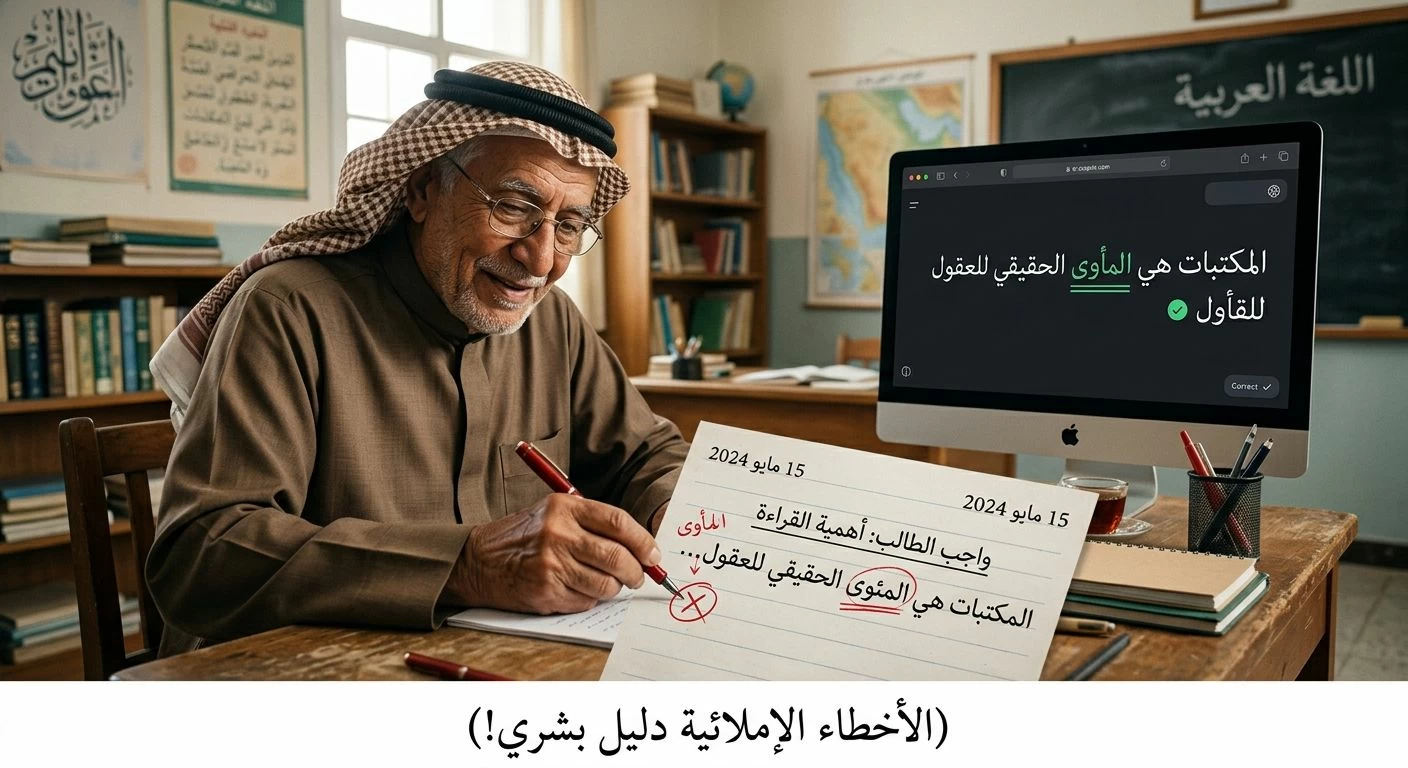
الخطأ الإملائي أصبح ميزة، وحين ترى «الاصطناعي» بإلغاء- أو جملة منقوصة لم يُكملها صاحبها، أو فاصلة في غير موضعها، تشعر فوراً: هذا كتبه إنسان!
الذكاء الاصطناعي لا يُخطئ إملائياً. لا ينسى علامة ترقيم. لا يكتب جملة ناقصة بشكل مثير للريبة!
وهنا يمكن لنا النظر إلى تحوّل غريب في تاريخ اللغة، الكمال اللغوي بات مشبوهاً. والخطأ البسيط بات علامة أصالة.
المعلم الذي كان يصحح الأخطاء بالقلم الأحمر، لم يتخيّل يوماً أن تلك الأخطاء ستصبح شهادة حضور إنساني!
والأعمق: حين يُخطئ الكاتب، يعني أن عقله كان في مكان آخر. كان يفكر في الفكرة، لا في الحرف. وهذا بالضبط ما يفعله الإنسان حين يكتب بصدق.
الآلة لا تفكر في الفكرة، تفكر في الحرف دائماً، ولذلك لا تُخطئ، ولذلك لا تُبدع حقاً!
* تتشابه النصوص !
نماذج الذكاء الاصطناعي تعلّمت من نفس المصادر، المقالات الأكاديمية والتقارير الرسمية والنصوص الإعلامية الجاهزة.
فتخرج النتيجة واحدة: لغة رسمية نظيفة وباردة، ولا تُخطئ نحوياً، لكنها لا تُحرّك شيئاً.
وهذا هو الفخ الحقيقي. ليس الخطأ، بل الصواب الفارغ البارد!
تذكر دائما أن الذكاء الاصطناعي أداة لا قلم. استخدمه للبحث والتنظيم والتدقيق، لكن أكتب أنت الجملة الأولى والأخيرة.
احذف مقدمته كلياً، أبدأ بجملتك أنت. استبدل كل صفة فضفاضة بتفصيل حقيقي. أضف مثالاً من حياتك، وشخصن الموضوع، منقصة صاحبك، أو موقفا عشته، حدثا مهما أو عابرا مررت به، فالذكاء الاصطناعي لا يملكها.
أقرأ النص بصوت عالٍ، كل جملة تتلعثم فيها هي جملة الآلة. أعد كتابتها.
أما الختامة فهي لك وحدك، لا تترك الذكاء يُغلق نصك. الخاتمة هي بصمتك.
في النهاية الذكاء لا يسرق صوتك واسمك، لكنك أنت تُعيره له!
فاللغة التي تكتبها هي ذاكرتك وتجربتك وطريقتك في رؤية العالم. لا نموذج يملكها، مهما تطوّر.
ببساطة استخدمه. لكن لا تبيع صوتك للأداءة.
إلى اللقاء،،
ناصر الصرامي
* صحفي سعودي — يكتب في مساحة تلتقي فيها التقنية بالإنسان،،
Read this sentence aloud:
“In light of the rapid developments our world is witnessing today, modern technology is no longer just a tool but a fundamental pillar that is indispensable in the journey of comprehensive development. The question now is not about technology, but where does development lead?”
Have you ever written a similar sentence? Did you send it? Did you publish it?
You didn’t write it; the machine did, and you added your name, not your voice!
The problem will not be with the artificial intelligence tool, but with the blind trust in it, which will surely put you in an awkward position, as it has placed some in the midst of a scandal!
Artificial intelligence does not know that it is lying and provides the information closest to it, no matter how far it is from your research, but it does not feel, does not hurt, does not laugh, does not carry the memory of a place or the scent of a moment or the weight of experience.
It gathers words, embellishes them intelligently, but they come out cold.
The word “delve” and its equivalents in Arabic such as “تعمّق في,” “استكشف,” and “تناول بالدراسة” appear in AI texts 48 times more than they appear in natural human writing!
Researchers at Max Planck found something concerning: humans themselves have started using the language of artificial intelligence, even when they are not using it! The machine learned from us, and now we are learning from it. A closed loop that gradually loses our linguistic diversity.
• The unmistakable style of the models!
When you read a text written by artificial intelligence in Arabic, you don’t need a list to recognize it.
You feel it. Through perfectly balanced sentences. Paragraphs of equal length. Smooth transitions. And not a single sentence surprises or stops you.
Everything is in its place, and that is exactly the flaw.
True human writing has a short sentence that comes after a long one. An idea that intersects with what preceded it. An unexpected word. A personal memory that suddenly intrudes into the text.
Artificial intelligence does not surprise you because it does not surprise itself!
It builds on what it knows. And on what it has been trained on, while a real writer, every time they write, discovers something they never knew.
* The spelling mistake is a sign of human innocence!
A paradox no one imagined a few years ago:
The spelling mistake has become a feature, and when you see “الاصطناعي” with a deletion—or an incomplete sentence left unfinished by its author, or a misplaced comma, you immediately feel: this was written by a human!
Artificial intelligence does not make spelling mistakes. It does not forget punctuation marks. It does not write a suspiciously incomplete sentence!
And here we can look at a strange transformation in the history of language; linguistic perfection has become suspicious. A simple mistake has become a mark of authenticity.
The teacher who used to correct mistakes with a red pen never imagined that those mistakes would become a testament to human presence!
And deeper: when the writer makes a mistake, it means their mind was elsewhere. They were thinking about the idea, not the letter. And this is exactly what a person does when they write sincerely.
The machine does not think about the idea; it always thinks about the letter, which is why it does not make mistakes, and therefore it does not truly create!
* The texts are similar!
AI models have learned from the same sources: academic articles, official reports, and ready-made media texts.
So the result is the same: a clean and cold formal language that does not make grammatical errors, but it does not move anything.
And this is the real trap. It’s not the mistake, but the empty cold correctness!
Always remember that artificial intelligence is a tool, not a pen. Use it for research, organization, and proofreading, but you write the first and last sentence.
Delete its introduction completely; start with your own sentence. Replace every vague adjective with a real detail. Add an example from your life, personalize the topic, a shortcoming of your friend, or a situation you experienced, an important or fleeting event you went through, because artificial intelligence does not possess them.
Read the text aloud; every sentence you stutter over is a sentence from the machine. Rewrite it.
As for the conclusion, it is yours alone; do not let the AI close your text. The conclusion is your fingerprint.
In the end, the intelligence does not steal your voice and name, but you lend them to it!
The language you write is your memory, your experience, and your way of seeing the world. No model owns it, no matter how advanced it becomes.
Simply use it. But do not sell your voice to the tool.
Goodbye,,
ناصر الصرامي
* A Saudi journalist — writing in a space where technology meets humanity,,