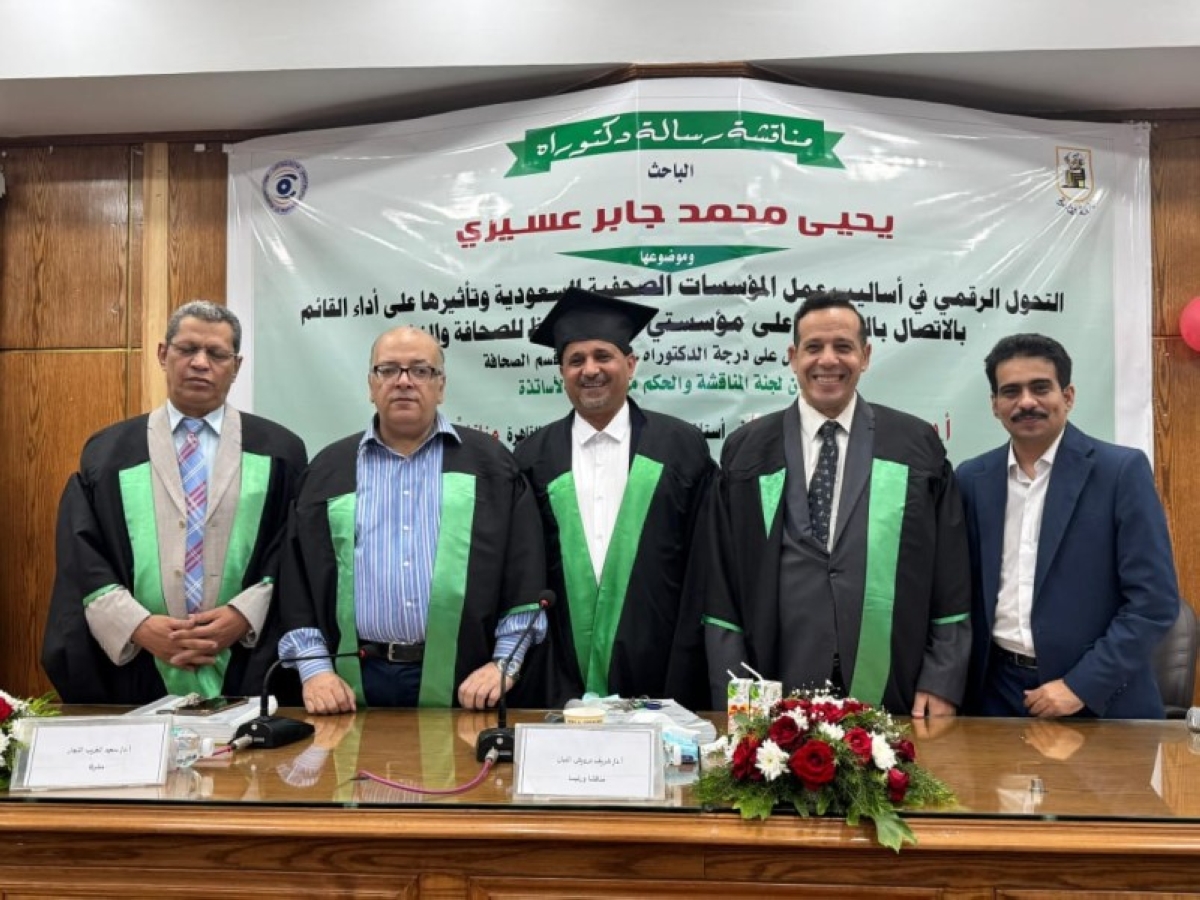
أكدت رسالة دكتوراه نوقشت في كلية الإعلام بجامعة القاهرة ريادة «عكاظ» في مجال التحول الرقمي داخل المؤسسات الصحفية السعودية، معتبرة تجربتها نموذجاً ملهماً في دمج التقنية الحديثة بالإنتاج الإعلامي، بما يعزز حضور الصحافة السعودية في المشهد الرقمي العربي.
دراسة توثّق التجربة السعودية
ناقشت كلية الإعلام بجامعة القاهرة رسالة دكتوراه بعنوان «التحول الرقمي في أساليب عمل المؤسسات الصحفية السعودية وتأثيره على أداء القائم بالاتصال بالتطبيق على مؤسستي عكاظ وعسير للصحافة والنشر»، للباحث يحيى محمد جابر عسيري. وضمّت لجنة المناقشة الأساتذة: البروفيسور شريف درويش اللبان أستاذ تكنولوجيا الصحافة، والبروفيسور سعيد الغريب النجار أستاذ الصحافة والمشرف على الرسالة، والأستاذ الدكتور محمد ثروت خبير الإعلام الرقمي.
«عكاظ».. ريادة مبكرة في التحول
أبرزت الدراسة أن «عكاظ» كانت من أوائل المؤسسات التي بدأت فعلياً في توظيف التحول الرقمي داخل غرف الأخبار وإداراتها التحريرية، مستفيدة من تقنيات الذكاء الاصطناعي والمقالات الصوتية والوسائط المتعددة لتقديم محتوى أكثر تفاعلاً وتأثيراً. وأكدت أن هذا التحول ساهم في تخفيض تكاليف الإنتاج والطباعة والتوزيع، وتسريع وتيرة العمل، إلى جانب تطوير منتجات إعلامية جديدة مثل البودكاست، والفيديوجراف، والواقع المعزز.
من القارئ إلى «المستخدم»
أشارت الرسالة إلى أن التحول الرقمي غيّر طبيعة العلاقة بين الصحيفة والجمهور، فلم يعد المتلقي مجرد «قارئ» بل أصبح «مستخدمًا» و«مستهلكًا» للمحتوى الإخباري عبر المنصات الرقمية المختلفة. كما استعرضت الدراسة تطور الصحافة السعودية منذ بداياتها وحتى تأسيس «عكاظ» عام 1960 وانطلاق صحيفة «الوطن» عام 2000.
إشادة أكاديمية بريادة «عكاظ»
أشاد خبير الإعلام الرقمي الدكتور محمد ثروت بتجربة «عكاظ»، مؤكداً أنها كانت سبّاقة في إطلاق مواقع إلكترونية ومشروعات رقمية متطورة، واستفادت من زياراتها المتعددة لمؤسسات إعلامية عالمية لتطوير أدواتها التحريرية. كما نوه إلى تميزها في توظيف الأقسام التفاعلية من خلال الجرافيكس والإنفوجراف والملتميديا، ما جعلها نموذجاً في التحول المهني والتقني للصحافة السعودية الحديثة.
A doctoral thesis discussed at the Faculty of Media at Cairo University confirmed the leadership of "Okaz" in the field of digital transformation within Saudi press institutions, considering its experience an inspiring model in integrating modern technology with media production, which enhances the presence of Saudi journalism in the Arab digital scene.
A Study Documenting the Saudi Experience
The Faculty of Media at Cairo University discussed a doctoral thesis titled "Digital Transformation in the Work Methods of Saudi Press Institutions and Its Impact on the Performance of the Communicator, Applied to Okaz and Asir Newspapers," by researcher Yahya Mohammed Jaber Asiri. The discussion committee included professors: Professor Sherif Darwish Al-Laban, Professor of Journalism Technology, Professor Said Al-Ghareeb Al-Najjar, Professor of Journalism and supervisor of the thesis, and Dr. Mohammed Tharwat, an expert in digital media.
"Okaz"... Early Leadership in Transformation
The study highlighted that "Okaz" was one of the first institutions to actively employ digital transformation within newsrooms and editorial departments, benefiting from artificial intelligence technologies, audio articles, and multimedia to provide more interactive and impactful content. It confirmed that this transformation contributed to reducing production, printing, and distribution costs, accelerating the pace of work, in addition to developing new media products such as podcasts, infographics, and augmented reality.
From Reader to "User"
The thesis pointed out that digital transformation changed the nature of the relationship between the newspaper and the audience, as the recipient is no longer just a "reader" but has become a "user" and "consumer" of news content across various digital platforms. The study also reviewed the evolution of Saudi journalism from its beginnings until the establishment of "Okaz" in 1960 and the launch of "Al-Watan" newspaper in 2000.
Academic Praise for "Okaz"'s Leadership
Digital media expert Dr. Mohammed Tharwat praised the experience of "Okaz," confirming that it was a pioneer in launching websites and advanced digital projects, benefiting from its multiple visits to global media institutions to develop its editorial tools. He also noted its excellence in employing interactive sections through graphics, infographics, and multimedia, making it a model for the professional and technical transformation of modern Saudi journalism.