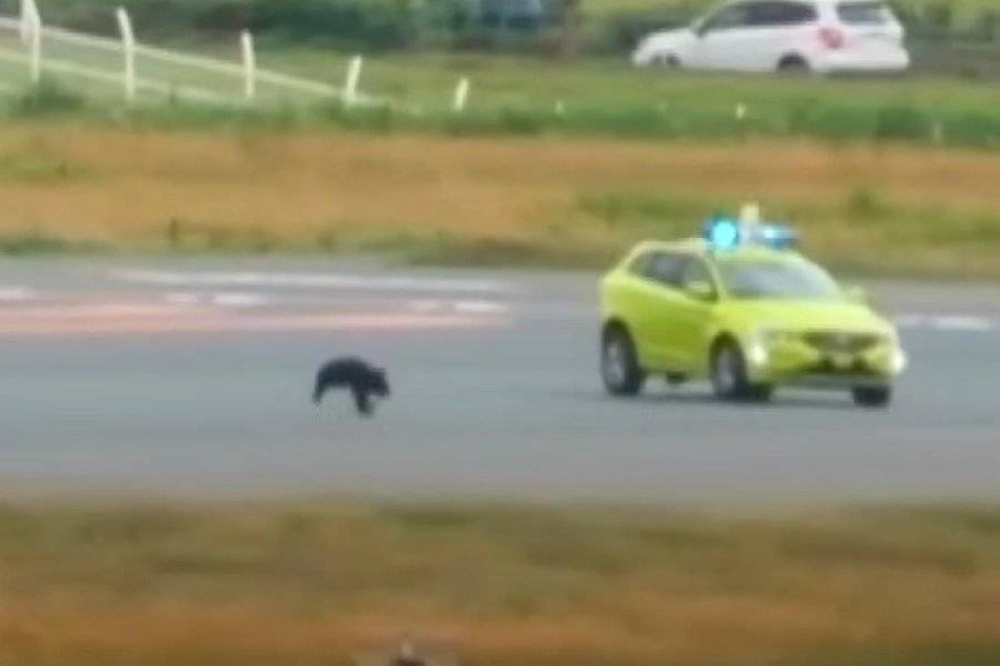
شهد مطار ياماغاتا في شمال اليابان حالة من الفوضى اليوم الخميس، بعد أن اقتحم دب أسود بري، يبلغ طوله حوالى 1.2 متر، منطقة المدرج، مما أدى إلى إغلاقه مؤقتًا وإلغاء 12 رحلة جوية، وتسبب الزائر غير المتوقع في تعطيل حركة الطيران لساعات، مع استمرار جهود السلطات للسيطرة على الموقف دون نجاح تام حتى مساء الخميس.
ووفقًا لمسؤول المطار، أكيرا ناغاي، تم رصد الدب لأول مرة بالقرب من المدرج حوالى الساعة 7 صباحًا، مما استدعى إغلاقًا فوريًا لمدة 30 دقيقة، أدى إلى تأخير 4 رحلات بما يصل إلى ساعة، وبعد اختفائه مؤقتًا، عاد الدب ليظهر مجددًا قرابة منتصف النهار، وهو يركض على المدرج، مما دفع السلطات إلى إعادة إغلاق المدرج وإلغاء 12 رحلة إضافية.
وكشفت سلطات الطيران اليابانية أن موظفي المطار حاولوا طرد الدب باستخدام سيارة ذات إضاءة زرقاء، لكنه تمكن من الفرار وما زال يتجول في محيط المطار، واستدعت السلطات صيادين محترفين لنصب الفخاخ، بينما حاصرت الشرطة المطار لمنع الدب من الهروب إلى المناطق المأهولة القريبة.
وقال ناغاي: «نحن الآن في حالة مأزق، لا يمكننا استقبال الطائرات في الوقت الحالي»، وأشار إلى أن المطار أُغلق مؤقتًا أمام الركاب لبقية اليوم، مع تحذيرات للسكان المحليين بالبقاء في حالة تأهب.
ولم يُبلغ عن إصابات أو أضرار مادية، لكن الحادثة أثارت ضجة واسعة على وسائل التواصل الاجتماعي، حيث تداول مستخدمون مقاطع فيديو تُظهر الدب وهو يتحرك بحرية في محيط المطار، لتُعد هذه الحادثة واحدة من سلسلة مواجهات متزايدة بين البشر والدببة في اليابان.
وتشهد اليابان ارتفاعًا ملحوظًا في حوادث اقتحام الدببة للمناطق الحضرية، وهي ظاهرة يُعزوها العلماء إلى تغيرات مناخية تؤثر على مصادر غذاء الدببة وأنماط هجرتها، إلى جانب انخفاض عدد السكان في المناطق الريفية بسبب الشيخوخة الديموغرافية.
ووفقًا لبيانات رسمية، تُعد منطقة ياماغاتا، المحاطة بالغابات والجبال، موطنًا لعدد كبير من الدببة السوداء الآسيوية، التي غالبًا ما تتسلل إلى الأماكن المأهولة بحثًا عن الطعام، خاصة في الصيف والخريف، وأفادت تقارير رسمية بتسجيل 219 هجومًا للدببة في السنة المنتهية في أبريل 2024، منها 6 حالات قاتلة.
وفي ديسمبر 2024، شهدت مدينة فوكوشيما حادثة مشابهة عندما اقتحم دب سوبرماركت لمدة يومين، وتم إغراؤه بالخروج باستخدام طعام مغطى بالعسل قبل أن يُقتل لاحقًا.
وأقر البرلمان الياباني في فبراير 2025 مشروع قانون يسمح للصيادين بإطلاق النار على الدببة في المناطق المأهولة، وهو قرار أثار جدلاً بين النشطاء البيئيين الذين يدعون إلى حلول أكثر إنسانية، مثل نقل الدببة إلى محميات طبيعية.
Yamagata Airport in northern Japan experienced chaos today, Thursday, after a wild black bear, approximately 1.2 meters long, invaded the runway area, leading to its temporary closure and the cancellation of 12 flights. The unexpected visitor disrupted air traffic for hours, with authorities continuing efforts to control the situation without complete success until Thursday evening.
According to airport official Akira Nagai, the bear was first spotted near the runway around 7 AM, prompting an immediate 30-minute closure, which delayed 4 flights by up to an hour. After disappearing temporarily, the bear reappeared around noon, running on the runway, prompting authorities to close the runway again and cancel 12 additional flights.
Japanese aviation authorities revealed that airport staff attempted to drive the bear away using a vehicle with blue lights, but it managed to escape and is still roaming around the airport. Authorities called in professional hunters to set traps while police cordoned off the airport to prevent the bear from fleeing to nearby populated areas.
Nagai stated, “We are now in a predicament; we cannot receive aircraft at this time,” noting that the airport was temporarily closed to passengers for the rest of the day, with warnings for local residents to remain vigilant.
No injuries or property damage have been reported, but the incident sparked widespread attention on social media, with users sharing videos showing the bear moving freely around the airport. This incident is part of a growing series of encounters between humans and bears in Japan.
Japan is witnessing a notable increase in bear incursions into urban areas, a phenomenon that scientists attribute to climate changes affecting bear food sources and migration patterns, alongside a declining rural population due to demographic aging.
According to official data, the Yamagata area, surrounded by forests and mountains, is home to a large number of Asian black bears, which often sneak into populated areas in search of food, especially in the summer and autumn. Official reports recorded 219 bear attacks in the year ending April 2024, including 6 fatal cases.
In December 2024, the city of Fukushima experienced a similar incident when a bear invaded a supermarket for two days, lured out with food covered in honey before being killed later.
The Japanese parliament passed a bill in February 2025 allowing hunters to shoot bears in populated areas, a decision that sparked controversy among environmental activists who advocate for more humane solutions, such as relocating bears to nature reserves.