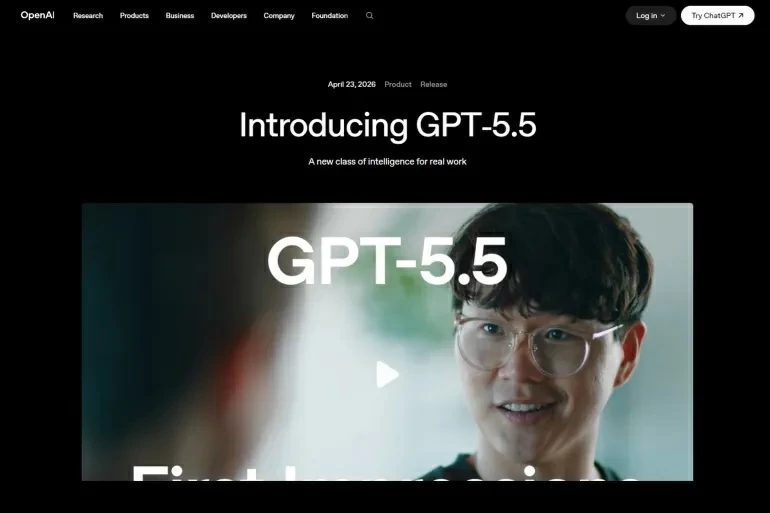
في خطوة زلزلت أوساط التقنية وأشعلت سباق الذكاء الاصطناعي مجدداً، أعلنت شركة OpenAI إطلاق نموذجها الأحدث GPT-5.5. التحديث الجديد ليس مجرد تحسين في الخوارزميات، بل هو قفزة نوعية تعيد تعريف دور الذكاء الاصطناعي من «أداة مساعدة» إلى «وكيل منفذ» للمهام المعقدة.
يتجاوز النموذج الجديد مجرد توليد النصوص ليقدم ميزة «العمل المستقل» (Autonomous Workflow). تخيل ذكاءً اصطناعياً قادراً على كتابة الأكواد البرمجية، واختبارها، وتصحيح أخطائها، والتنقل بين الأدوات الرقمية حتى إكمال المشروع بالكامل، كل ذلك دون تدخل بشري مكثف. وتشير التقارير التقنية إلى أن النظام حقق دقة مذهلة بلغت 82.7% في سير العمل البرمجي، متفوقاً بذلك على كافة النماذج السابقة.
التحدي التقني الذي نجحت OpenAI في تجاوزه هو الحفاظ على «سرعة الاستجابة». ففي عالم الذكاء الاصطناعي، غالباً ما كانت النماذج الأكثر ذكاءً هي الأكثر بطئاً، لكن GPT-5.5 كسر هذه القاعدة، حيث حافظ على سرعة قياسية تضاهي الإصدارات السابقة رغم رفع مستوى كفاءته بمراحل.
ولم يكن GPT-5.5 هو المفاجأة الوحيدة، فقد تزامن الإطلاق مع نظام Images 2.0 لتوليد الصور، الذي يتميز بقدرة فريدة على «الفهم السياقي». هذا النظام لا يكتفي برسم الصور، بل يصمم واجهات مستخدم وتصاميم تقنية بدقة لغوية وجودة احترافية، مما يجعله منافساً شرساً لأدوات التصميم المتخصصة.
ويأتي هذا الإطلاق في ظل منافسة شرسة مع عمالقة مثل Google وAnthropic، حيث يصب الجميع تركيزهم اليوم على ما يسمى بـ «الذكاء الاصطناعي الوكيل» Agentic AI .OpenAI لا تستهدف فقط تقديم نموذج ذكي، بل تسعى لتقديم «شريك في التنفيذ» يغير قواعد العمل داخل الشركات والمؤسسات.
وأكدت الشركة أن النموذج الجديد سيُطرح تدريجياً لمشتركي الفئات المدفوعة، مع خطط لفتح واجهة البرمجة (API) للمطورين قريباً. ورغم القوة الهائلة لهذا النموذج، شددت الشركة على التزامها بمعايير أمان صارمة لمنع أي استخدام غير مشروع، وضمان أن يظل الذكاء الاصطناعي قوة دافعة للتطوير لا للتهديد.
ويمكن القول إنه لا يبدو أن GPT-5.5 مجرد تحديث تقني عابر، بل هو إعلان مرحلة جديدة، حيث تصبح الآلة هي التي تبادر، وتنفذ، وتكمل المهام المعقدة نيابة عن البشر.
In a move that has shaken the tech community and reignited the race for artificial intelligence, OpenAI announced the launch of its latest model, GPT-5.5. This new update is not just an improvement in algorithms; it represents a qualitative leap that redefines the role of artificial intelligence from a "support tool" to an "agent executor" of complex tasks.
The new model goes beyond mere text generation to offer the feature of "Autonomous Workflow." Imagine an artificial intelligence capable of writing code, testing it, debugging it, and navigating through digital tools to complete an entire project, all without intensive human intervention. Technical reports indicate that the system achieved an impressive accuracy of 82.7% in programming workflows, surpassing all previous models.
The technical challenge that OpenAI successfully overcame was maintaining "response speed." In the world of artificial intelligence, the smartest models have often been the slowest, but GPT-5.5 broke this rule, maintaining a record speed comparable to previous versions while significantly enhancing its efficiency.
Moreover, GPT-5.5 was not the only surprise, as its launch coincided with the release of Images 2.0 for image generation, which features a unique ability for "contextual understanding." This system does not just draw images; it designs user interfaces and technical designs with linguistic precision and professional quality, making it a fierce competitor to specialized design tools.
This launch comes amid fierce competition with giants like Google and Anthropic, as everyone focuses today on what is called "Agentic AI." OpenAI is not only aiming to provide an intelligent model but is also striving to offer a "partner in execution" that changes the rules of work within companies and institutions.
The company confirmed that the new model will be gradually rolled out to paid subscribers, with plans to open the API for developers soon. Despite the immense power of this model, the company emphasized its commitment to strict safety standards to prevent any unlawful use and ensure that artificial intelligence remains a driving force for development, not a threat.
It can be said that GPT-5.5 does not seem to be just a fleeting technical update; rather, it is an announcement of a new phase, where machines take the initiative, execute, and complete complex tasks on behalf of humans.