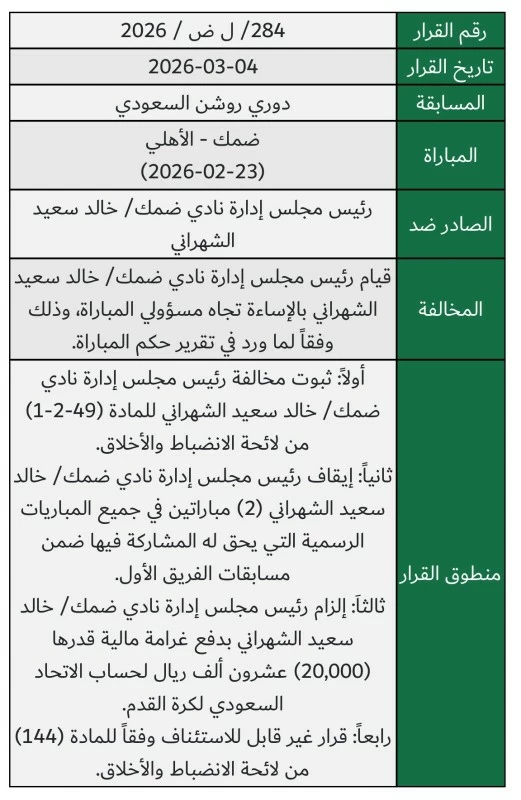
فتحت لجنة الانضباط والأخلاق في الاتحاد السعودي لكرة القدم بابًا واسعًا من الجدل الجماهيري بعد قرارها إيقاف رئيس مجلس إدارة نادي ضمك خالد الشهراني مباراتين رسميتين، عقب ثبوت إساءته لمسؤولي مباراة ضمك والأهلي وفق ما ورد في تقرير حكم اللقاء، وهو قرارٌ أعاد النقاش مجددًا حول معيار العدالة والانضباط في العقوبات، ومدى اتساقها مع حالات مشابهة شهدها الموسم الرياضي الحالي.
قرار الإيقاف بحد ذاته لا يثير الإشكال؛ فلوائح الانضباط في كرة القدم تقوم أساسًا على حماية منظومة اللعبة واحترام مسؤولي المباريات، وهو مبدأ راسخ في أنظمة الاتحاد الدولي لكرة القدم (FIFA)، والاتحاد الآسيوي، حيث تُعد الإساءة للحكام أو مسؤولي المباراة مخالفة تستوجب العقوبة وفق التقارير الرسمية للحكام والمراقبين.
لكن الإشكالية التي أثارها القرار هذه المرة لا تتعلق بالعقوبة ذاتها، بل بسرعة إصدارها مقارنة بوقائع أخرى مشابهة وأشدّ لم تشهد الحسم ذاته بالسرعة أو الوضوح.
من بينها حالات جدلية تتعلق بتصريحات أو مواقف لمدربين أو مسؤولين أو إداريين تجاه الحكام أو اللجان أو الأندية المنافسة، بعضها يوثق بالصوت والصورة أو عبر منصات إعلامية، ومع ذلك تتأخر القرارات أو تمر دون عقوبات واضحة، وهو ما يخلق انطباعًا لدى المتابعين بوجود تفاوت في آلية التعامل مع الحالات المتشابهة.
هذا التفاوت –سواء كان حقيقيًا أو مجرد انطباع جماهيري– يمثل التحدي الأكبر أمام أي لجنة انضباط.
من جانبه يرى الأكاديمي القانوني الدكتور حسن رديف أن التباين في سرعة اتخاذ القرارات الانضباطية في الحالات المتشابهة يؤدي إلى الإخلال بمبدأ المساواة والعدالة بين الأطراف، كما يخلق حالة من عدم اليقين القانوني ويؤثر على استقرار الأندية أمام معالجة آثار القرارات الانضباطية التي من المفترض أن تصدر قبل بداية كل جولة في الدوري، كذلك يضعف هذا التباين الثقة في لجنة الاتضباط عند اتخاذ القرارات الانضباطية، بل قد يصل إلى إثارة الشكوك حول حيادها، إضافة إلى ذلك قد يقلل من أثر الردع والانضباط.
عليه فإن توحيد المعايير الزمنية لاتخاذ القرارات الانضباطية في الحالات المتشابهة يُعد عنصرًا مهمًا لتحقيق العدالة الإجرائية، وتعزيز الثقة من قبل الأطراف في لجنة الانضباط، ويضمن فعالية قراراتها.
The Disciplinary and Ethics Committee of the Saudi Football Federation has opened a wide door for public debate following its decision to suspend the Chairman of the Board of Directors of Damak Club, Khalid Al-Shahrani, for two official matches, after it was proven that he insulted the officials of the Damak and Al-Ahli match according to the referee's report. This decision has reignited discussions about the criteria of fairness and discipline in penalties, and how consistent they are with similar cases witnessed in the current sports season.
The suspension decision itself does not raise issues; the disciplinary regulations in football are fundamentally based on protecting the integrity of the game and respecting match officials, which is a firmly established principle in the regulations of FIFA and the Asian Football Confederation. Insulting referees or match officials is considered a violation that warrants punishment according to the official reports of referees and observers.
However, the problem raised by this decision this time does not relate to the penalty itself, but rather to the speed of its issuance compared to other similar and more severe incidents that did not see the same promptness or clarity in resolution.
Among these are controversial cases related to statements or positions taken by coaches, officials, or administrators towards referees, committees, or competing clubs, some of which are documented with audio and video or through media platforms. Nevertheless, decisions are delayed or pass without clear penalties, which creates an impression among followers of a disparity in the handling of similar cases.
This disparity—whether real or merely a public perception—represents the greatest challenge for any Disciplinary Committee.
For his part, legal academic Dr. Hassan Radeef believes that the variation in the speed of making disciplinary decisions in similar cases leads to a violation of the principle of equality and justice among the parties involved. It also creates a state of legal uncertainty and affects the stability of clubs in addressing the repercussions of disciplinary decisions that are supposed to be issued before the start of each round in the league. Additionally, this variation undermines trust in the Disciplinary Committee when making disciplinary decisions, and may even raise doubts about its neutrality. Furthermore, it may diminish the deterrent effect of discipline.
Therefore, standardizing the time criteria for making disciplinary decisions in similar cases is an important element in achieving procedural justice, enhancing the trust of the parties in the Disciplinary Committee, and ensuring the effectiveness of its decisions.