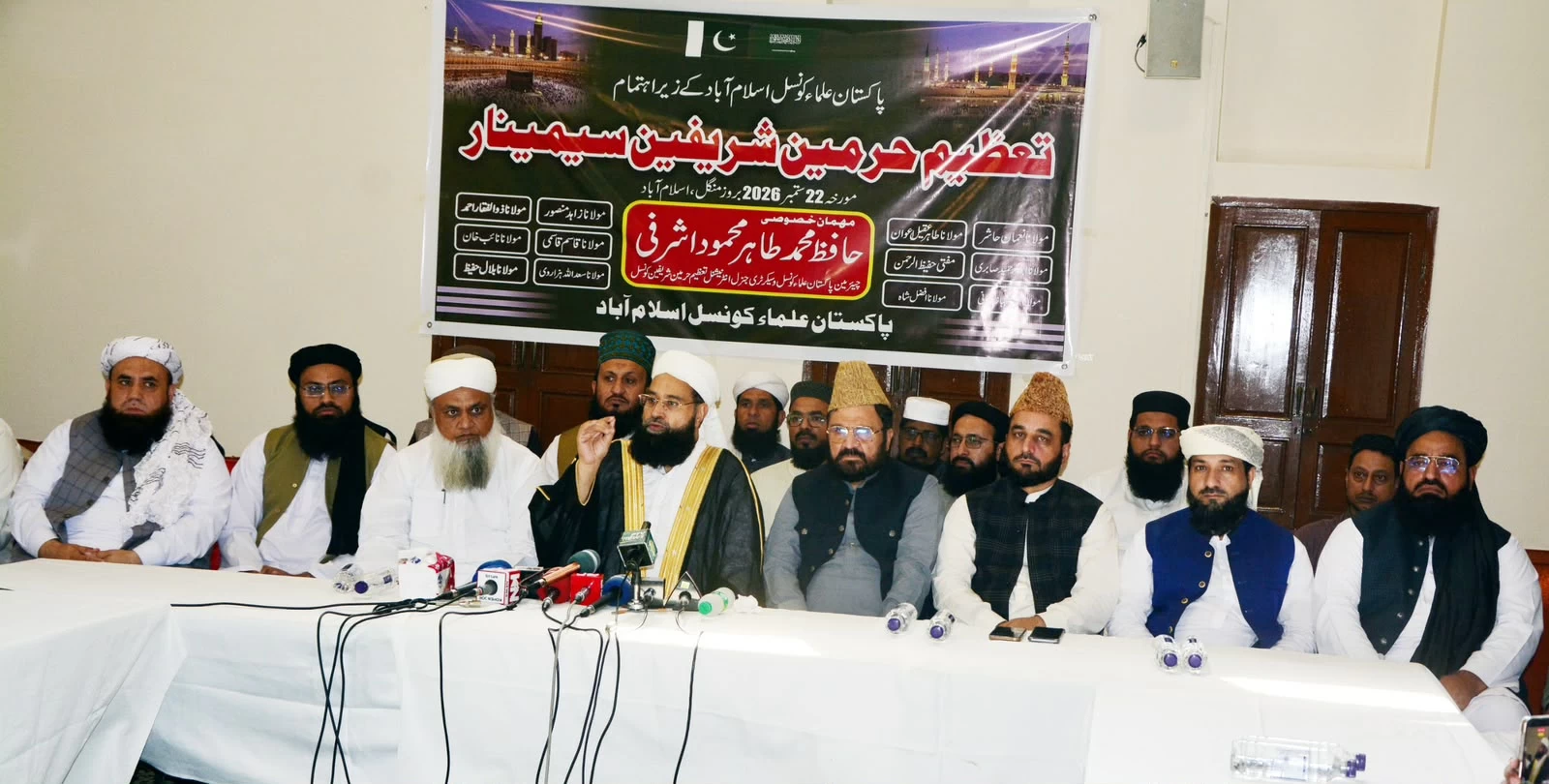
أصدر علماء ومشايخ ومفتون من مختلف المذاهب الإسلامية في باكستان فتوى جماعية أكدوا فيها أن أمن الحرمين الشريفين وسلامة مكة المكرمة والمدينة المنورة «خط أحمر» للأمة الإسلامية، وأن الدفاع عنهما في حال تعرضهما لأي اعتداء مسؤولية دينية مشتركة للمسلمين.
وأعلن العلماء الباكستانيون خلال اجتماع عقد في إسلام آباد برئاسة رئيس مجلس علماء باكستان والأمين العام للمجلس الدولي لتعظيم الحرمين الشريفين حافظ أشرفي، تأييدهم الكامل لموقف الحكومة والدولة الباكستانية بشأن أمن السعودية، مؤكدين أن العلاقات الباكستانية السعودية تقوم على الأخوة والثقة والروابط التاريخية، وأن موقف الدولة الباكستانية الداعم لأمن السعودية واستقرارها وحماية الحرمين الشريفين يعكس مشاعر الشعب الباكستاني.
ودان الاجتماع الذي شارك فيه عدد من كبار العلماء والمفتين وشيوخ الحديث من مختلف المدارس الفكرية الإسلامية، بشدة التصريحات والتهديدات الصادرة عن قيادة الحوثيين ومفتي المليشيا بشأن مكة المكرمة والمدينة المنورة والسعودية، معتبراً أن استهداف الحرمين الشريفين أو تهديد أمنهما أو التلويح بالاعتداء عليهما أمر مخالف للشريعة وتعاليم الإسلام وغير مقبول.
ودعا علماء باكستان الحوثيين إلى وقف الخطاب التحريضي والتهديدات، معربين عن إدانتهم للتهديدات الموجهة ضد السعودية وباكستان وتركيا.
وأكد المشاركون أن الدول الثلاث تمتلك القدرة على الدفاع عن أراضيها وشعوبها وأمنها الوطني، وأن التعاون الدفاعي بينها يمثل عاملاً مهماً لأمن المنطقة واستقرارها.
وأوضح العلماء أن حماية الحرمين الشريفين ليست قضية خلاف شيعي ـ سني أو صراع مذهبي، مشددين على أن مكة المكرمة والمدينة المنورة مقدستان لجميع المسلمين، وأن الحفاظ على أمنهما وحرمتهما مسؤولية مشتركة للأمة الإسلامية.
وفي ما يتعلق بالقضية الفلسطينية، انتقد الاجتماع الأطراف التي تستخدم القضية لتحقيق أهداف سياسية وإقليمية وإثارة الانقسام بين المسلمين، منددين باستهداف سفن سعودية وعربية وإسلامية في الوقت الذي يُسمح فيه لسفن إسرائيلية بالمرور عبر الممرات البحرية.
ودعا الاجتماع علماء ومشايخ ومفتي العالم الإسلامي إلى إعلان التضامن مع السعودية بقيادة خادم الحرمين الشريفين الملك سلمان بن عبدالعزيز وولي العهد رئيس مجلس الوزراء الأمير محمد بن سلمان، ورفض أي تهديد أو اعتداء يستهدف الحرمين الشريفين.
ونصت الفتوى الجماعية على أنه في حال قيام أي دولة أو جماعة أو جهة أو فرد بالاعتداء على مكة المكرمة أو المدينة المنورة أو أراضي الحرمين الشريفين، يصبح التصدي للعدوان والدفاع عن أمن الحرمين واستقرارهما واجباً شرعياً، مع دعم الإجراءات الدفاعية المشروعة التي تتخذها القيادة السعودية، والعمل في إطار الضوابط الشرعية وقوانين الدول المعنية.
وشدد العلماء في ختام الفتوى، أن الدفاع عن الحرمين الشريفين ليس مسؤولية دولة أو شعب أو مذهب بعينه، وإنما «مسؤولية دينية مشتركة للأمة الإسلامية بأسرها».
Scholars, sheikhs, and muftis from various Islamic sects in Pakistan issued a collective fatwa affirming that the security of the Two Holy Mosques and the safety of Mecca and Medina is a "red line" for the Islamic nation, and that defending them in the event of any aggression is a shared religious responsibility for Muslims.
During a meeting held in Islamabad, chaired by the Chairman of the Council of Scholars of Pakistan and the Secretary-General of the International Council for the Honor of the Two Holy Mosques, Hafiz Ashrafi, the Pakistani scholars announced their full support for the position of the Pakistani government and state regarding the security of Saudi Arabia, emphasizing that the Pakistan-Saudi relations are based on brotherhood, trust, and historical ties, and that the Pakistani state's stance supporting the security and stability of Saudi Arabia and protecting the Two Holy Mosques reflects the sentiments of the Pakistani people.
The meeting, which included several senior scholars, muftis, and hadith scholars from various Islamic schools of thought, strongly condemned the statements and threats issued by the Houthi leadership and the militia's mufti regarding Mecca, Medina, and Saudi Arabia, considering that targeting the Two Holy Mosques or threatening their security or hinting at aggression against them is contrary to Sharia and the teachings of Islam and is unacceptable.
The Pakistani scholars called on the Houthis to stop the inciting rhetoric and threats, expressing their condemnation of the threats directed against Saudi Arabia, Pakistan, and Turkey.
Participants affirmed that the three countries have the capability to defend their territories, peoples, and national security, and that defense cooperation among them is an important factor for the security and stability of the region.
The scholars clarified that protecting the Two Holy Mosques is not a matter of Shia-Sunni conflict or sectarian strife, stressing that Mecca and Medina are sacred to all Muslims, and that maintaining their security and sanctity is a shared responsibility of the Islamic nation.
Regarding the Palestinian issue, the meeting criticized the parties that use the issue to achieve political and regional goals and to incite division among Muslims, denouncing the targeting of Saudi, Arab, and Islamic ships while allowing Israeli ships to pass through maritime corridors.
The meeting called on scholars, sheikhs, and muftis of the Islamic world to declare solidarity with Saudi Arabia, led by the Custodian of the Two Holy Mosques King Salman bin Abdulaziz and Crown Prince and Prime Minister Mohammed bin Salman, and to reject any threat or aggression targeting the Two Holy Mosques.
The collective fatwa stated that if any state, group, entity, or individual attacks Mecca or Medina or the lands of the Two Holy Mosques, it becomes a religious duty to confront the aggression and defend the security and stability of the Two Holy Mosques, while supporting the legitimate defensive measures taken by the Saudi leadership and acting within the framework of Sharia controls and the laws of the concerned countries.
The scholars emphasized at the conclusion of the fatwa that defending the Two Holy Mosques is not the responsibility of a particular state, people, or sect, but rather "a shared religious responsibility for the entire Islamic nation."