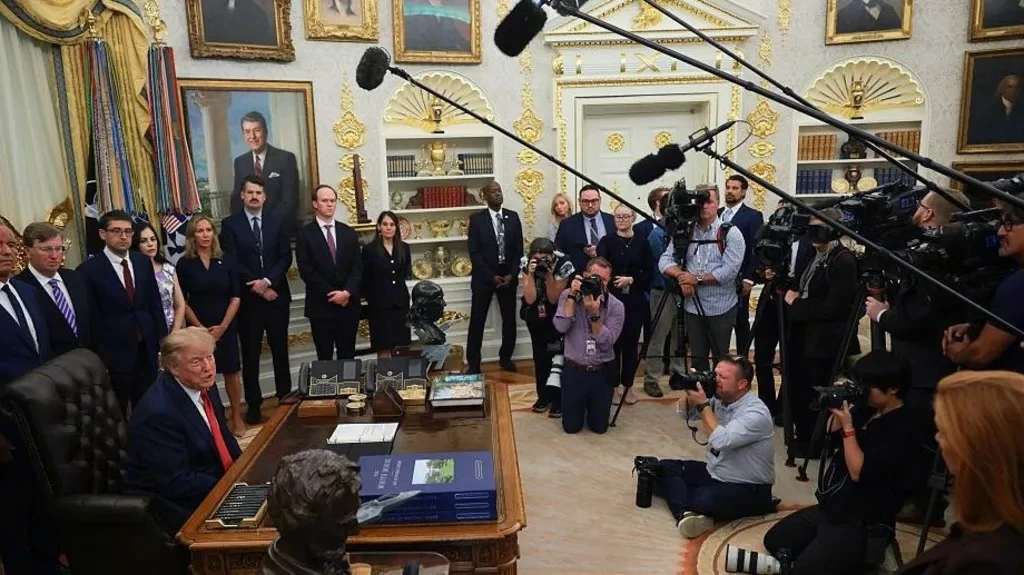
أعلن الرئيس الأمريكي دونالد ترمب، حظر مؤسسات CNN وMS NOW وبوليتيكو، من دخول البيت الأبيض «بشكل فوري»، في أحدث فصل من المواجهة المتصاعدة بين الرئيس الأمريكي وعدد من المؤسسات الإعلامية التي ينتقدها باستمرار.
وقال ترمب، في منشور عبر منصته «تروث سوشيال»، إن هذه المؤسسات «تكتب أو تنشر باستمرار قصصاً مختلقة أو أكاذيب» بشأن إدارته، لكنه لم يذكر تقارير أو وقائع محددة قال إنها دفعت إلى اتخاذ قرار الحظر.
ووصف ترمب القرار لاحقاً بأنه «حظر بسيط جداً»، دون أن يوضح آلية تنفيذه، أو ما إذا كان القرار يعني منع موظفي المؤسسات الثلاث من دخول مجمع البيت الأبيض أو المشاركة في التغطية الصحفية من داخله.
ورغم الإعلان، ظل صحفيون من CNN وبوليتيكو، داخل البيت الأبيض بعد وقت قصير من صدور القرار، كما كان فريق تابع لـCNN يرافق نائب الرئيس الأمريكي جيه دي فانس خلال تنقله من وإلى فعالية في ولاية أيوا.
CNN: هجوم غير قانوني على حرية الصحافة
وسارعت CNN إلى انتقاد قرار ترمب، معتبرة أن أي حظر من هذا النوع سيكون «هجوماً غير قانوني» على حرية الصحافة في الولايات المتحدة.
وقالت الشبكة في بيان، إنها «تقف بشكل كامل وراء فريقها في البيت الأبيض وتغطياته العادلة والدقيقة».
وأضافت أن الصحفيين «لهم حق بموجب الدستور الأمريكي في القيام بهذه التغطية دون عرقلة أو تدخل من الحكومة»، محذرة من أن تنفيذ الحظر الذي هدد به ترمب سيكون اعتداءً غير قانوني على هذا الحق الأساسي المحمي دستورياً.
ومن المتوقع أن يواجه القرار تحديات قانونية أمام المحاكم الأمريكية.
أما بوليتيكو، فقالت في بيان إنها ستواصل «التغطية العادلة لهذا البيت الأبيض والبيوت البيضاء القادمة»، مؤكدة أنها «ستدافع بقوة عن حقوقها المنصوص عليها في التعديل الأول للدستور ضد أي محاولة لتقييدها».
في المقابل، رفضت MS NOW، التي كانت تعرف سابقاً باسم MSNBC، التعليق على إعلان ترمب.
ترمب يلوح بمؤسسات إعلامية أخرى
وقال ترمب في منشوره إن المؤسسات الإعلامية «لا ينبغي أن تكون قادرة على كتابة أو نشر قصص مختلقة وأكاذيب باستمرار» أثناء تغطيتها لرئيس الولايات المتحدة أو إدارته أو البلاد، مضيفاً عبارة «مؤسسات إخبارية أخرى ستأتي».
وعندما سأله أحد الصحفيين عما يقصده بعبارة «أخرى ستأتي»، أجاب ترمب مشيراً إلى ما يعتبره «أخباراً زائفة»، قائلاً إن نيويورك تايمز وواشنطن بوست من بين المؤسسات التي يصفها بهذه الصفة.
ولم يحدد ترمب مؤسسات أخرى بشكل رسمي، لكنه قال لاحقاً في المكتب البيضاوي إن القرار جاء نتيجة تراكم تقارير نشرها الإعلام خلال السنوات الماضية.
وقال: «الأمر يتعلق حقاً بتراكم القصص خلال السنوات القليلة الماضية، لقد سئمت من ذلك».
وأضاف أن مؤسسات إعلامية أخرى «قد تنضم إليهم»، دون أن يذكر أسماء محددة.
وعندما سُئل عن توقيت الإعلان، قال ترمب إنه «لا يوجد سبب» محدد لاختيار (الجمعة) لإصداره، كما أقر بإمكانية أن تؤدي الخطوة إلى دعاوى قضائية، مضيفاً أنه يرى أن من المفيد «تسليط الضوء على الأمر، سواء صمد أمام الطعون أم لم يصمد».
تحذيرات من انتهاك التعديل الأول
وأثار الإعلان انتقادات فورية من منظمات أمريكية معنية بحرية الصحافة وحقوق وسائل الإعلام.
وقال معهد نايت للتعديل الأول في جامعة كولومبيا، إن ترمب يواجه بالفعل أحكاماً قضائية عديدة بشأن قضايا مماثلة.
وأضاف إن استبعاد المؤسسات الإخبارية من تجمع الصحافة في البيت الأبيض، إذا كان هذا هو المقصود بالقرار، سيكون «غير دستوري على نحو مضاعف»، معتبراً أن تجمع الصحافة يمثل «منتدى عاماً» يخضع للحماية بموجب التعديل الأول للدستور، وبالتالي لا يستطيع الرئيس استبعاد الصحفيين بناءً على وجهات نظرهم.
بدوره، قالت لجنة المراسلين من أجل حرية الصحافة، وهي منظمة تقدم خدمات قانونية لوسائل الإعلام، إنها تتوقع أن ترفض المحاكم الحظر سريعاً، واصفة إياه بأنه «غير دستوري بشكل واضح».
وقال رئيس المنظمة بروس براون، إن التعديل الأول «واضح» في أن البيت الأبيض، بمجرد السماح لبعض الصحفيين بالدخول، لا يمكنه منع آخرين بسبب عدم رضاه عن تغطيتهم.
كما وصفت مؤسسة حرية الصحافة القرار بأنه غير قانوني، منتقدة سياسة ترمب تجاه وسائل الإعلام.
صدامات متكررة مع الصحافة
ويأتي قرار ترمب في ظل تاريخ طويل من التوتر بينه وبين وسائل الإعلام الأمريكية.
ومنذ عودته إلى البيت الأبيض في يناير 2025، دخل ترمب ومسؤولو إدارته في مواجهات متكررة مع صحفيي البيت الأبيض، كما عملت الإدارة خلال ولايته الثانية على إدخال مدونين محافظين ومؤثرين ووسائل إعلام أخرى إلى غرفة الإحاطة الصحفية، بحجة توفير وجهات نظر أكثر تنوعاً للجمهور الأمريكي.
وفي فبراير، أعلنت إدارة ترمب أنها ستتولى إدارة التجمع الصحفي الرئاسي الذي يتيح لوسائل الإعلام الوصول إلى الرئيس، بعد أن كانت جمعية مراسلي البيت الأبيض تديره لأكثر من قرن.
وفي الشهر نفسه، منعت الإدارة صحفيي ومصوري أسوشيتد برس (AP) من بعض المواقع ذات الوصول المحدود، مثل المكتب البيضاوي والطائرة الرئاسية، بسبب استخدام الوكالة تسمية «خليج المكسيك» بدلاً من «خليج أمريكا».
ورفعت أسوشيتد برس دعوى قضائية على خلفية القرار، ولا تزال القضية منظورة أمام القضاء.
كما اشتبك ترمب مراراً مع الصحفيين خلال الفعاليات في البيت الأبيض وعلى متن الطائرة الرئاسية، وغالباً ما وصف بعضهم بأنهم ينشرون «أخباراً زائفة» أو اتهمهم بالتصرف بوقاحة.
وخلال ولايته الأولى، منع ترمب مراسل CNN جيم أكوستا من دخول البيت الأبيض، قبل أن تعيد الشبكة رفع دعوى قضائية أدت إلى إعادة اعتماد الصحفي.
CNN ضمن تجمع محدود للتغطية
وتعد CNN واحدة من خمس مؤسسات إخبارية أمريكية فقط تتولى تصوير الفيديو ضمن تجمع التغطية الصحفية الرئاسية، وهو نظام يتيح لمؤسسة أو مراسل مشاركة المواد المصورة من فعاليات الرئيس مع بقية وسائل الإعلام.
وتشارك هيئة الإذاعة البريطانية BBC في تجمع التغطية الإذاعية للبيت الأبيض.
ترمب في مواجهة قانونية مع وسائل إعلام
ولا يقتصر الصدام بين ترمب ووسائل الإعلام على الوصول إلى البيت الأبيض، إذ سبق للرئيس الأمريكي أن اتخذ إجراءات قانونية ضد عدد من المؤسسات الإعلامية الأمريكية والدولية، من بينها وول ستريت جورنال ونيويورك تايمز وBBC.
وانتهت بعض هذه الدعاوى إلى اتفاق مؤسسات إعلامية على دفع تسويات مالية بملايين الدولارات، بينما لا تزال الدعوى التي رفعها ترمب ضد BBC مستمرة.
ويفتح إعلان ترمب الأخير بشأن CNN وMS NOW وبوليتيكو باباً جديداً للصراع بين الإدارة الأمريكية ووسائل الإعلام، وسط توقعات بأن تحدد المحاكم مدى قانونية أي إجراءات تستهدف منع هذه المؤسسات من الوصول إلى البيت الأبيض أو المشاركة في التغطية الصحفية للرئيس.
U.S. President Donald Trump announced an "immediate" ban on CNN, MS NOW, and Politico from entering the White House, in the latest chapter of the escalating confrontation between the U.S. president and several media outlets that he continuously criticizes.
Trump stated in a post on his platform "Truth Social" that these outlets "constantly write or publish fabricated stories or lies" about his administration, but he did not mention specific reports or incidents that he claimed led to the ban decision.
Trump later described the decision as a "very simple ban," without clarifying how it would be implemented, or whether it meant preventing employees of the three outlets from entering the White House complex or participating in press coverage from within.
Despite the announcement, journalists from CNN and Politico remained inside the White House shortly after the decision was made, and a CNN team accompanied U.S. Vice President J.D. Vance during his travel to and from an event in Iowa.
CNN: An Illegal Attack on Press Freedom
CNN quickly criticized Trump's decision, considering any ban of this kind to be an "illegal attack" on press freedom in the United States.
The network stated in a statement that it "fully stands behind its team in the White House and their fair and accurate coverage."
It added that journalists "have the right under the U.S. Constitution to conduct this coverage without obstruction or interference from the government," warning that implementing the ban threatened by Trump would be an illegal violation of this fundamental constitutionally protected right.
The decision is expected to face legal challenges in U.S. courts.
Politico stated in a statement that it would continue "fair coverage of this White House and future White Houses," affirming that it "will vigorously defend its rights as outlined in the First Amendment against any attempt to restrict them."
In contrast, MS NOW, formerly known as MSNBC, declined to comment on Trump's announcement.
Trump Hints at Other Media Outlets
In his post, Trump stated that media outlets "should not be able to write or publish fabricated stories and lies continuously" while covering the President of the United States or his administration or the country, adding the phrase "other news outlets will come."
When a journalist asked him what he meant by "other will come," Trump responded, referring to what he considers "fake news," saying that The New York Times and The Washington Post are among the outlets he describes in this manner.
Trump did not officially specify other outlets, but he later said in the Oval Office that the decision came as a result of a buildup of reports published by the media over the past years.
He said: "It really is about the accumulation of stories over the past few years, I am tired of it."
He added that other media outlets "may join them," without naming specific ones.
When asked about the timing of the announcement, Trump said there was "no specific reason" for choosing Friday to issue it, and he acknowledged that the move could lead to lawsuits, adding that he sees it as beneficial to "highlight the matter, whether it withstands challenges or not."
Warnings of Violating the First Amendment
The announcement sparked immediate criticism from American organizations concerned with press freedom and media rights.
The Knight First Amendment Institute at Columbia University stated that Trump is already facing numerous court rulings regarding similar issues.
It added that excluding news outlets from the White House press pool, if that is what the decision implies, would be "doubly unconstitutional," considering that the press pool represents a "public forum" protected under the First Amendment, and thus the president cannot exclude journalists based on their viewpoints.
For its part, the Committee to Protect Journalists, an organization that provides legal services to media, stated that it expects courts to quickly reject the ban, describing it as "clearly unconstitutional."
The organization's president, Bruce Brown, stated that the First Amendment is "clear" that once the White House allows some journalists to enter, it cannot prevent others due to dissatisfaction with their coverage.
The Freedom of the Press Foundation also described the decision as illegal, criticizing Trump's policy towards the media.
Repeated Clashes with the Press
Trump's decision comes amid a long history of tension between him and the American media.
Since returning to the White House in January 2025, Trump and his administration officials have engaged in repeated confrontations with White House reporters, and during his second term, the administration worked to include conservative bloggers, influencers, and other media into the press briefing room, claiming to provide a more diverse range of perspectives to the American public.
In February, the Trump administration announced that it would take over the management of the presidential press pool that allows media access to the president, after the White House Correspondents' Association had managed it for over a century.
In the same month, the administration barred Associated Press (AP) journalists and photographers from some restricted access sites, such as the Oval Office and Air Force One, due to the agency's use of the term "Gulf of Mexico" instead of "Gulf of America."
AP filed a lawsuit regarding the decision, and the case is still pending in court.
Trump has also repeatedly clashed with journalists during events at the White House and aboard Air Force One, often describing some of them as spreading "fake news" or accusing them of behaving rudely.
During his first term, Trump barred CNN reporter Jim Acosta from entering the White House, before the network filed a lawsuit that led to the journalist's reinstatement.
CNN Among a Limited Pool for Coverage
CNN is one of only five American news organizations that provide video coverage within the presidential press pool, a system that allows an outlet or reporter to share video material from presidential events with other media.
The BBC is also part of the White House radio coverage pool.
Trump in Legal Battles with Media
The clash between Trump and the media is not limited to access to the White House, as the U.S. president has previously taken legal actions against several American and international media outlets, including The Wall Street Journal, The New York Times, and the BBC.
Some of these lawsuits resulted in media organizations agreeing to pay financial settlements in the millions of dollars, while the lawsuit Trump filed against the BBC is still ongoing.
Trump's recent announcement regarding CNN, MS NOW, and Politico opens a new chapter in the conflict between the U.S. administration and the media, amid expectations that courts will determine the legality of any actions aimed at preventing these outlets from accessing the White House or participating in the president's press coverage.