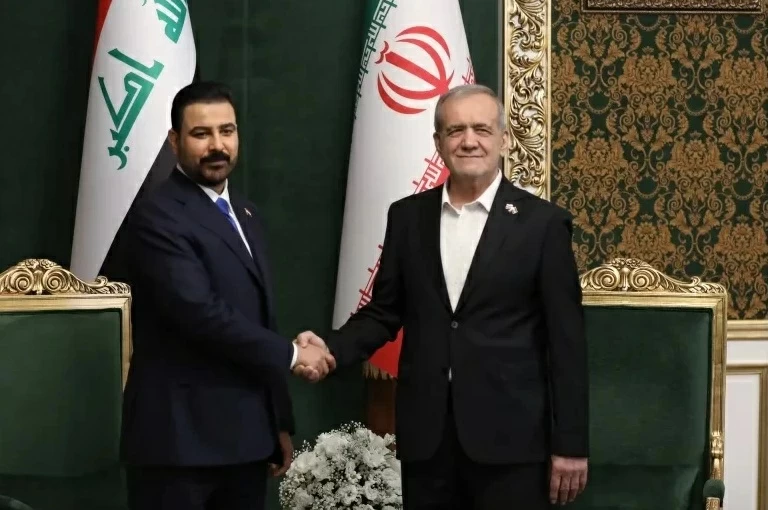
كشفت صحيفة «نيويورك تايمز» أن إيران رفضت مقترحاً أمريكياً بوقف إطلاق النار، حمله رئيس الوزراء العراقي علي الزيدي إلى طهران عقب زيارته الأخيرة إلى البيت الأبيض ولقائه الرئيس دونالد ترمب. واعتبر المسؤولون الإيرانيون أن المقترح لا يعالج القضية الأساسية المتعلقة بمستقبل السيطرة على مضيق هرمز.
وجاءت محاولة الوساطة في وقت كان ترمب يهدد فيه بتوسيع نطاق الحرب واستهداف البنية التحتية الحيوية في إيران.
ولم تتكشف بعد تفاصيل مقترح وقف إطلاق النار، لكن مسؤولين إيرانيين أكدوا أنه العرض الوحيد المطروح حالياً، وأن طهران لا ترغب في اتفاق مؤقت يترك مسألة السيطرة على مضيق هرمز دون حسم.
ووصل الزيدي إلى طهران على رأس وفد من كبار المسؤولين العراقيين، إذ التقى الرئيس الإيراني مسعود بزشكيان، وكبير المفاوضين الإيرانيين العميد محمد باقر قاليباف، ووزير الخارجية عباس عراقجي، وفقاً لوسائل إعلام محلية.
وقال عراقجي في تصريحات للتلفزيون الرسمي، إن إيران والعراق «تربطهما مصالح اقتصادية وسياسية وأمنية وعلاقات وثيقة»، مشيراً إلى أن الزيارة تكتسب أهمية خاصة في ظل الظروف الراهنة بالمنطقة.
وأضاف أن الزيدي نقل إلى المسؤولين الإيرانيين «انطباعاته وآراءه» بعد زيارته إلى واشنطن، لكنه شدّد على أن طهران وواشنطن لا تحتاجان إلى مزيد من الوسطاء.
واعتبر عراقجي أن المشكلة ليست في نقل الرسائل، بل في النظرة الأمريكية غير المنطقية الساعية إلى الهيمنة.
وتوجه الزيدي، أمس (الخميس)، إلى طهران تلبية لدعوة رسمية من قبل الحكومة الإيرانية.
وكان المتحدث باسم الحكومة العراقية حيدر العبودي، أفاد (الأربعاء) بأن الزيدي سيبحث خلال الزيارة مستجدات الأوضاع في المنطقة والتطورات الإقليمية والعلاقات الثنائية وملفات الطاقة والغاز والمياه.
وقال العبودي إن وفد العراق يحمل رسائل لتعزيز الحلول الدبلوماسية لأن المنطقة فيها مصالح جغرافية متداخلة، والعراق قدّم مبادرات دبلوماسية متوازنة لحل الأزمة في المنطقة.
The New York Times revealed that Iran rejected a U.S. proposal for a ceasefire, which was brought by Iraqi Prime Minister Ali Al-Zaydi to Tehran following his recent visit to the White House and his meeting with President Donald Trump. Iranian officials considered that the proposal does not address the core issue related to the future control of the Strait of Hormuz.
The mediation attempt came at a time when Trump was threatening to expand the war and target vital infrastructure in Iran.
The details of the ceasefire proposal have not yet been disclosed, but Iranian officials confirmed that it is the only offer currently on the table, and that Tehran does not wish for a temporary agreement that leaves the issue of control over the Strait of Hormuz unresolved.
Al-Zaydi arrived in Tehran at the head of a delegation of senior Iraqi officials, where he met with Iranian President Masoud Bezhakian, chief Iranian negotiator Major General Mohammad Baqer Qalibaf, and Foreign Minister Abbas Araghchi, according to local media.
Araghchi stated in remarks to state television that Iran and Iraq "share economic, political, and security interests and close relations," noting that the visit holds special significance given the current circumstances in the region.
He added that Al-Zaydi conveyed to Iranian officials his "impressions and opinions" following his visit to Washington, but emphasized that Tehran and Washington do not need more intermediaries.
Araghchi considered that the problem is not in conveying messages, but in the illogical American perspective seeking hegemony.
Al-Zaydi traveled to Tehran yesterday (Thursday) in response to an official invitation from the Iranian government.
The spokesperson for the Iraqi government, Haider Al-Abadi, stated (on Wednesday) that Al-Zaydi will discuss developments in the region, regional developments, bilateral relations, and issues related to energy, gas, and water during the visit.
Al-Abadi mentioned that the Iraqi delegation carries messages to enhance diplomatic solutions, as the region has intertwined geographical interests, and Iraq has presented balanced diplomatic initiatives to resolve the crisis in the region.