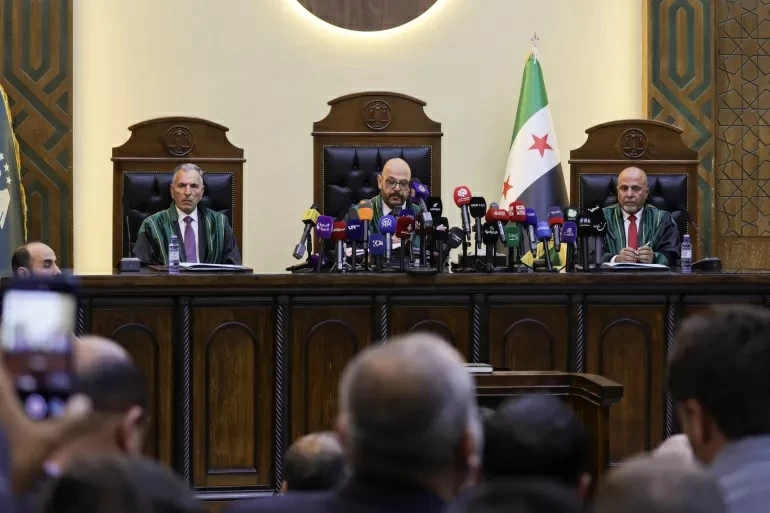
أطلقت الهيئة الوطنية للعدالة الانتقالية في سورية سلسلة محاكمات جديدة لمتهمين بارتكاب جرائم خلال فترة حكم نظام بشار الأسد المخلوع، بالتزامن مع تسريع وزارة العدل خطوات مسار العدالة الانتقالية، بعد نحو أسبوع من احتجاجات شعبية، طالبت بتسريع محاسبة مرتكبي الانتهاكات.
استجابة لمطالب الشارع
وأعلن مدير إدارة المحاسبة والمساءلة في «الهيئة الوطنية للعدالة الانتقالية» رديف مصطفى، بدء المحاكمات، اليوم (الإثنين)، بحق المتهم عبدالناصر براق، على أن تعقد جلسة جديدة لمحاكمة المتهم عاطف نجيب، غداً الثلاثاء.
وللمرة الأولى تبدأ الأربعاء القادم، جلسة محاكمة المتهم وسيم الأسد، تليها أول جلسة لمحاكمة المفتي السابق لنظام الأسد أحمد بدرالدين حسون.
وشهدت وزارة العدل، أمس (الأحد)، عقد اجتماع ترأسه الوزير مظهر الويس، بحضور جميع المحامين العامين على مستوى سورية؛ لمناقشة الأوضاع الأخيرة والمطالب الشعبية بتسريع إجراءات العدالة الانتقالية.
وأسفر الاجتماع عن قرارات أبرزها تخصيص غرف في عدليات المحافظات كافة للنيابة العامة، إلى جانب دوائر للتحقيق وأخرى للإحالة، لتتولى النظر في «الشكاوى المقدمة من المواطنين بشأن الانتهاكات المرتكبة من قبل أزلام النظام البائد»، بحسب ما أوضح المحامي العام في دمشق حسام خطاب.
وقال خطاب إن هذه الغرف ستمكّن المواطن من التقدم بشكوى بحق أي شخص ارتُكب بحقه أو بحق عائلته انتهاك، ليتم مباشرة إحالتها إلى دائرة التحقيق المخصصة للعدالة الانتقالية، وجمع الأدلة والتحقيق فيها، ومن ثم إحالتها إلى محكمة الجنايات المختصة في مركز دمشق. واعتبر المحامي العام بدمشق، أن هذه الخطوة تعد تسريعاً في مسار العدالة واستجابة حقيقية لمطالب الشارع.
تسريع التقاضي وتحقيق المحاسبة
من جانبه، أكد وزير العدل مظهر الويس، أن الاجتماع تفاعل مع المطالب المشروعة التي طالب بها السوريون وتعاطى مع دعوات النخب المجتمعية والأكاديمية التي وضعت الكرة في ملعب سلطة القانون وإحالة الأمر إلى القضاء، لافتا إلى أن «هدف الاجتماعات تأمين إجراءات تضمن سلاسة وسرعة الإجراءات المطلوبة حتى يصل الناس إلى حالة العدالة والمحاسبة المطلوبة وفق سيادة القانون».
وأضاف أن واجب السلطة القضائية أن تكون على قدر المسؤولية وتتعاطى مع هذه الدعوات، مشيراً إلى وجود آليات ووسائل وأساليب تتعاطى مع هذه المرحلة جرى التحضير والترتيب لها مسبقاً.
The National Commission for Transitional Justice in Syria has launched a series of new trials for individuals accused of committing crimes during the rule of the ousted Bashar al-Assad regime, coinciding with the acceleration of the Ministry of Justice's steps in the transitional justice process, following about a week of popular protests demanding a swift accountability for the perpetrators of violations.
In response to public demands
Director of the Accountability and Responsibility Department at the "National Commission for Transitional Justice," Radeef Mustafa, announced the commencement of trials today (Monday) against the accused Abdul Nasser Barak, with a new session for the trial of the accused Atef Najib scheduled for tomorrow, Tuesday.
For the first time, the trial session for the accused Waseem al-Assad will begin next Wednesday, followed by the first session for the trial of the former Mufti of the Assad regime, Ahmad Badreddin Hassoun.
Yesterday (Sunday), the Ministry of Justice held a meeting chaired by Minister Mazhar al-Weiss, attended by all public prosecutors across Syria, to discuss the recent situations and the public demands to expedite transitional justice procedures.
The meeting resulted in decisions, the most notable of which was the allocation of rooms in all provincial courts for the public prosecution, alongside departments for investigation and others for referral, to handle "complaints submitted by citizens regarding violations committed by the remnants of the fallen regime," as clarified by the public prosecutor in Damascus, Hossam Khattab.
Khattab stated that these rooms will enable citizens to file complaints against anyone who has committed violations against them or their families, which will then be directly referred to the investigation department designated for transitional justice, to collect evidence and investigate, and subsequently refer it to the competent criminal court in central Damascus. The public prosecutor in Damascus considered this step a speeding up of the justice process and a genuine response to public demands.
Accelerating litigation and achieving accountability
For his part, Minister of Justice Mazhar al-Weiss confirmed that the meeting engaged with the legitimate demands raised by Syrians and responded to the calls from community and academic elites that placed the ball in the court of the rule of law and referred the matter to the judiciary, noting that "the goal of the meetings is to secure procedures that ensure the smoothness and speed of the required actions so that people can reach the state of justice and accountability required under the rule of law."
He added that it is the duty of the judiciary to be up to the responsibility and to engage with these calls, pointing out that there are mechanisms, means, and methods prepared and arranged in advance to address this phase.