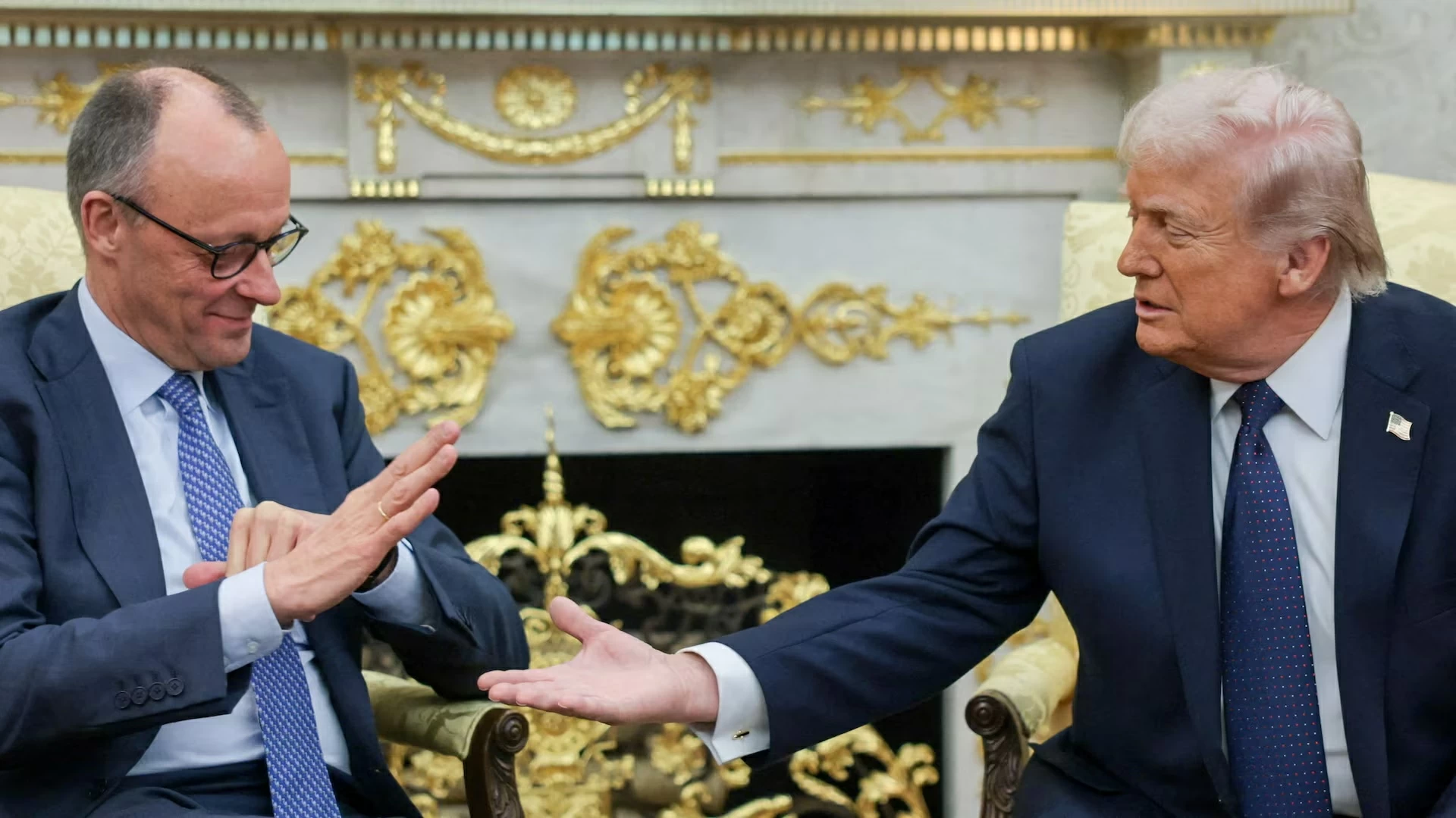
شن الرئيس الأمريكي دونالد ترمب هجوماً جديداً ضد المستشار الألماني فريدريش ميرتس، معتبراً أنه «لا يعرف ما يتحدث عنه»، في ما يتعلق بالملف الإيراني. جاء ذلك عقب انتقادات حادة وجهها الأخير لسياسة واشنطن في التعامل مع الأزمة.
وكتب ترمب عبر منصة «تروث سوشيال»، اليوم الأربعاء، أن ميرتس «يعتقد أنه من المقبول أن تمتلك إيران سلاحاً نووياً»، مضيفًا: «هو لا يعرف ما يتحدث عنه»، في رد مباشر على تصريحات ألمانية أثارت جدلاً واسعاً.
ورغم هذه الانتقادات، وصف ميرتس علاقته بالرئيس الأمريكي بأنها «لا تزال جيدة». وأضاف: «من وجهة نظري، لا تزال علاقتي الشخصية مع الرئيس الأمريكي جيدة. لكنني كنت أشك منذ البداية في أسباب حرب إيران. ولهذا السبب أوضحت الأمر».
وكان المستشار الألماني وجّه انتقادات لافتة للولايات المتحدة، بشأن مسار المفاوضات مع إيران.
وقال إن المسؤولين الأمريكيين توجهوا إلى إسلام أباد دون تحقيق نتائج، ما يعكس، بحسب تعبيره، ضعف الاستراتيجية الأمريكية في إدارة الأزمة.
وأبدى شكوكه بشأن ما وصفه بغياب «استراتيجية خروج واضحة»، محذراً من أن استمرار الصراع قد يكرر سيناريوهات سابقة شبيهة بحربي العراق وأفغانستان.
وتكشف التصريحات المتبادلة عن تصدع متزايد في المواقف بين الولايات المتحدة وبعض حلفائها الأوروبيين، في ظل تصاعد التوتر مع إيران وتعثر الجهود الدبلوماسية.
وكررميرتس بأن بلاده إلى جانب شركائها الأوروبيين، لم تُستشر بشكل كافٍ قبل بدء العمليات العسكرية. وأكد المستشار الألماني أن الأزمة تكلف بلاده «أموالاً طائلة»، في ظل ارتفاع أسعار الطاقة وتأثر الاقتصاد الأوروبي. وتحدث عن استعداد أوروبي للمساهمة في تأمين الملاحة، عبر إرسال كاسحات ألغام إلى المنطقة.
ويتزامن هذا التوتر بين واشنطن وبرلين مع تداعيات اقتصادية متزايدة، مع استمرار الاضطرابات في مضيق هرمز، الذي يُعد شرياناً حيوياً لإمدادات الطاقة العالمية.
وتجىء هذه التوترات في وقت تتراجع فيه آمال التوصل إلى تسوية دبلوماسية، بعد فشل جولات تفاوضية، وإلغاء زيارات مسؤولين أمريكيين.
U.S. President Donald Trump launched a new attack against German Chancellor Friedrich Merz, considering that he "doesn't know what he is talking about" regarding the Iranian file. This came after sharp criticisms directed by the latter towards Washington's policy in dealing with the crisis.
Trump wrote via the "Truth Social" platform on Wednesday that Merz "believes it is acceptable for Iran to have a nuclear weapon," adding: "He doesn't know what he is talking about," in a direct response to German statements that sparked widespread controversy.
Despite these criticisms, Merz described his relationship with the U.S. president as "still good." He added: "From my perspective, my personal relationship with the U.S. president is good. But I have doubted from the beginning the reasons for the Iran war. That is why I clarified the matter."
The German chancellor had made notable criticisms of the United States regarding the course of negotiations with Iran.
He stated that U.S. officials went to Islamabad without achieving results, which reflects, in his words, the weakness of the U.S. strategy in managing the crisis.
He expressed doubts about what he described as the absence of a "clear exit strategy," warning that the continuation of the conflict could repeat previous scenarios similar to the wars in Iraq and Afghanistan.
The exchanged statements reveal an increasing rift in positions between the United States and some of its European allies, amid rising tensions with Iran and stalled diplomatic efforts.
Merz reiterated that his country, along with its European partners, was not sufficiently consulted before the commencement of military operations. The German chancellor confirmed that the crisis is costing his country "a lot of money," amid rising energy prices and the impact on the European economy. He spoke of European readiness to contribute to securing navigation by sending mine sweepers to the region.
This tension between Washington and Berlin coincides with increasing economic repercussions, as disturbances in the Strait of Hormuz continue, which is considered a vital artery for global energy supplies.
These tensions come at a time when hopes for a diplomatic settlement are diminishing, following failed rounds of negotiations and the cancellation of visits by U.S. officials.