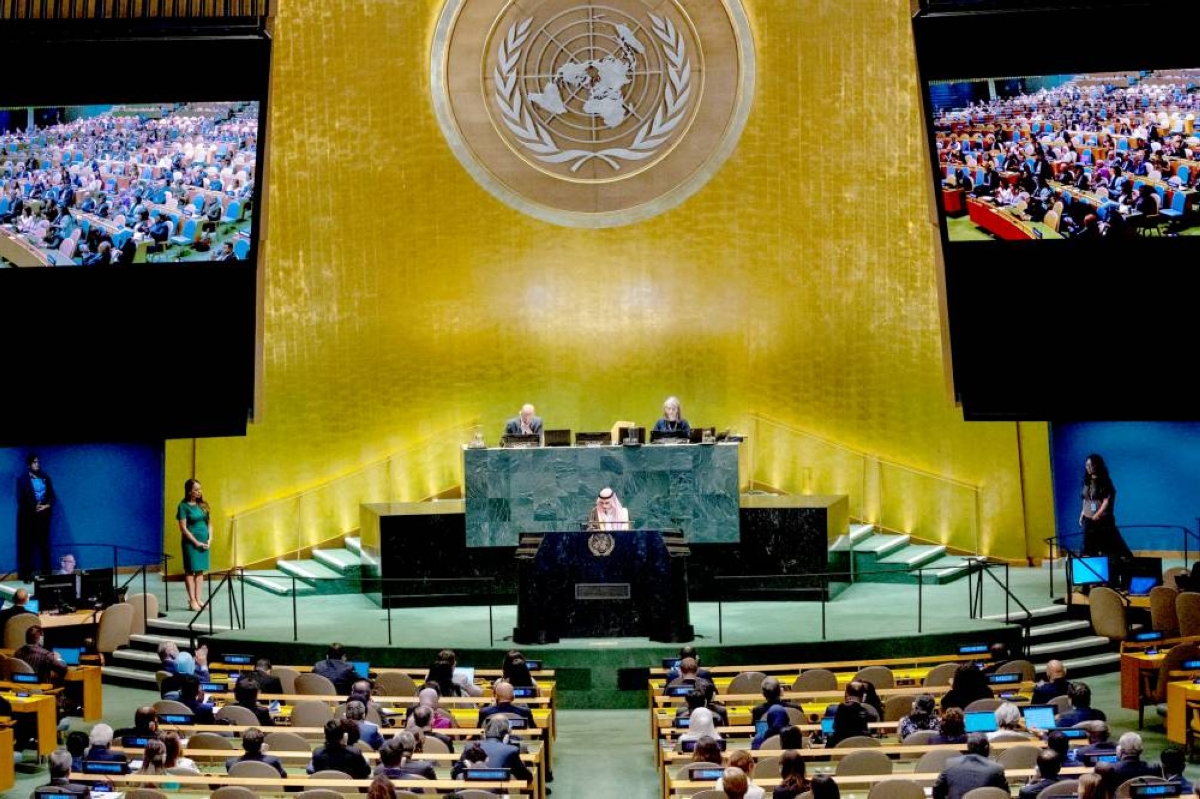
فلسطين عادت، لا عبر ساحات الاشتباك بل على طاولة السياسة الدولية. في مؤتمر حلّ الدولتين بنيويورك، فرضت المملكة حضورها كمحرك لا كمشارك، وفتحت نافذة في جدار الصمت العالمي. تجاهلت واشنطن الدعوة، وقاطعتها تل أبيب، لكن أكثر من 120 دولة ومنظمة تقاطرت إلى اللقاء. لم يكن هذا التجمع مجرد رسالة رمزية بل محاولة جدية لكسر احتكار الغرب لمسار التسوية، وبناء هندسة إقليمية جديدة، عنوانها أن القضية الفلسطينية لم تمت، بل تغيرت قواعد الاشتباك حولها. في هذا اللقاء، حيث اجتمعت الإرادات خارج محور واشنطن – تل أبيب، كانت المملكة هي الطرف الذي حمل على كتفيه مهمة هندسة خارطة طريق عملية، تتجاوز الشعارات، وتضع المجتمع الدولي أمام مسؤولياته. وليس عبثاً أن تترافق هذه الجهود مع استعدادات فرنسية للاعتراف بدولة فلسطين، وتحركات أوروبية تميل نحو ذات الوجهة. فهل يشكل هذا المؤتمر لحظة مفصلية تقود إلى تغيير حقيقي، أم أن الواقع الدولي المتشابك لا يزال يمنح إسرائيل هامش المناورة للهروب من الاستحقاقات؟
تأسيس مرحلة جديدة
حين تحدث وزير الخارجية الأمير فيصل بن فرحان، في الجلسة الافتتاحية، بدا كلامه مؤسساً لمرحلة جديدة: «لا يمكن أن يكون هناك سلام في المنطقة من دون قيام دولة فلسطينية مستقلة عاصمتها القدس الشرقية». لم تكن هذه العبارة جديدة في مضمونها، لكنها جديدة في سياقها وموقعها السياسي. فالرياض لم تعد تكتفي بدور الناصح أو الراعي، بل تحولت إلى فاعل دبلوماسي يطرح ويقترح ويدفع.
ووفق ما رشح من المؤتمر، فإن المملكة لم تكتفِ بالطرح النظري، بل قدمت ملامح خارطة طريق شاملة، تتضمن دعماً مالياً عاجلاً للفلسطينيين، إعادة هيكلة السلطة، ومقاربة أمنية تضمن نزع سلاح الفصائل خارج إطار الدولة. وبين السطور، بدا واضحاً أن السعودية تعد العدة لتحويل شعار «حل الدولتين» من وثيقة في الأرشيف السياسي إلى مشروع تنفيذي تقوده هي، بدلاً من أن تتركه رهينة الانقسامات من هنا أو الرفض من هناك.
باريس تعلن.. وأوروبا تتحرك
في الموازاة، كانت باريس تتحرك بخطى أكثر ثباتاً. فقد أعلن وزير خارجيتها جان-نوال بارو أن فرنسا ستعترف رسمياً بدولة فلسطين في الجمعية العامة القادمة للأمم المتحدة في سبتمبر. خطوة اعتبرها الإعلام الأوروبي «تاريخية»، خصوصاً أنها تأتي من دولة عضو في مجلس الأمن الدولي ومن دول مجموعة السبع. لكن الخطوة الفرنسية لم تحظَ بحماسة موازية من بقية العواصم الأوروبية. ألمانيا، كعادتها، بدت أكثر حذراً، مؤكدة أن «الاعتراف الأحادي لا يصنع السلام»، فيما وضعت لندن خططاً للاعتراف بدولة فلسطينية.
ورغم ذلك، فإن المؤتمر حرك النقاش الأوروبي، وأعاد القضية الفلسطينية إلى واجهة السياسة الخارجية للقارة العجوز. الصحف الأوروبية، من «لوموند» إلى «الغارديان»، تفاعلت مع الطرح السعودي – الفرنسي؛ باعتباره محاولة ناضجة لكسر الجمود، لكنها أيضاً نبهت إلى المعوقات البنيوية: الانقسام الفلسطيني، تعنت إسرائيل، والفراغ الأمريكي المتعمد.
حسابات متباينة لا تفسد التحالفات
المفارقة في مؤتمر نيويورك لم تكن فقط في حضوره الواسع، بل في الغياب اللافت لبعض الأطراف المؤثرة، وعلى رأسها الولايات المتحدة. فواشنطن رغم تحالفها الوثيق مع الرياض وباريس، آثرت عدم الانخراط المباشر، معتبرة أن توقيت المبادرة لا يتناسب مع مقاربتها الحالية لحل الصراع. الموقف الأمريكي عكس تفضيلاً لاستراتيجيات أكثر هدوءاً وتدرجاً، وربما حرصاً على عدم تأزيم العلاقة مع إسرائيل في لحظة دقيقة إقليمياً.
أما إسرائيل، فقد عبّرت بصراحة عن رفضها لفكرة الاعتراف بدولة فلسطينية خارج إطار مفاوضات مباشرة، وزعمت أن المؤتمر لا ينسجم مع ما تعتبره ضرورات الأمن والاستقرار.
لكن غياب واشنطن، على رمزيته، لم يُضعف دينامية المؤتمر بل أعطى مساحة جديدة لحلفاء دوليين، مثل السعودية وفرنسا، لتقديم رؤى مكملة للمسار السياسي، دون أن يعني ذلك خروجاً عن التنسيق أو تضارباً في المسارات. فالمسافة التكتيكية لا تلغي الشراكة الاستراتيجية، بل تؤشر أحياناً إلى توزيع أدوار بين الحلفاء في إدارة ملفات معقدة.
هل من دولة في الأفق؟
بعيداً عن الاحتفالات الدبلوماسية، يطرح السؤال الواقعي نفسه: هل بات حل الدولتين أقرب مما كان عليه؟ الجواب الصادق: نعم، ولكن بشروط معقدة. فما حدث في نيويورك هو اختراق دبلوماسي مهم، لكنه لا يزال في بدايته. المشروع السعودي بحاجة إلى تحصين عربي وفلسطيني أولاً، وتوسيع الدعم الأوروبي ثانياً، وكسر جدار الرفض الإسرائيلي – الأمريكي ثالثاً.
ومع أن الطريق يبدو طويلًا، إلا أن لحظة نيويورك فتحت نافذة سياسية لا يستهان بها؛ فالتحول في موقف فرنسا، واندفاعة السعودية على المبادرة، وتحول الرأي العام الدولي بعد مجازر غزة، كلها مؤشرات توحي أن معادلة 2025 ليست كما كانت قبلها.
أقرب من أي وقت مضى
ربما لن نرى الدولة الفلسطينية غداً، وربما تجهض المبادرات، لكن الفرق هذه المرة أن اللاعب الذي يتحرك هو السعودية بثقلها السياسي والاقتصادي والديني، وأن الشريك هو فرنسا، لا الاتحاد الأوروبي المتردد. ولعل الأهم أن الفلسطينيين أنفسهم باتوا يدركون أن اللحظة السياسية الحالية رغم هشاشتها قد لا تتكرر. وعليه، فالمسألة ليست متى ستعلن الدولة، بل كيف ستفرض على الخريطة التي طالما أنكرت وجودها. في نيويورك، لم تنتظر السعودية أن تُكتب فلسطين من جديد، بل كتبتها بأسلوب مختلف: بصوت الغالب لا بصوت الضحية، وبلغة العالم التي تفهم المصالح أكثر مما تصغي للآلام. هكذا، بدا المؤتمر وكأنه تمرين دولي على الاعتراف وممر إجباري نحو عدالة تأخرت، لكنها لم تُنس.
Palestine has returned, not through the arenas of conflict but at the table of international politics. At the New York two-state solution conference, the Kingdom asserted its presence as a driver, not just a participant, and opened a window in the wall of global silence. Washington ignored the invitation, and Tel Aviv boycotted it, but more than 120 countries and organizations flocked to the meeting. This gathering was not merely a symbolic message but a serious attempt to break the West's monopoly on the settlement process and build a new regional architecture, underscored by the notion that the Palestinian cause has not died; rather, the rules of engagement surrounding it have changed. In this meeting, where wills converged outside the Washington-Tel Aviv axis, the Kingdom was the party that took on the task of engineering a practical roadmap that transcends slogans and places the international community before its responsibilities. It is not coincidental that these efforts coincided with French preparations to recognize the State of Palestine and European movements leaning in the same direction. So, does this conference represent a pivotal moment leading to real change, or does the intertwined international reality still grant Israel the maneuvering room to escape from its obligations?
Establishing a New Phase
When Foreign Minister Prince Faisal bin Farhan spoke in the opening session, his words seemed to establish a new phase: "There can be no peace in the region without the establishment of an independent Palestinian state with East Jerusalem as its capital." This phrase was not new in its content, but it was new in its context and political position. Riyadh is no longer content with merely being an advisor or a sponsor; it has transformed into a diplomatic actor that proposes, suggests, and pushes forward.
According to what emerged from the conference, the Kingdom did not limit itself to theoretical proposals but presented outlines for a comprehensive roadmap that includes urgent financial support for the Palestinians, restructuring the authority, and a security approach that ensures the disarmament of factions outside the framework of the state. Between the lines, it was clear that Saudi Arabia is preparing to transform the slogan of "the two-state solution" from a document in the political archive into an executive project led by it, rather than leaving it hostage to divisions here or rejections there.
Paris Announces.. and Europe Moves
Meanwhile, Paris was moving with more steady steps. French Foreign Minister Jean-Yves Le Drian announced that France would officially recognize the State of Palestine at the upcoming United Nations General Assembly in September. This step was considered "historic" by European media, especially since it comes from a member state of the United Nations Security Council and one of the G7 countries. However, the French step did not receive a parallel enthusiasm from other European capitals. Germany, as usual, appeared more cautious, asserting that "unilateral recognition does not make peace," while London laid out plans to recognize a Palestinian state.
Nevertheless, the conference stirred European discussion and brought the Palestinian cause back to the forefront of the foreign policy of the old continent. European newspapers, from "Le Monde" to "The Guardian," reacted to the Saudi-French proposal as a mature attempt to break the stalemate, but they also warned of structural obstacles: Palestinian division, Israeli obstinacy, and the deliberate American void.
Diverse Calculations Do Not Undermine Alliances
The paradox at the New York conference was not only in its wide attendance but also in the notable absence of some influential parties, foremost among them the United States. Despite its close alliance with Riyadh and Paris, Washington preferred not to engage directly, considering that the timing of the initiative did not align with its current approach to resolving the conflict. The American position reflected a preference for quieter and more gradual strategies, perhaps out of a desire not to exacerbate relations with Israel at a regionally delicate moment.
As for Israel, it openly expressed its rejection of the idea of recognizing a Palestinian state outside the framework of direct negotiations, claiming that the conference does not align with what it considers necessities for security and stability.
However, Washington's absence, despite its symbolism, did not weaken the dynamics of the conference but rather provided a new space for international allies, such as Saudi Arabia and France, to present complementary visions for the political path, without implying a departure from coordination or conflicting trajectories. Tactical distance does not negate strategic partnership; rather, it sometimes indicates a distribution of roles among allies in managing complex files.
Is There a State on the Horizon?
Away from diplomatic celebrations, the realistic question arises: Is the two-state solution closer than it was? The honest answer: Yes, but under complex conditions. What happened in New York is an important diplomatic breakthrough, but it is still in its early stages. The Saudi project needs first to be fortified by Arab and Palestinian support, secondly to expand European backing, and thirdly to break the wall of Israeli-American rejection.
Although the road seems long, the moment in New York opened a significant political window; the shift in France's position, Saudi Arabia's momentum on the initiative, and the shift in international public opinion following the Gaza massacres are all indicators suggesting that the equation for 2025 is not what it was before.
Closer Than Ever
We may not see the Palestinian state tomorrow, and initiatives may be thwarted, but the difference this time is that the player taking action is Saudi Arabia with its political, economic, and religious weight, and the partner is France, not the hesitant European Union. Perhaps more importantly, the Palestinians themselves have come to realize that the current political moment, despite its fragility, may not recur. Therefore, the issue is not when the state will be declared, but how it will be imposed on the map that has long denied its existence. In New York, Saudi Arabia did not wait for Palestine to be rewritten; rather, it wrote it in a different style: in the voice of the victor, not the victim, and in the language of the world that understands interests more than it listens to pains. Thus, the conference appeared as an international exercise in recognition and a mandatory passage towards a delayed justice that has not been forgotten.