


أعلن رئيس الوزراء الماليزي أنور إبراهيم اليوم (الإثنين) موافقة تايلند وكمبوديا على وقف إطلاق نار غير مشروط على الحدود بينهما، والبدء بإجراءات عملياتية لفك الاشتباك والدخول في حوار لحل النزاع، وذلك أعقاب اجتماع ضم رؤساء حكومات الدول الثلاث في بوتراجايا العاصمة الإدارية لماليزيا، بحضور صيني وأمريكي.
وأوضح إبراهيم في بيان أن كمبوديا وتايلند اتفقتا على وقف فوري وغير مشروط لإطلاق النار يبدأ عند منتصف الليل بالتوقيت المحلي، مبيناً أن القادة الإقليميين من الجانبين الكمبودي والتايلندي سيعقدون اجتماعاً (الثلاثاء).
وثمّن كل من رئيس الوزراء الكمبودي هون مانيت والتايلندي بومتام يوشايا شايا الجهود التي بذلتها ماليزيا والولايات المتحدة والصين للتوصل إلى الاتفاق والسماح بعودة الهدوء للمنطقة المتنازع عليها، وعودة المشردين بسبب الاشتباكات إلى ديارهم.
وكان الجانبان تبادلا الاتهامات ببدء أحدث تصعيد على الحدود، وتبادلا اللوم في القتال المستمر، الذي أسفر عن مقتل 35 شخصاً على الأقل، وإصابة أكثر من 200، بحسب أرقام مسؤولين تايلنديين وكمبوديين. ويعود النزاع على الحدود بينهما إلى عقود ماضية.
ويعود أصل التوتر إلى نزاع حدودي طويل الأمد بين البلدين الواقعين في جنوب شرق آسيا، حيث يفصل بينهما خط حدودي يبلغ طوله 817 كيلومتراً، وتوصل الجانبان إلى اتفاق لوقف إطلاق النار في 28 مايو الماضي عقب اشتباكات محدودة، لكن الوضع تدهور مجدداً في 24 يوليو الجاري، ما أدى إلى تجدد القتال وسقوط 32 قتيلاً من الطرفين.
وأعلن الرئيس الأمريكي دونالد ترمب (السبت) أنه تواصل مع قائدي البلدين، وأنهما قررا بدء مفاوضات فورية لوقف إطلاق النار والتوصل إلى سلام دائم.
رئيس الوزراء الماليزي: تايلند وكمبوديا توصلا لاتفاق وقف إطلاق نار غير مشروط
28 يوليو 2025 - 17:11
|
آخر تحديث 28 يوليو 2025 - 17:11
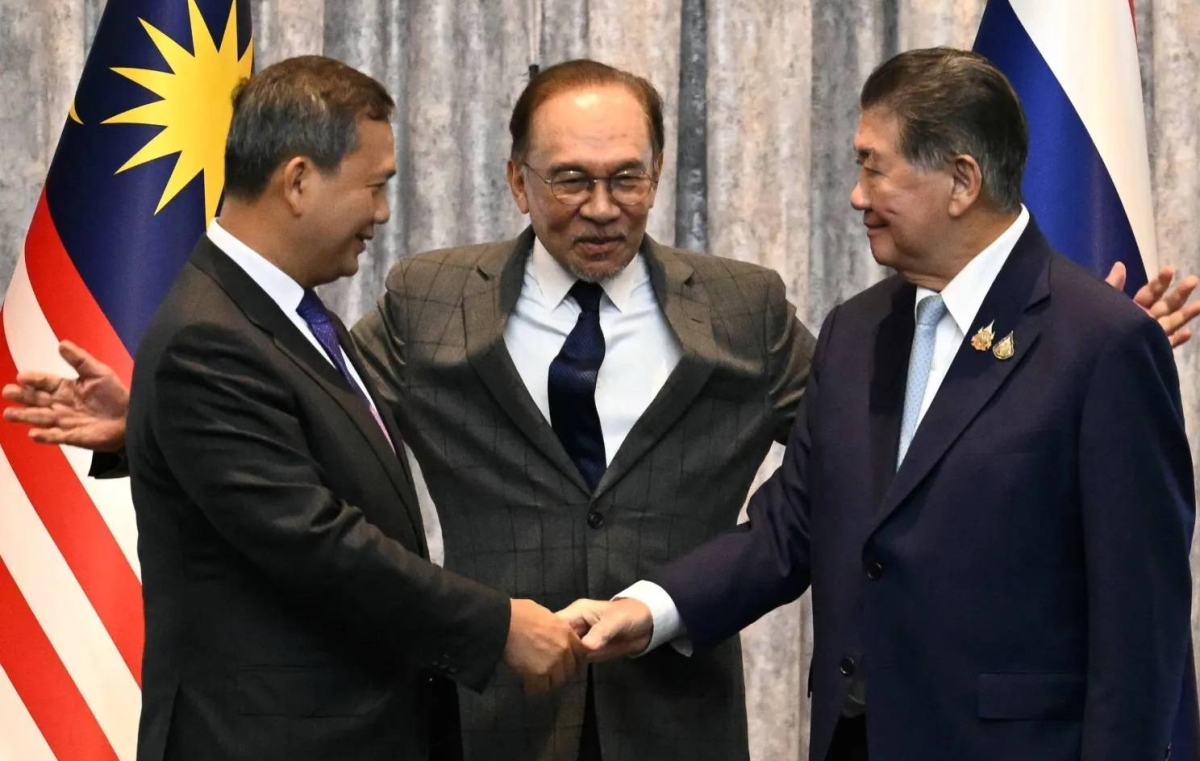
رئيس الوزراء الماليزي يتوسط الزعيمين الكمبودي والتايلندي.


تابع قناة عكاظ على الواتساب
«عكاظ» (جدة) okaz_online@
The Malaysian Prime Minister Anwar Ibrahim announced today (Monday) that Thailand and Cambodia have agreed to an unconditional ceasefire along their border and to initiate operational procedures for disengagement and dialogue to resolve the conflict, following a meeting that included the heads of government of the three countries in Putrajaya, the administrative capital of Malaysia, with Chinese and American presence.
Ibrahim clarified in a statement that Cambodia and Thailand agreed to an immediate and unconditional ceasefire starting at midnight local time, indicating that regional leaders from both the Cambodian and Thai sides will hold a meeting (Tuesday).
Both Cambodian Prime Minister Hun Manet and Thai Prime Minister Prayut Chan-o-cha praised the efforts made by Malaysia, the United States, and China to reach the agreement and allow for a return to calm in the disputed area, as well as the return of those displaced by the clashes to their homes.
The two sides had exchanged accusations of initiating the latest escalation along the border and blamed each other for the ongoing fighting, which has resulted in at least 35 deaths and more than 200 injuries, according to figures from Thai and Cambodian officials. The border dispute between them dates back decades.
The origins of the tension stem from a long-standing border dispute between the two Southeast Asian countries, which are separated by a border line that is 817 kilometers long. The two sides reached a ceasefire agreement on May 28 following limited clashes, but the situation deteriorated again on July 24, leading to renewed fighting and 32 fatalities on both sides.
U.S. President Donald Trump announced (Saturday) that he had communicated with the leaders of both countries, and they decided to begin immediate negotiations for a ceasefire and to reach a lasting peace.
Ibrahim clarified in a statement that Cambodia and Thailand agreed to an immediate and unconditional ceasefire starting at midnight local time, indicating that regional leaders from both the Cambodian and Thai sides will hold a meeting (Tuesday).
Both Cambodian Prime Minister Hun Manet and Thai Prime Minister Prayut Chan-o-cha praised the efforts made by Malaysia, the United States, and China to reach the agreement and allow for a return to calm in the disputed area, as well as the return of those displaced by the clashes to their homes.
The two sides had exchanged accusations of initiating the latest escalation along the border and blamed each other for the ongoing fighting, which has resulted in at least 35 deaths and more than 200 injuries, according to figures from Thai and Cambodian officials. The border dispute between them dates back decades.
The origins of the tension stem from a long-standing border dispute between the two Southeast Asian countries, which are separated by a border line that is 817 kilometers long. The two sides reached a ceasefire agreement on May 28 following limited clashes, but the situation deteriorated again on July 24, leading to renewed fighting and 32 fatalities on both sides.
U.S. President Donald Trump announced (Saturday) that he had communicated with the leaders of both countries, and they decided to begin immediate negotiations for a ceasefire and to reach a lasting peace.


