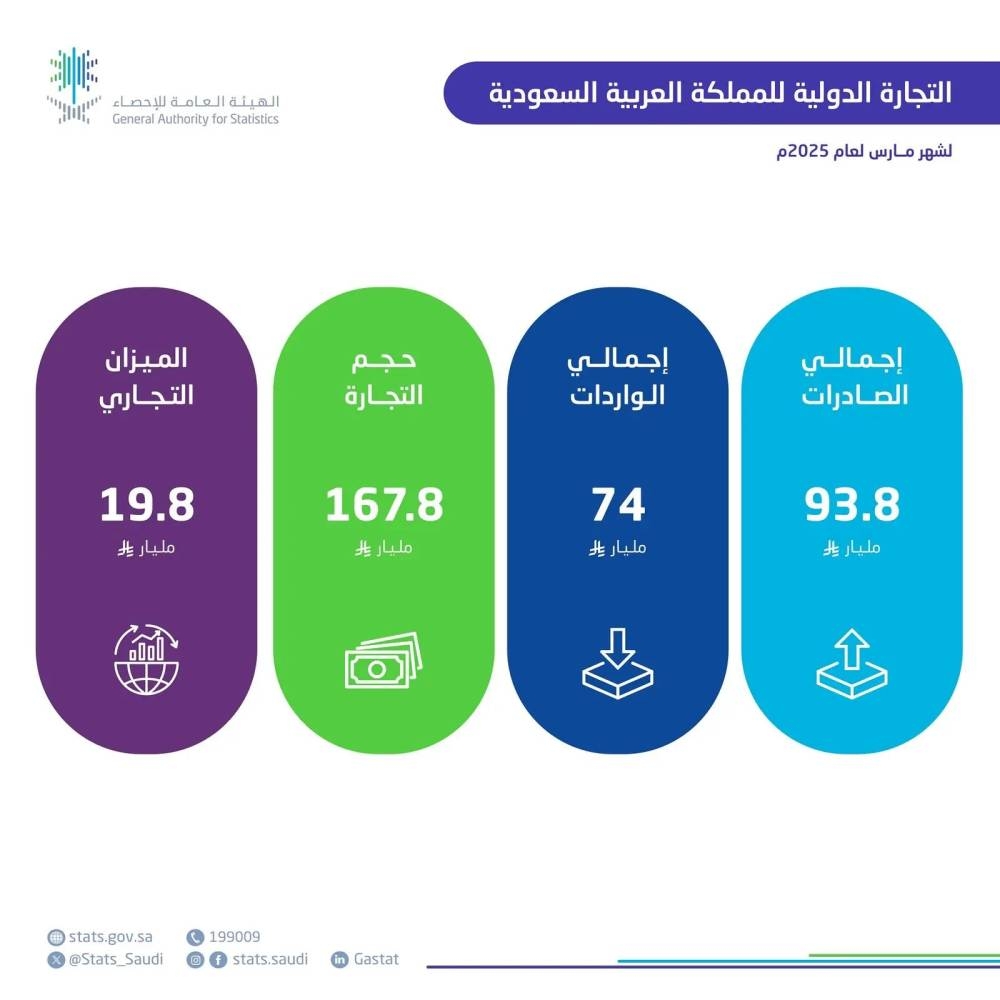
أصدرت الهيئة العامة للإحصاء اليوم نشرة إحصاءات التجارة الدولية السلعية لشهر مارس 2025 والربع الأول من العام ذاته، التي كشفت استمرار نمو الصادرات غير البترولية.
وأظهرت نتائج النشرة أن الصادرات غير البترولية «شاملة إعادة التصدير» سجّلت ارتفاعاً ملحوظاً بنسبة 13.4% خلال الربع الأول 2025 مقارنةً بالربع المماثل من عام 2024، كما حققت نمواً بنسبة 10.7% في مارس 2025 مقارنة بمارس 2024، ما يعكس اتساع مساهمة القطاعات غير النفطية في التجارة الخارجية للمملكة.
في حين أن الصادرات السلعية الكلية سجَّلت انخفاضاً بنسبة 3.2% في الربع الأول من عام 2025 مقارنةً بالفترة ذاتها من عام 2024، بينما بلغت نسبة الانخفاض في شهر مارس 9.8%.
أما الواردات السلعية فقد ارتفعت بنسبة 7.3% خلال الربع الأول 2025، وبنسبة 0.1% في مارس 2025، مقارنةً بالفترات المماثلة من العام السابق.
في حين تراجع الفائض في الميزان التجاري بنسبة 28% في الربع الأول، وبنسبة 34.2% خلال شهر مارس.
وأوضحت نتائج النشرة تحسّن نسبة الصادرات غير البترولية إلى الواردات، حيث بلغت 36.2% في الربع الأول من 2025 مقابل 34.3% في الربع الأول من 2024، كما ارتفعت النسبة في شهر مارس لتصل إلى 36.5% مقابل 33% في مارس 2024.
في المقابل، تراجعت نسبة الصادرات البترولية من إجمالي الصادرات الكلية إلى 71.8% في الربع الأول 2025 مقارنة بـ75.9% في الفترة نفسها من 2024، وإلى 71.2% في مارس مقارنة بـ76.5% في مارس 2024.
وتصدرت «منتجات الصناعات الكيماوية» قائمة سلع الصادرات غير البترولية، حيث شكلت 23.8% من إجمالي الصادرات غير البترولية في الربع الأول، و25.7% في مارس 2025.
في حين كانت «الآلات والأجهزة والمعدات الكهربائية وأجزاؤها» أكبر السلع المستوردة، بنسبة 25.8% في الربع الأول، و26.1% في مارس.
وبيّنت النشرة أن جمهورية الصين الشعبية لا تزال الشريك التجاري الرئيسي للمملكة، حيث استحوذت على 15.7% من إجمالي الصادرات، و26.6% من إجمالي الواردات في الربع الأول 2025، بينما بلغت نسبتها في شهر مارس 15.5% للصادرات، و25.3% للواردات.
يذكر أن إحصاءات التجارة الدولية السلعية تعتمد على السجلات الإدارية من هيئة الزكاة والضريبة والجمارك في ما يخص البيانات غير البترولية، ومن وزارة الطاقة للبيانات البترولية، وتُصنف السلع وفقاً للنظام المنسق لتوصيف السلع الأساسية وترميزها 2022.
The General Authority for Statistics issued today the International Merchandise Trade Statistics Bulletin for March 2025 and the first quarter of the same year, which revealed the continued growth of non-oil exports.
The bulletin's results showed that non-oil exports, including re-exports, recorded a significant increase of 13.4% during the first quarter of 2025 compared to the same quarter of 2024. Additionally, they achieved a growth rate of 10.7% in March 2025 compared to March 2024, reflecting the expanding contribution of non-oil sectors to the Kingdom's foreign trade.
Meanwhile, total merchandise exports recorded a decline of 3.2% in the first quarter of 2025 compared to the same period in 2024, while the decline rate in March was 9.8%.
On the other hand, merchandise imports increased by 7.3% during the first quarter of 2025, and by 0.1% in March 2025, compared to the same periods of the previous year.
At the same time, the surplus in the trade balance decreased by 28% in the first quarter and by 34.2% during March.
The bulletin's results indicated an improvement in the ratio of non-oil exports to imports, reaching 36.2% in the first quarter of 2025 compared to 34.3% in the first quarter of 2024. The ratio also increased in March to 36.5% compared to 33% in March 2024.
Conversely, the ratio of oil exports to total exports decreased to 71.8% in the first quarter of 2025 compared to 75.9% in the same period of 2024, and to 71.2% in March compared to 76.5% in March 2024.
“Chemical industry products” topped the list of non-oil export goods, accounting for 23.8% of total non-oil exports in the first quarter and 25.7% in March 2025.
Meanwhile, “machines, electrical devices, and their parts” were the largest imported goods, accounting for 25.8% in the first quarter and 26.1% in March.
The bulletin indicated that the People's Republic of China remains the Kingdom's main trading partner, accounting for 15.7% of total exports and 26.6% of total imports in the first quarter of 2025, while its shares in March were 15.5% for exports and 25.3% for imports.
It is worth noting that international merchandise trade statistics rely on administrative records from the Zakat, Tax, and Customs Authority for non-oil data, and from the Ministry of Energy for oil data, with goods classified according to the Harmonized System for the description and coding of goods 2022.