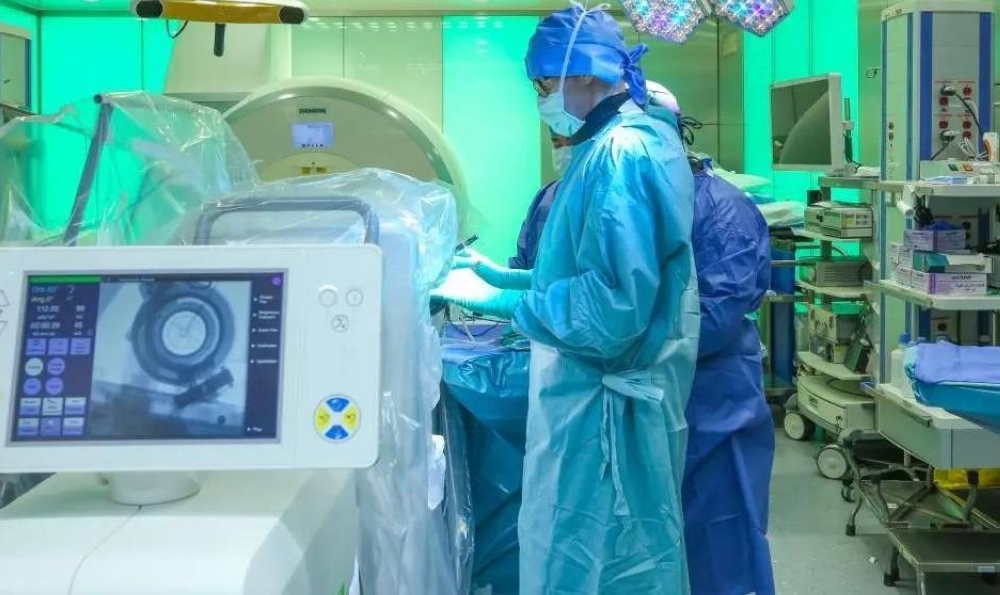
نجح مستشفى الملك فيصل التخصصي ومركز الأبحاث بالرياض في إجراء أول عملية من نوعها في الشرق الأوسط؛ لزرع جهاز ذكي داخل الدماغ، يعمل على تحسين التحكم بالأمراض العصبية المزمنة، من خلال رصد النشاط الكهربائي غير الطبيعي وإرسال نبضات كهربائية دقيقة إلى المناطق المصابة، ما يسهم في تخفيف الأعراض وتقليل الاعتماد على الأدوية، ويُعزز جودة حياة المرضى، ويمنحهم مزيداً من الاستقلالية والاستقرار الصحي.
ويمكّن هذا الابتكار المتقدم المرضى من تحسين السيطرة على الأعراض العصبية، مع إمكانية تقليل جرعات الأدوية بنسبة تصل إلى 50%، ما يخفف آثارها الجانبية، ويعزز جودة الحياة اليومية، خصوصاً لدى المصابين بمرض باركنسون والصرع واضطرابات الحركة.
ويسهم الذكاء الاصطناعي داخل الجهاز في تحليل الإشارات الدماغية بشكل فوري، ليتعرف على الأنماط غير الطبيعية في نشاط الدماغ، ويستجيب تلقائياً بإرسال نبضات كهربائية دقيقة تُعيد التوازن للنشاط العصبي، ما يُمكّن من علاج أكثر دقة ومرونة يتكيف مع حالة كل مريض لحظة بلحظة، دون الحاجة إلى تدخل يدوي مستمر من الفريق الطبي.
ويبدأ أثر الجهاز في الظهور خلال الأسابيع الأولى من الزرع، إلا أن تحقيق الفائدة القصوى يتطلب معايرة دقيقة خلال فترة تتراوح من شهر إلى 3 أشهر، تُضبط خلالها الاستجابة الكهربائية بناءً على الإشارات الدماغية الفعلية التي يسجلها الجهاز.
ويتميز الإجراء باستخدام تقنيات طفيفة التوغل تستغرق بين 3 إلى 5 ساعات فقط، دون الحاجة إلى شقوق جراحية واسعة، ما يقلل من فترة التعافي والمضاعفات المحتملة، ويعزز سرعة عودة المريض إلى حياته اليومية.
King Faisal Specialist Hospital and Research Centre in Riyadh has successfully performed the first operation of its kind in the Middle East; to implant a smart device inside the brain, which works to improve the control of chronic neurological diseases by monitoring abnormal electrical activity and sending precise electrical pulses to the affected areas, contributing to alleviating symptoms and reducing dependence on medications, enhancing the quality of life for patients, and granting them more independence and health stability.
This advanced innovation enables patients to improve control over neurological symptoms, with the potential to reduce medication doses by up to 50%, which alleviates their side effects and enhances the quality of daily life, especially for those suffering from Parkinson's disease, epilepsy, and movement disorders.
The artificial intelligence within the device contributes to the immediate analysis of brain signals, recognizing abnormal patterns in brain activity, and automatically responding by sending precise electrical pulses that restore balance to neural activity, allowing for more accurate and flexible treatment that adapts to each patient's condition moment by moment, without the need for continuous manual intervention from the medical team.
The effects of the device begin to appear within the first weeks of implantation, but achieving maximum benefit requires precise calibration over a period ranging from one month to three months, during which the electrical response is adjusted based on the actual brain signals recorded by the device.
The procedure is characterized by the use of minimally invasive techniques that take only 3 to 5 hours, without the need for extensive surgical incisions, which reduces recovery time and potential complications, and enhances the speed of the patient's return to their daily life.