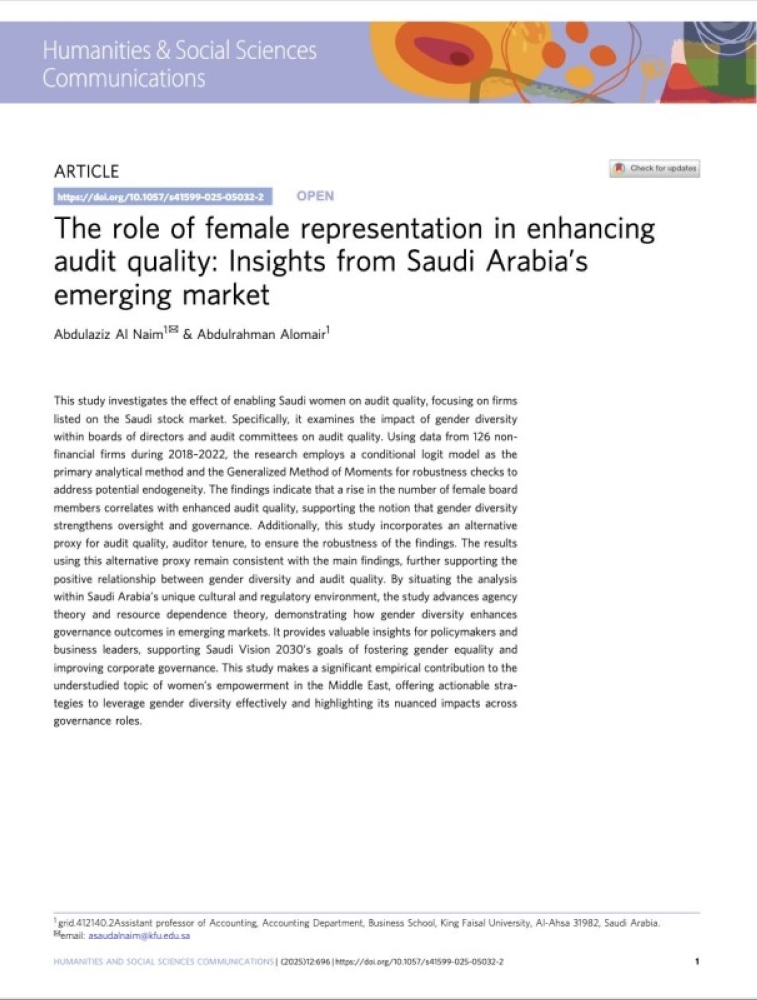
كشفت دراسة أكاديمية حديثة أن تمكين المرأة السعودية في مجالس إدارات الشركات واللجان المختصة بالتدقيق يُسهم بشكل ملموس في تحسين جودة التدقيق المالي والحوكمة المؤسسية داخل السوق المالية السعودية.
وأجريت الدراسة من قبل الباحثين عبدالعزيز النعيم وعبدالرحمن العمير، ونُشرت في مجلة Humanities & Social Sciences Communications العالمية، واستندت إلى تحليل بيانات 126 شركة مالية غير مصرفية مدرجة في السوق السعودية خلال الفترة من 2018 إلى 2022، مستخدمة نماذج تحليلية متقدمة لقياس العلاقة بين تنوع الجنسين وجودة التدقيق.
وأظهرت النتائج وجود علاقة إيجابية واضحة بين ارتفاع عدد النساء في مجالس الإدارة واللجان الرقابية وبين تحسّن جودة التدقيق، ما يعكس دور المرأة في تعزيز الرقابة وتحقيق أعلى معايير الشفافية والحوكمة.
واعتمدت الدراسة أيضاً على مؤشرات بديلة لتقييم جودة التدقيق مثل مدة خدمة المدقق الخارجي، لضمان موثوقية النتائج، التي ظلت ثابتة حتى مع تغير المؤشرات، ما يدعم بقوة فرضية أن التنوع الجندري ينعكس بشكل مباشر على فعالية الرقابة المالية.
وأكد الباحثان أن نتائج هذه الدراسة تأتي في سياق الدعم المتزايد لأهداف رؤية السعودية 2030، خصوصاً في ما يتعلق بتمكين المرأة وتعزيز مشاركتها في مواقع صنع القرار، كما توفر نتائجها أدلة عملية يمكن أن يستفيد منها صناع القرار والقادة التنفيذيون في تحسين الحوكمة داخل الشركات.
وتُعد هذه الدراسة من الإسهامات القليلة التي تتناول موضوع تمكين المرأة وتأثيره المباشر على ممارسات الحوكمة المالية في منطقة الشرق الأوسط، حيث تقدم توصيات إستراتيجية لتعزيز التنوع وتوظيفه بفعالية لتحقيق بيئة رقابية أقوى وأكثر شفافية.
A recent academic study revealed that empowering Saudi women in corporate boards and audit committees significantly contributes to improving the quality of financial auditing and corporate governance within the Saudi financial market.
The study was conducted by researchers Abdulaziz Al-Nuaim and Abdulrahman Al-Omair, and published in the global journal Humanities & Social Sciences Communications. It was based on an analysis of data from 126 non-banking financial companies listed in the Saudi market during the period from 2018 to 2022, using advanced analytical models to measure the relationship between gender diversity and audit quality.
The results showed a clear positive relationship between the increasing number of women on boards and oversight committees and the improvement in audit quality, reflecting the role of women in enhancing oversight and achieving the highest standards of transparency and governance.
The study also relied on alternative indicators to assess audit quality, such as the tenure of the external auditor, to ensure the reliability of the results, which remained consistent even with changes in the indicators. This strongly supports the hypothesis that gender diversity directly impacts the effectiveness of financial oversight.
The researchers confirmed that the findings of this study come in the context of the increasing support for the goals of Saudi Vision 2030, particularly regarding the empowerment of women and enhancing their participation in decision-making positions. Its results provide practical evidence that decision-makers and executive leaders can utilize to improve governance within companies.
This study is one of the few contributions addressing the topic of women's empowerment and its direct impact on financial governance practices in the Middle East, offering strategic recommendations to enhance diversity and effectively leverage it to achieve a stronger and more transparent oversight environment.