يواصل مشروع قياس وتحقيق رضا المستفيدين من خدمات الأجهزة الحكومية والعامة بالمنطقة الشرقية، تنفيذ سلسلة برامج لقاءاته التوعوية وورش العمل عن بعد، والتي تستهدف الرفع من مهارات الموظفين بشكل عام، ومقدمي الخدمة بشكل خاص لتطوير مهاراتهم في تجويد الخدمات المقدمة للمستفيدين.
وفي هذا الصدد أشار المدير التنفيذي للمشروع عبدالإله الظفر، إلى إطلاق المشروع صباح (الأربعاء) ورشة عمل تضمنت ثلاث جلسات والتي يرمي من خلالها مشروع رضا المستفيدين ضمن أهدافه لبناء مزيداً من الشركات المجتمعية ومد جسور التعاون مع الأجهزة الحكومية والعامة بالمنطقة لتقديم حزمة من اللقاءات التوعوية وورش العمل التي ترمي في مجملها إلى الرفع من مهارات الموظفين العاملين بالخطوط الأمامية لخدمة المستفيدين.
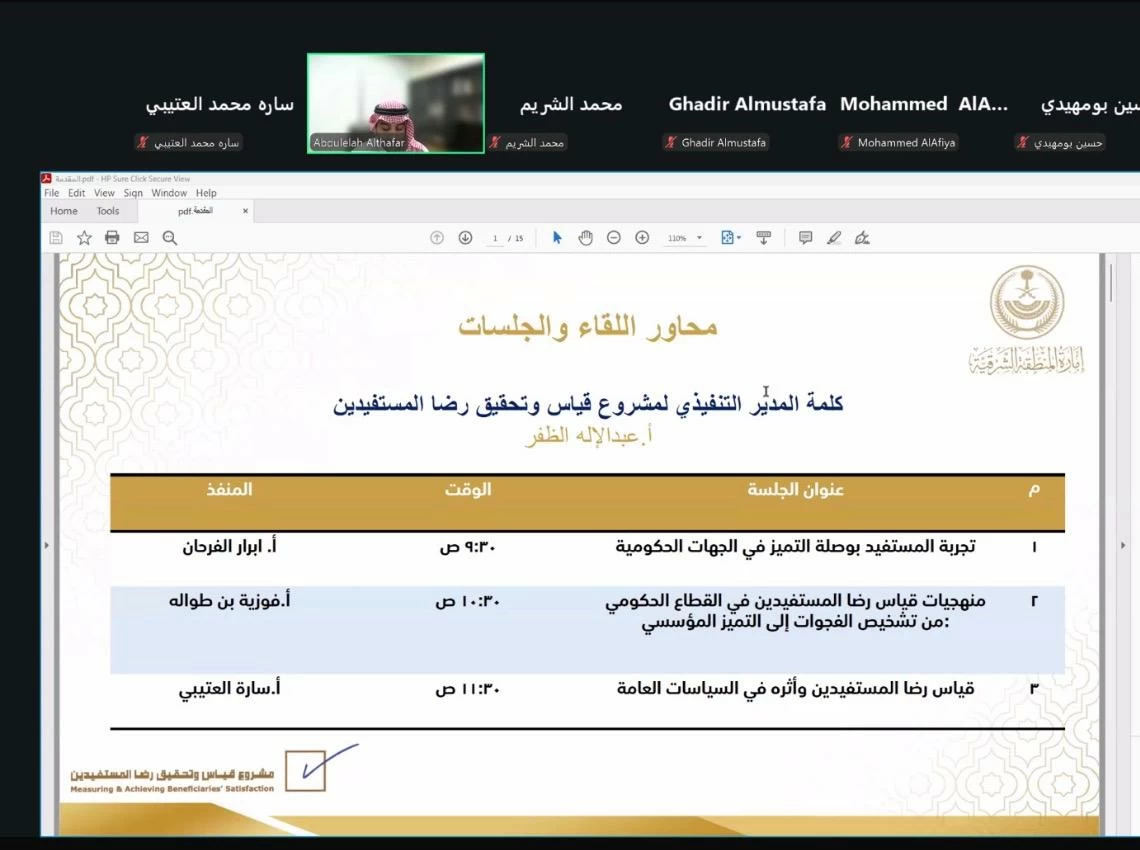
ولفت المدير التنفيذي للمشروع عبدالإله الظفر، إلى انطلاق الجلسة الأولى من ورشة العمل والتي وقفت على تقديمها رئيس قسم خدمة العملاء بفرع معهد الإدارة العامة بالمنطقة الشرقية الأستاذة أبرار الفرحان، بعنوان تجربة المستفيد «بوصلة التميز في الجهات الحكومية» استعرضت خلالها عدة محاور رئيسية بدءاً من تسليط الضوء على: أهمية تجربة المستفيد، فهم المستفيد، رحلة المستفيد، تصميم التجربة، الثقافة والحوكمة، كذلك وقوف المدربة على محور «الجودة والرضا وصولاً إلى التجربة» إضافة إلى محور «التوقع والانطباع»، مروراً بالوقوف على تكامل الهرم الإداري في توجيه «بوصلة التميز»، إضافة إلى مناقشة التكامل بين التجربة الرقمية والميدانية.
كما أشار في الوقت نفسه إلى مواصلة الورشة تقديم جلستها الثانية، والتي جاءت بعنوان منهجيات قياس رضا المستفيدين في القطاع الحكومي «من تشخيص الفجوات.. إلى التميز المؤسسي» والتي وقفت على تقديمها الأستاذة فوزية بنت طواله، باحثة دكتوراه إعلام رقمي وتقنية الاتصال، حيث استعرضت خلالها عدة تساؤلات منها: ما المقصود برضا المستفيد، لماذا نقيس رضا المستفيدين، كذلك طرق قياس رضا المستفيد، الاستبانات الدورية وقياس الأداء الفعلي، فجوة التوقعات وعدم التطابق، المتسوق الخفي والشكوى والتغذية الراجعة، مقارنة مختصرة بين المنهجيات، من قياس الرضا إلى التميز المؤسسي، تحليل المشكلة، تحديد الأولويات، كيف ندعم التحسين من خلال تجارب دولية، مروراً باستعراضها حزمة من التوصيات لتفعيل القياس.
ولفت المدير التنفيذي للمشروع الظفر، إلى الجلسة الثالثة والختامية من ورشة العمل التي وقفت على تقديمها الأستاذة سارة العتيبي عضو هيئة تدريب قسم الإدارة والسياسات العامة فرع معهد الإدارة العامة بالمنطقة الشرقية، وجاءت بعنوان قياس رضا المستفيدين وأثره في السياسات العامة «من الرقم في التقرير .. إلى القرار الذي يغير الخدمة»، وأضافت تناولت خلالها تسليط الضوء على: طرق القياس «الاستطلاع – الشكاوى والملاحظات – المتسوق الخفي – مجموعات التركيز»، كذلك استعراضها لدورة السياسة العامة «التشخيص وتحديد الأولويات، صياغة الخيارات، اختيار وتطوير الحلول، التنفيذ والمتابعة، التقييم والتعديل»، وصولاً إلى مناقشة أبرز مهارات التحسين والتطوير المستمر في تقديم الخدمة، إضافة إلى تسليطها الضوء عن قرب على نشر ثقافة التحسين المستمر وربطها بتجويد خدمات المستفيدين.
عمل طموح:
وفي ختام البرنامج تقدم المدير التنفيذي للمشروع عبدالإله الظفر، بالشكر الوافر والامتنان للأمير سعود بن نايف بن عبدالعزيز آل سعود أمير المنطقة الشرقية رئيس مجلس إدارة المشروع، ونائبه الأمير سعود بن بندر بن عبدالعزيز آل سعود نائب رئيس مجلس إدارة المشروع، (حفظهم الله)، على دعمهما الكبير والمتواصل لأعمال المشروع، ولرئيس اللجنة التنفيذية للمشروع الأمير فهد بن عبدالله بن جلوي آل سعود، لمتابعته الدقيقة لمراحل سير المشروع وأعمال اللجان مما كان له بالغ الأثر في توفير كافة عوامل النجاح لتحقيق الأهداف المرجوة، والشكر موصول لفرع معهد الإدارة العامة بالمنطقة الشرقية على تعاونه مع المشروع في تنفيذ البرنامج والشكر موصول لكافة مقدمي البرنامج على جهودهم المبذولة وفقاً لما خطط له، ولكافة المستهدفين بالبرنامج.
The project for measuring and achieving the satisfaction of beneficiaries from government and public services in the Eastern Province continues to implement a series of awareness meetings and remote workshops, which aim to enhance the skills of employees in general, and service providers in particular, to develop their skills in improving the services provided to beneficiaries.
In this regard, the executive director of the project, Abdul Ilah Al-Dhafir, pointed out the launch of a workshop on Wednesday morning that included three sessions. Through this workshop, the Beneficiary Satisfaction Project aims to build more community partnerships and strengthen cooperation with government and public agencies in the region to provide a package of awareness meetings and workshops that generally aim to enhance the skills of frontline employees serving beneficiaries.
The executive director of the project, Abdul Ilah Al-Dhafir, noted the start of the first session of the workshop, which was presented by the head of the Customer Service Department at the branch of the Public Administration Institute in the Eastern Province, Ms. Abrar Al-Farhan, titled "The Beneficiary Experience: A Compass for Excellence in Government Entities." During this session, she reviewed several key topics, starting with highlighting: the importance of the beneficiary experience, understanding the beneficiary, the beneficiary journey, experience design, culture and governance, as well as addressing the topic of "quality and satisfaction leading to the experience," in addition to the topic of "expectation and impression," and discussing the integration of the administrative pyramid in directing the "Compass for Excellence," along with discussing the integration between the digital and field experience.
At the same time, he pointed out the continuation of the workshop with its second session, titled "Methodologies for Measuring Beneficiary Satisfaction in the Government Sector: From Diagnosing Gaps to Institutional Excellence," which was presented by Ms. Fawzia bint Tawalah, a PhD researcher in Digital Media and Communication Technology. During this session, she addressed several questions, including: What is meant by beneficiary satisfaction? Why do we measure beneficiary satisfaction? Also, methods for measuring beneficiary satisfaction, periodic surveys and measuring actual performance, the gap between expectations and reality, mystery shopping, complaints, and feedback, a brief comparison between methodologies, from measuring satisfaction to institutional excellence, problem analysis, prioritization, how to support improvement through international experiences, and she reviewed a set of recommendations to activate measurement.
The executive director of the project, Al-Dhafir, highlighted the third and final session of the workshop, which was presented by Ms. Sarah Al-Otaibi, a member of the training staff in the Department of Management and Public Policies at the branch of the Public Administration Institute in the Eastern Province. This session was titled "Measuring Beneficiary Satisfaction and Its Impact on Public Policies: From the Number in the Report to the Decision That Changes the Service." She added that she focused on: measurement methods (surveys – complaints and observations – mystery shopping – focus groups), as well as reviewing the public policy cycle (diagnosis and prioritization, formulating options, selecting and developing solutions, implementation and follow-up, evaluation and modification), leading to a discussion of the most prominent skills for continuous improvement and development in service delivery, in addition to closely highlighting the dissemination of a culture of continuous improvement and linking it to enhancing the quality of services for beneficiaries.
Aspirational Work:
At the conclusion of the program, the executive director of the project, Abdul Ilah Al-Dhafir, expressed his sincere thanks and gratitude to Prince Saud bin Naif bin Abdulaziz Al Saud, the Emir of the Eastern Province and Chairman of the Project Board, and his deputy, Prince Saud bin Bandar bin Abdulaziz Al Saud, Vice Chairman of the Project Board (may God protect them), for their significant and continuous support for the project's activities, and to the chairman of the executive committee of the project, Prince Fahd bin Abdullah bin Jalawi Al Saud, for his meticulous follow-up of the project's progress and the work of the committees, which had a great impact in providing all the success factors to achieve the desired goals. Thanks were also extended to the branch of the Public Administration Institute in the Eastern Province for its cooperation with the project in implementing the program, and to all program presenters for their efforts according to the planned agenda, and to all those targeted by the program.