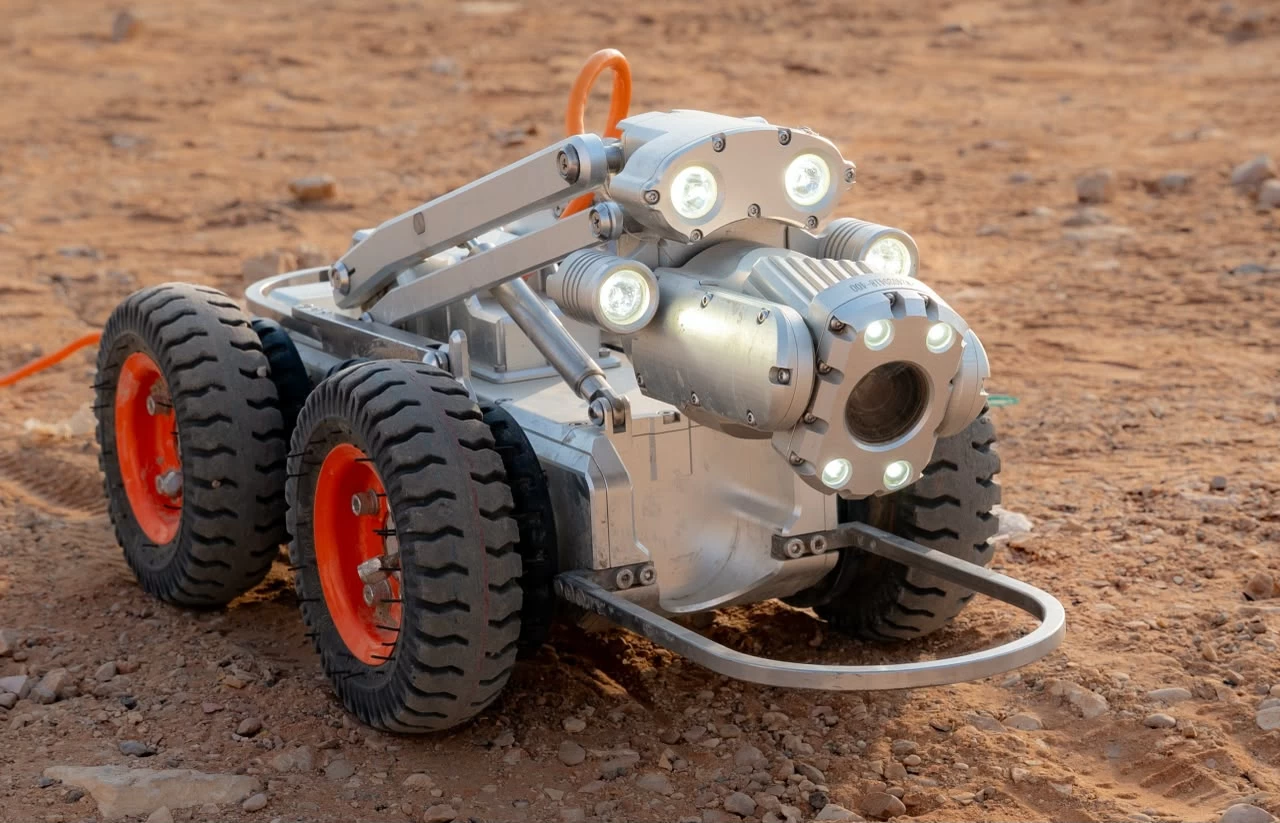
أطلقت الهيئة العامة للطرق روبوتاً متطوراً لفحص العبّارات الأنبوبية؛ بهدف رفع كفاءة صيانة الطرق وتقييم الأصول، وتعزيز جودة البنية التحتية والسلامة المرورية، ضمن جهودها لتطوير قطاع الطرق وتحقيق مستهدفاته، ومن بينها خفض وفيات الحوادث المرورية إلى أقل من خمس حالات لكل 100 ألف نسمة، ومواءمة شبكة الطرق مع معايير السلامة الدولية وفق البرنامج الدولي لتقييم الطرق (IRAP).
وأوضحت الهيئة أن الروبوت يعمل بتقنية الدوائر التلفزيونية المغلقة (CCTV)، ومزوّد بكاميرات عالية الدقة (4K) للرؤية الأمامية والخلفية، وإضاءة مساعدة، وأجهزة لقياس المسافات، بما يتيح توثيق الحالة الإنشائية والتشغيلية للعبّارات بدقة، مع إمكانية الدوران بزاوية 360 درجة والانقلاب بزاوية 180 درجة، والتكبير حتى 10 مرات، ونقل الصور مباشرة إلى وحدة التحكم.
وبيّنت أن الروبوت يستطيع العمل داخل العبّارات بأقطار وظروف تشغيلية مختلفة، وتصوير العيوب وتحديد مواقعها، فيما يتولى برنامج مدمج رصد التشققات والتشوهات والانسدادات والترسبات والتمزقات تلقائياً، وتحليل بيانات الفحص وإصدار تقارير تفصيلية تدعم القرارات الفنية والتشغيلية.
وأكدت الهيئة أن توظيف هذه التقنية يسهم في تقليل الحاجة إلى دخول العاملين البيئات المغلقة والخطرة، ورفع دقة تشخيص الأصول، وتسريع الصيانة الوقائية ومعالجة الملاحظات قبل تفاقمها، بما يعزز موثوقية شبكة الطرق وكفاءتها.
The Public Authority for Roads has launched an advanced robot for inspecting tube bridges; aimed at enhancing the efficiency of road maintenance and asset evaluation, and improving the quality of infrastructure and traffic safety, as part of its efforts to develop the road sector and achieve its targets, including reducing traffic accident fatalities to less than five cases per 100,000 people, and aligning the road network with international safety standards according to the International Road Assessment Programme (IRAP).
The Authority explained that the robot operates using closed-circuit television (CCTV) technology, and is equipped with high-definition (4K) cameras for front and rear viewing, auxiliary lighting, and distance measurement devices, allowing for accurate documentation of the structural and operational condition of the bridges, with the ability to rotate 360 degrees and tilt 180 degrees, zoom in up to 10 times, and transmit images directly to the control unit.
It indicated that the robot can operate inside bridges with varying diameters and operational conditions, capturing defects and pinpointing their locations, while an integrated program automatically monitors cracks, deformations, blockages, deposits, and tears, analyzes inspection data, and generates detailed reports that support technical and operational decisions.
The Authority confirmed that employing this technology contributes to reducing the need for workers to enter confined and hazardous environments, enhancing the accuracy of asset diagnosis, and accelerating preventive maintenance and addressing observations before they worsen, thereby improving the reliability and efficiency of the road network.