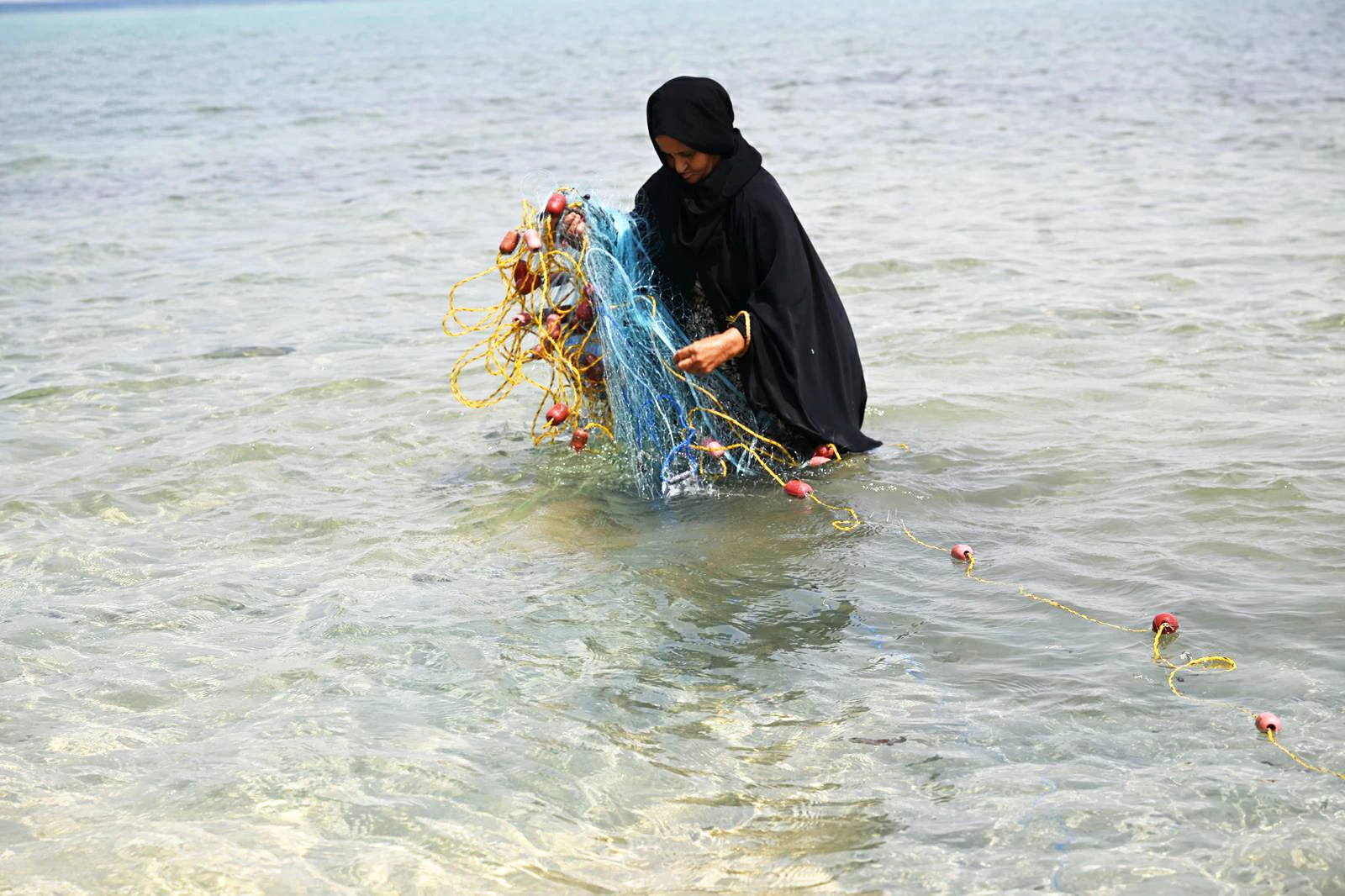
للبحر في جزر فرسان حكايات لا تنتهي، وللنساء فيه نصيب من الرزق والمعرفة وذاكرة المكان. هناك، تعلّمت عنبرة قاسم الصيد على يد جدّتها قبل أكثر من أربعة عقود، ومضت مع الأيام تحمل أسرار المهنة، من التقاط الرزق من البحر إلى إعداده وحفظه، حتى أصبحت اليوم تنقل ما تعلّمته إلى شابات يرغبن في السير على خطاها.
هذه الحكاية المحلية، وجدت طريقها إلى العالم عبر كتاب طهي أصدرته منظمة الأغذية والزراعة للأمم المتحدة «الفاو»، احتفاءً بالسنة الدولية للمزارعات 2026، ليعرّف بتجربة صيّادات جزر فرسان بمنطقة جازان، ويبرز دور المرأة في إنتاج الغذاء وحماية المعارف التقليدية واستمرار المهن المتوارثة.
في تجربة عنبرة، لا ينفصل الصيد عن تفاصيل الحياة اليومية؛ فالمعرفة تبدأ من البحر، وتمتد إلى العناية بالأسماك وتجهيزها، ثم حفظها بطرائق توارثتها الأسر، لتصل في النهاية إلى المائدة. ومن أبرز ملامح هذا الموروث الأسماك المملّحة والمجفّفة على الطريقة السعودية، المصحوبة بالسلطة، في وصفة تختزن جانباً من ذاكرة الغذاء في فرسان وجازان.
لكن الحكاية لا تتوقف عند استعادة الماضي؛ فالمهنة تمثل مصدراً للغذاء والدخل، وباباً لفرص اقتصادية تسعى الصيّادات إلى تطويرها عبر تحسين جودة المصيد والمنتجات، ونقل الخبرة إلى الجيل الجديد. وتدعم هذه الجهود مبادرات برنامج التنمية الريفية الزراعية المستدامة، الذي تنفذه «الفاو» بالتعاون مع وزارة البيئة والمياه والزراعة، لتطوير مهارات الصيد الحرفي وحفظ الأسماك، مع مراعاة استدامة الموارد البحرية.
وبين يدٍ تعلّمت من جدّتها، وأخرى شابة تتعلّم اليوم، تستمر الحكاية؛ حكاية امرأة جعلت من البحر مهنةً، ومن المعرفة أمانةً، ومن الموروث طريقاً نحو المستقبل. ومن فرسان، تعبر هذه الخبرة إلى صفحات كتاب عالمي، شاهدةً على حضور المرأة السعودية في صناعة الغذاء وصون التراث وفتح آفاق جديدة للأجيال القادمة.
The sea in the Farasan Islands has endless tales, and women have their share of sustenance, knowledge, and the memory of the place. There, Anbara Qasim learned fishing from her grandmother over four decades ago, and as the days went by, she carried the secrets of the profession, from catching sustenance from the sea to preparing and preserving it, until today she passes on what she learned to young women who wish to follow in her footsteps.
This local story found its way to the world through a cookbook published by the Food and Agriculture Organization of the United Nations (FAO), in celebration of the International Year of Women Farmers 2026, to introduce the experience of the female fishers of the Farasan Islands in the Jazan region, highlighting the role of women in food production, protecting traditional knowledge, and continuing inherited professions.
In Anbara's experience, fishing is intertwined with the details of daily life; knowledge begins at sea, extends to caring for and preparing the fish, and then preserving it using methods passed down through families, ultimately reaching the table. Among the most notable features of this heritage are the salted and dried fish prepared in the Saudi way, accompanied by salad, in a recipe that holds a part of the food memory in Farasan and Jazan.
However, the story does not stop at recalling the past; the profession represents a source of food and income, and a gateway to economic opportunities that the fishers seek to develop by improving the quality of the catch and products, and transferring expertise to the new generation. These efforts are supported by initiatives from the Sustainable Agricultural Rural Development Program, implemented by the FAO in collaboration with the Ministry of Environment, Water, and Agriculture, to develop artisanal fishing skills and fish preservation, while considering the sustainability of marine resources.
With one hand learning from her grandmother and the other young hand learning today, the story continues; the story of a woman who made the sea a profession, knowledge a trust, and heritage a path to the future. From Farasan, this experience crosses into the pages of a global book, witnessing the presence of Saudi women in food production, preserving heritage, and opening new horizons for future generations.