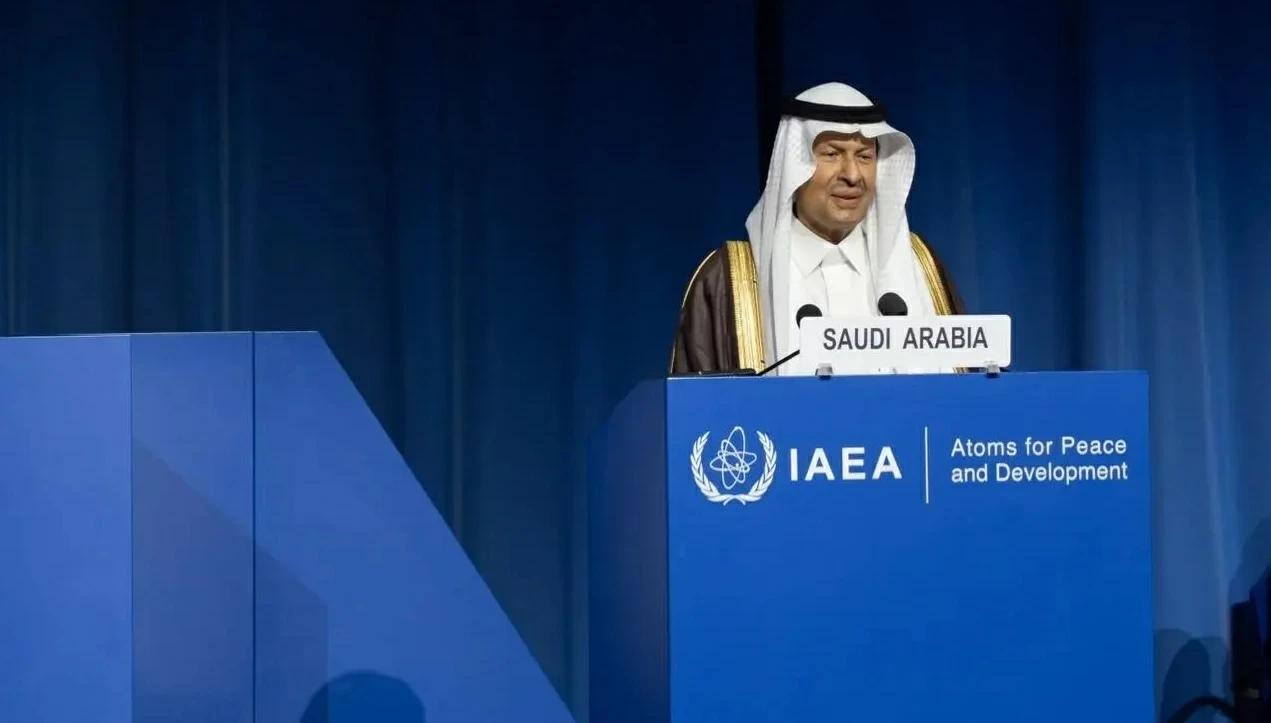
ألقى وزير الطاقة وزير الصناعة والثروة المعدنية رئيس مجلس إدارة مدينة الملك عبدالله للطاقة الذرية والمتجددة، رئيس مجلس إدارة هيئة الرقابة النووية والإشعاعية الأمير عبدالعزيز بن سلمان بن عبدالعزيز، كلمة السعودية في المؤتمر العام السبعين للوكالة الدولية للطاقة الذرية، المنعقد في العاصمة النمساوية فيينا، بمشاركة الدول الأعضاء وعدد من المنظمات والجهات الدولية المعنية بقطاع الطاقة الذرية.
ونقل في مستهل الكلمة اعتزاز المملكة بالدور المحوري، الذي تضطلع به الوكالة الدولية للطاقة الذرية، في دعم الدول الأعضاء، وتعزيز الاستخدامات السلمية للطاقة النووية، وترسيخ مبادئ الأمان والأمن والضمانات، مقدمًا تهنئته لرئيس الوكالة بتوليه رئاسة أعمال الدورة السبعين للمؤتمر العام.
تطوير قدرات معالجة وفصل المعادن الأرضية النادرة
وقال وزير الطاقة: «كشفت أعمال الاستكشاف والدراسات الجيولوجية، في مشروع جبل صايد، في منطقة المدينة المنورة، عن موارد تقديرية تبلغ نحو 114 مليون طن من الخام، الذي يحتوي على تركيزاتٍ مرتفعة من المعادن الأرضية النادرة، خاصة العناصر الثقيلة منها، مصحوبة بتركيزاتٍ واعدة من اليورانيوم، الأمر الذي يضع هذا المشروع بين أهم مواقع موارد المعادن الأرضية النادرة الجاري تطويرها على مستوى العالم، وقد تعزز هذا التوجه خلال زيارة ولي العهد، إلى الولايات المتحدة الأمريكية، في نوفمبر من عام 2025م، حيث وقع البلدان إطارًا للتعاون في مجال المعادن الحرجة، وتأمين سلاسل الإمداد أعقبته شراكة بين شركة التعدين العربية السعودية»معادن«وشركة MP Materials الأمريكية، لتطوير قدرات معالجة وفصل المعادن الأرضية النادرة، وإنتاج اليورانيوم المُصاحب».
وأشار إلى مواصلة المملكة جهودها من خلال مبادرة مسح الغطاء الرسوبي، لاستكشاف المزيد من خامات اليورانيوم من مصادره التقليدية، مفيدًا أن الثروات تكتسب أهمية خاصة عندما يُنظر إليها ضمن منظومة أوسع من المقومات التي تتمتع بها المملكة وتجمع بين موارد معدنية واعدة، وإمدادات طاقة تنافسية، وبنية تحتية متطورة، وقدرات صناعية واستثمارية متنامية، وموقع إستراتيجي، وشراكات دولية فاعلة.
طموح السعودية لا يقف عند إنتاج الخامات
وأكد الأمير عبدالعزيز بن سلمان أن طموح المملكة لا يقف عند إنتاج الخامات، أو تصدير المُركزات، بل يتجاوز ذلك إلى بناء سلسلة قيمةٍ، اقتصادية وصناعية متكاملة، لجميع المعادن، تبدأ من الاستكشاف والتعدين، وتمر بالمعالجة والفصل والتكرير، وإنتاج أكاسيد العناصر الأرضية النادرة، واستخلاص اليورانيوم المصاحب وتنقيته، وصولًا إلى إنتاج الكعكة الصفراء، وتطوير سلسلة القيمة المرتبطة بها، وفقًا للجدوى الاقتصادية، بأعلى معايير الشفافية، وفي إطار التزامات المملكة الدولية.
وأفاد أن المقومات تختلف من دولة إلى أخرى، والنظر إلى خيارات الدول من خلال نموذج واحد، لا يعكس بصورة كاملة اختلاف مواردها وقدراتها وظروفها الاقتصادية وأولوياتها الوطنية، وتكتسب هذه المسألة أهمية خصوصاً عند المقارنة بدول أخرى في المنطقة لا تتوافر لديها قاعدة الموارد ذاتها، أو لا تمتلك القدرات والصناعات المرتبطة بها بالقدر نفسه، مفيدًا أن تكامل المقومات في المملكة يوفر أساسًا اقتصاديًا وصناعيًا واضحًا للانتقال من مجرد استخراج الموارد إلى بناء سلاسل قيمة متكاملة تعظم قيمتها محليًا.
وبين أن تطوير هذه السلسلة ليس هدفًا منفصلًا عن واقع المملكة الاقتصادي والصناعي، وإنما هو امتدادٌ مباشرٌ له، تدعمه موارد متاحة، وقدرات يجري تطويرها، واستثمارات وشراكات تتحول إلى مشاريعٍ ملموسة على أرض الواقع، ويعكس ذلك نهج المملكة في تعظيم الاستفادة من مقوماتها الوطنية وتحويلها إلى قيمة اقتصادية وصناعية مستدامة، وهذا ما يميز نموذج المملكة عن نماذج أخرى في المنطقة، حيث تختلف قاعدة الموارد، والخيارات الاقتصادية، والترتيبات الوطنية من دولة إلى أخرى.
المملكة تنتهج نهجًا واضحًا يقوم على الشفافية
وشدد أن للمملكة الحق في ممارسة خياراتها في الاستخدامات السلمية للطاقة النووية، التي تسير جنبًا إلى جنب مع أعلى مستويات المسؤولية والشفافية، ويأتي ذلك اتساقًا مع الحق الأصيل للدول الأطراف في معاهدة عدم انتشار الأسلحة النووية، في تطوير واستخدام الطاقة النووية للأغراض السلمية دون تمييز.
وأشار إلى أن المملكة تنتهج نهجًا واضحًا يقوم على الشفافية والانفتاح والتعاون الدولي؛ فهي لا تسعى إلى تطوير برنامجها النووي السلمي بمعزل عن المجتمع الدولي، أو من خلال أنشطة تُدار في مخابئ في الخفاء، أو في منشآت مخفية في أعماق الجبال، بل تعمل على تطوير قدراتها من خلال شراكات دولية موثوقة، تعزز الثقة وتدعم منظومة عدم الانتشار النووي.
شراكة مع أمريكا وترتيبات خاصة للضمانات
وقال: "تمثل الشراكة مع الولايات المتحدة الأمريكية الصديقة نموذجًا لهذا التوجه؛ إذ يمتد التعاون بين البلدين من المعادن الحرجة وتأمين سلاسل الإمداد إلى الاستخدامات السلمية للطاقة النووية، وفي يوليو الماضي، توّج هذا المسار بتوقيع اتفاقية للتعاون في مجال الاستخدامات السلمية للطاقة النووية، المعروفة باتفاقية 123، مؤكدًا أن المملكة في إطار التزاماتها الحالية بموجب اتفاق الضمانات الشاملة، ووفقًا لسياساتها الوطنية المعلنة، ونهجها القائم على الشفافية، وضعت ترتيباتٍ طوعية خصوصاً للضمانات، مع الولايات المتحدة الأمريكية، تتعلق بالتعاون المشترك بين البلدين، إيمانًا منها بأهمية تعزيز هذه الشراكة وترسيخ موثوقيتها، وسيخضع تنفيذ هذه الترتيبات الخاصة للضمانات لإشراف الوكالة الدولية للطاقة الذرية وفقًا لنظامها ودور مجلس محافظي الوكالة حيالها.
وفي ختام كلمته أكد أن المملكة تواصل تعزيز منظومتها الوطنية، وأنظمتها الرقابية للطاقة النووية، وتطبيقاتها، إيمانًا منها بأن بناء الثقة يعتمد على المؤسسات الوطنية، والأُطر التنظيمية الراسخة، والكفاءات الوطنية، كما ستستمر في تعزيز جاهزية الاستجابة للطوارئ النووية والإشعاعية لديها، وترسيخ ثقافة الأمان والأمن النوويين، وتعزيز التعاون التقني مع الوكالة والشركاء الدوليين، وتجدد دعمها الكامل للوكالة الدولية للطاقة الذرية، وحرصها على مواصلة التعاون البناء معها، ومع الدول الأعضاء، بما يعزز الثقة الدولية، ويسهم في تحقيق مستقبلٍ أكثر أمنًا واستدامة وازدهارًا.
المملكة ثاني أكبر مُصدِّر للأسمدة الفوسفاتية عالمياً.
وكشف أن المشروع الوطني للطاقة الذرية يمضي قدمًا في تنفيذ برنامجٍ لاستكشاف موارد اليورانيوم، وتقييم فرص الاستفادة الاقتصادية منها، من خلال العديد من المسارات المترابطة، ومنها استخلاص اليورانيوم المصاحب لحمض الفوسفوريك ضمن عمليات إنتاج الأسمدة الفوسفاتية في شمال المملكة، أخذًا في الاعتبار مكانة المملكة باعتبارها ثاني أكبر مُصدِّر للأسمدة الفوسفاتية عالميًا.
وبيَّن أن الأعمال التجريبية التي أُجريت بالتعاون مع شركة «أورانو» الفرنسية، أظهرت مؤشراتٍ اقتصاديةً واعدة لاستخلاص اليورانيوم من هذه العمليات، وتوج هذا التعاون بتوقيع مذكرة تفاهمٍ، خلال زيارة ولي العهد، إلى فرنسا، في أغسطس الماضي.
السعودية مصدر موثوق للطاقة
وقال وزير الطاقة: «يأتي اجتماعنا اليوم في وقت يشهد فيه العالم نموًا متسارعًا في الطلب على الطاقة، مدفوعًا بالتوسع الاقتصادي والتقني والصناعي، وفي ظل هذه التحولات، فإن تنويع مصادر الطاقة، وتعزيز موثوقيتها، واستدامتها، أصبحت ضروراتٍ لدعم النمو الاقتصادي وأمن الإمدادات».
وأكد أن المملكة رسّخت على مدى عقود، مكانتها كمصدرٍ موثوقٍ به للطاقة، وشريكٍ فاعلٍ في استقرار أسواقها العالمية، وبالتوازي مع هذا الدور، تمضي المملكة في بناء مزيج وطني من مصادر الطاقة المختلفة، يكون أكثر تنوعًا واستدامةً، وفق اعتبارات اقتصادية وتنموية متكاملة، ومن ذلك إدخال الطاقة النووية في هذا المزيج، وفق إطار تنظيمي راسخ، يتوافق مع التزاماتها الدولية.
مقومات وموارد وثروات طبيعية
واستعرض الأمير عبدالعزيز بن سلمان ما تتمتع به المملكة من مقومات وموارد، وثروات طبيعية واسعة ومتنوعة، تعمل على استثمارها بما يحقق التنمية والازدهار، ويعود بالنفع على الإنسان والاقتصاد، ومنها خامات الفوسفات، والذهب، والنحاس، والزنك، والفضة، والبوكسايت، والمغنيسيوم، وخام الحديد والرصاص, والنيكل والمعادن الأرضية النادرة، والمعادن الانتقالية، واليورانيوم، والسيلكا والجبس.
وأوضح أن المملكة تعمل على تعظيم الاستفادة من الثروات، وتحويلها من موارد طبيعية إلى قيمة اقتصادية وصناعية مستدامة، بما يعزز مرونة سلاسل الإمداد العالمية للمعادن الحرجة والإستراتيجية.
The Minister of Energy, Minister of Industry and Mineral Resources, Chairman of the Board of Directors of King Abdullah City for Atomic and Renewable Energy, and Chairman of the Board of Directors of the Nuclear and Radiological Regulatory Authority, Prince Abdulaziz bin Salman bin Abdulaziz, delivered Saudi Arabia's speech at the 70th General Conference of the International Atomic Energy Agency, held in the Austrian capital Vienna, with the participation of member states and several organizations and international entities concerned with the atomic energy sector.
At the beginning of his speech, he conveyed the Kingdom's pride in the pivotal role played by the International Atomic Energy Agency in supporting member states, enhancing the peaceful uses of nuclear energy, and reinforcing the principles of safety, security, and safeguards, extending his congratulations to the agency's president on assuming the presidency of the 70th General Conference.
Developing Capabilities for Processing and Separating Rare Earth Metals
The Minister of Energy stated: "Exploration and geological studies in the Jabal Sayid project in the Medina region have revealed estimated resources of about 114 million tons of ore, which contains high concentrations of rare earth metals, especially heavy elements, accompanied by promising concentrations of uranium. This positions this project among the most important sites for developing rare earth metal resources globally. This trend was further reinforced during the Crown Prince's visit to the United States in November 2025, where the two countries signed a framework for cooperation in the field of critical minerals and securing supply chains, followed by a partnership between the Saudi Arabian Mining Company 'Ma'aden' and the American company MP Materials to develop capabilities for processing and separating rare earth metals and producing associated uranium."
He noted that the Kingdom continues its efforts through the Sedimentary Cover Survey Initiative to explore more uranium ores from traditional sources, indicating that these resources gain special importance when viewed within a broader framework of the Kingdom's advantages, which combine promising mineral resources, competitive energy supplies, advanced infrastructure, growing industrial and investment capabilities, a strategic location, and effective international partnerships.
Saudi Arabia's Ambition Goes Beyond Raw Material Production
Prince Abdulaziz bin Salman emphasized that the Kingdom's ambition does not stop at producing raw materials or exporting concentrates; it goes beyond that to building an integrated economic and industrial value chain for all minerals, starting from exploration and mining, passing through processing, separation, and refining, to producing rare earth element oxides, extracting and purifying associated uranium, and reaching the production of yellowcake, while developing the related value chain according to economic feasibility, with the highest standards of transparency, and within the framework of the Kingdom's international commitments.
He stated that the advantages differ from one country to another, and viewing countries' options through a single model does not fully reflect the differences in their resources, capabilities, economic conditions, and national priorities. This issue is particularly important when comparing with other countries in the region that do not have the same resource base or do not possess the same level of capabilities and industries. He pointed out that the integration of advantages in the Kingdom provides a clear economic and industrial basis for transitioning from mere resource extraction to building integrated value chains that maximize their value locally.
He explained that developing this chain is not a separate goal from the Kingdom's economic and industrial reality; rather, it is a direct extension of it, supported by available resources, developing capabilities, and investments and partnerships that turn into tangible projects on the ground. This reflects the Kingdom's approach to maximizing the benefits from its national advantages and transforming them into sustainable economic and industrial value, which distinguishes the Kingdom's model from others in the region, where the resource base, economic options, and national arrangements differ from one country to another.
The Kingdom Follows a Clear Approach Based on Transparency
He emphasized that the Kingdom has the right to exercise its options in the peaceful uses of nuclear energy, which go hand in hand with the highest levels of responsibility and transparency. This is consistent with the inherent right of the states parties to the Treaty on the Non-Proliferation of Nuclear Weapons to develop and use nuclear energy for peaceful purposes without discrimination.
He pointed out that the Kingdom follows a clear approach based on transparency, openness, and international cooperation; it does not seek to develop its peaceful nuclear program in isolation from the international community or through activities managed in secret shelters or hidden facilities deep in the mountains. Instead, it works to develop its capabilities through reliable international partnerships that enhance trust and support the nuclear non-proliferation regime.
Partnership with America and Special Safeguard Arrangements
He said: "The partnership with the friendly United States of America represents a model for this approach; the cooperation between the two countries extends from critical minerals and securing supply chains to the peaceful uses of nuclear energy. Last July, this path culminated in the signing of an agreement for cooperation in the peaceful uses of nuclear energy, known as Agreement 123. He emphasized that the Kingdom, in light of its current commitments under the comprehensive safeguards agreement, and according to its announced national policies and its transparency-based approach, has established voluntary arrangements specifically for safeguards with the United States regarding joint cooperation between the two countries, believing in the importance of enhancing this partnership and solidifying its reliability. The implementation of these special safeguard arrangements will be subject to the oversight of the International Atomic Energy Agency in accordance with its system and the role of the Agency's Board of Governors regarding it.
In conclusion, he affirmed that the Kingdom continues to enhance its national system and its regulatory frameworks for nuclear energy and its applications, believing that building trust relies on national institutions, established regulatory frameworks, and national competencies. It will also continue to enhance its readiness to respond to nuclear and radiological emergencies, reinforce the culture of nuclear safety and security, and enhance technical cooperation with the Agency and international partners, renewing its full support for the International Atomic Energy Agency and its commitment to continue constructive cooperation with it and with member states, which enhances international trust and contributes to achieving a more secure, sustainable, and prosperous future.
The Kingdom is the Second Largest Exporter of Phosphate Fertilizers Globally.
He revealed that the national nuclear energy project is progressing in implementing a program to explore uranium resources and assess the opportunities for economic benefit from them through several interconnected pathways, including the extraction of uranium associated with phosphoric acid within phosphate fertilizer production processes in northern Saudi Arabia, considering the Kingdom's position as the second largest exporter of phosphate fertilizers globally.
He indicated that the experimental work conducted in cooperation with the French company 'Orano' showed promising economic indicators for extracting uranium from these processes, and this cooperation was crowned with the signing of a memorandum of understanding during the Crown Prince's visit to France last August.
Saudi Arabia is a Reliable Energy Supplier
The Minister of Energy stated: "Our meeting today comes at a time when the world is witnessing a rapid growth in energy demand, driven by economic, technological, and industrial expansion. In light of these transformations, diversifying energy sources and enhancing their reliability and sustainability have become necessities to support economic growth and supply security."
He affirmed that the Kingdom has established its position as a reliable energy supplier and an active partner in stabilizing global markets for decades. Concurrently with this role, the Kingdom is working on building a national mix of various energy sources that is more diverse and sustainable, according to integrated economic and developmental considerations, including the introduction of nuclear energy into this mix, within a solid regulatory framework that aligns with its international commitments.
Components, Resources, and Natural Wealth
Prince Abdulaziz bin Salman reviewed the components and resources that the Kingdom possesses, as well as its wide and diverse natural wealth, which it seeks to invest in achieving development and prosperity, benefiting both people and the economy. These include phosphate ores, gold, copper, zinc, silver, bauxite, magnesium, iron and lead ores, nickel, rare earth metals, transitional metals, uranium, silica, and gypsum.
He explained that the Kingdom is working to maximize the benefits from its wealth, transforming it from natural resources into sustainable economic and industrial value, thereby enhancing the resilience of global supply chains for critical and strategic minerals.