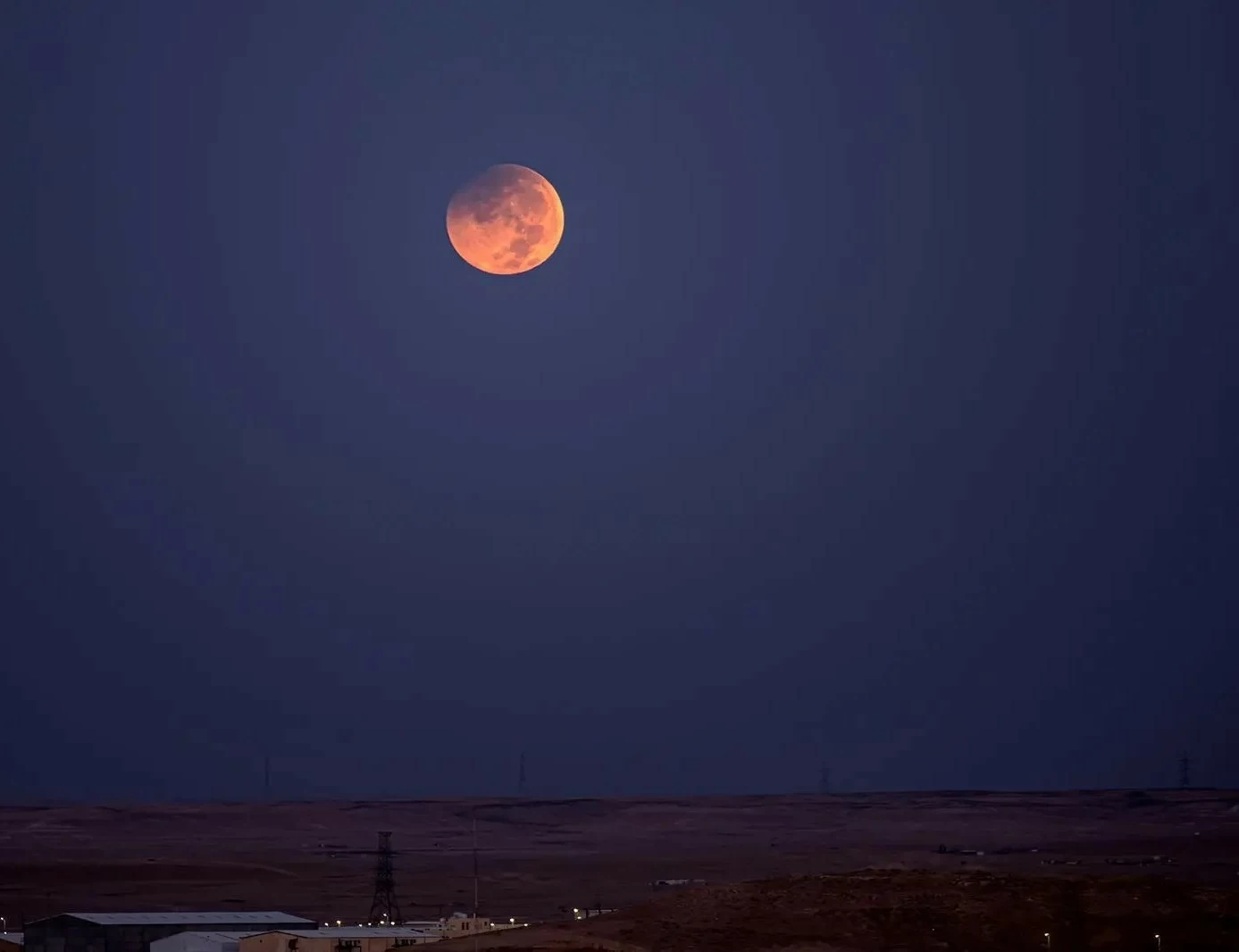
شهدت سماء مدينة عرعر فجر اليوم اكتمال بدر شهر ربيع الأول لعام 1448هـ، بالتزامن مع خسوف قمري جزئي عميق، في ظاهرة فلكية أمكن رصد مراحلها الأولى من المملكة قبل غروب القمر، فيما امتدت مشاهدتها إلى مناطق واسعة من العالم.
وبدأت في عرعر مرحلة خسوف شبه الظل عند الساعة 4:23 فجرًا، قبل أن يبدأ دخول القمر في منطقة ظل الأرض ويظهر الخسوف الجزئي قرابة الساعة 5:33 صباحًا، واستمرت مشاهدته محليًا حتى غروب القمر في الأفق الغربي قرابة الساعة 5:49 صباحًا، فيما واصل الخسوف مراحله عالميًا بعد غروب القمر عن المنطقة.
وأوضح عضو نادي الفلك والفضاء عدنان خليفة أن الخسوف يحدث عندما تقع الأرض بين الشمس والقمر، فيمر القمر داخل ظل الأرض، مشيرًا إلى أن خسوف اليوم يُعد من الخسوفات الجزئية العميقة، إذ دخل نحو 93% من قرص القمر في منطقة ظل الأرض عند ذروة الظاهرة عالميًا، ما جعله قريبًا بصريًا من الخسوف الكلي.
وبيّن أن موقع المملكة الجغرافي أتاح مشاهدة المراحل المبكرة من الظاهرة قبيل غروب القمر، مع تفاوت مدة الخسوف ونسبته المرئية من منطقة إلى أخرى، فيما لم تكن ذروة الخسوف عالميًا مرئية من عرعر، بسبب غروب القمر قبل وصول الظاهرة إلى أقصى مراحلها.
وأضاف خليفة أن الخسوف القمري من الظواهر الفلكية التي يمكن متابعتها بالعين المجردة دون الحاجة إلى وسائل حماية خاصة، بخلاف كسوف الشمس، لافتًا النظر إلى أن توقيت الظاهرة قبيل شروق الشمس أتاح للمهتمين بالفلك فرصة رصد تدرج دخول القمر في ظل الأرض بالقرب من الأفق الغربي.
ويُعد خسوف 28 أغسطس 2026 من الخسوفات القمرية الجزئية العميقة، وبلغت ذروته عالميًا بعد غروب القمر في المملكة، فيما استمرت مرحلته الجزئية عالميًا نحو ثلاث ساعات و18 دقيقة، وشوهدت بدرجات متفاوتة في أجزاء من الأمريكيتين وأوروبا وأفريقيا ومناطق أخرى من العالم.
The sky of the city of Arar witnessed the completion of the full moon of the month of Rabi' al-Awwal in the year 1448 AH at dawn today, coinciding with a deep partial lunar eclipse, in an astronomical phenomenon that could be observed in its early stages from the Kingdom before the moon set, while its visibility extended to wide areas of the world.
The penumbral eclipse phase began in Arar at 4:23 AM, before the moon entered the Earth's shadow and the partial eclipse became visible around 5:33 AM. It continued to be observed locally until the moon set on the western horizon around 5:49 AM, while the eclipse continued its phases globally after the moon set in the region.
Adnan Khalifa, a member of the Astronomy and Space Club, explained that an eclipse occurs when the Earth is positioned between the sun and the moon, causing the moon to pass into the Earth's shadow. He pointed out that today's eclipse is considered one of the deep partial eclipses, as about 93% of the moon's disk entered the Earth's shadow at the peak of the phenomenon globally, making it visually close to a total eclipse.
He indicated that the geographical location of the Kingdom allowed for the observation of the early stages of the phenomenon just before the moon set, with varying durations of the eclipse and its visible percentage from one area to another, while the peak of the eclipse globally was not visible from Arar due to the moon setting before the phenomenon reached its maximum stages.
Khalifa added that the lunar eclipse is one of the astronomical phenomena that can be followed with the naked eye without the need for special protective means, unlike a solar eclipse, noting that the timing of the phenomenon just before sunrise provided astronomy enthusiasts the opportunity to observe the gradual entry of the moon into the Earth's shadow near the western horizon.
The eclipse on August 28, 2026, is considered one of the deep partial lunar eclipses, reaching its peak globally after the moon set in the Kingdom, while its partial phase continued globally for about three hours and 18 minutes, and it was observed to varying degrees in parts of the Americas, Europe, Africa, and other regions of the world.