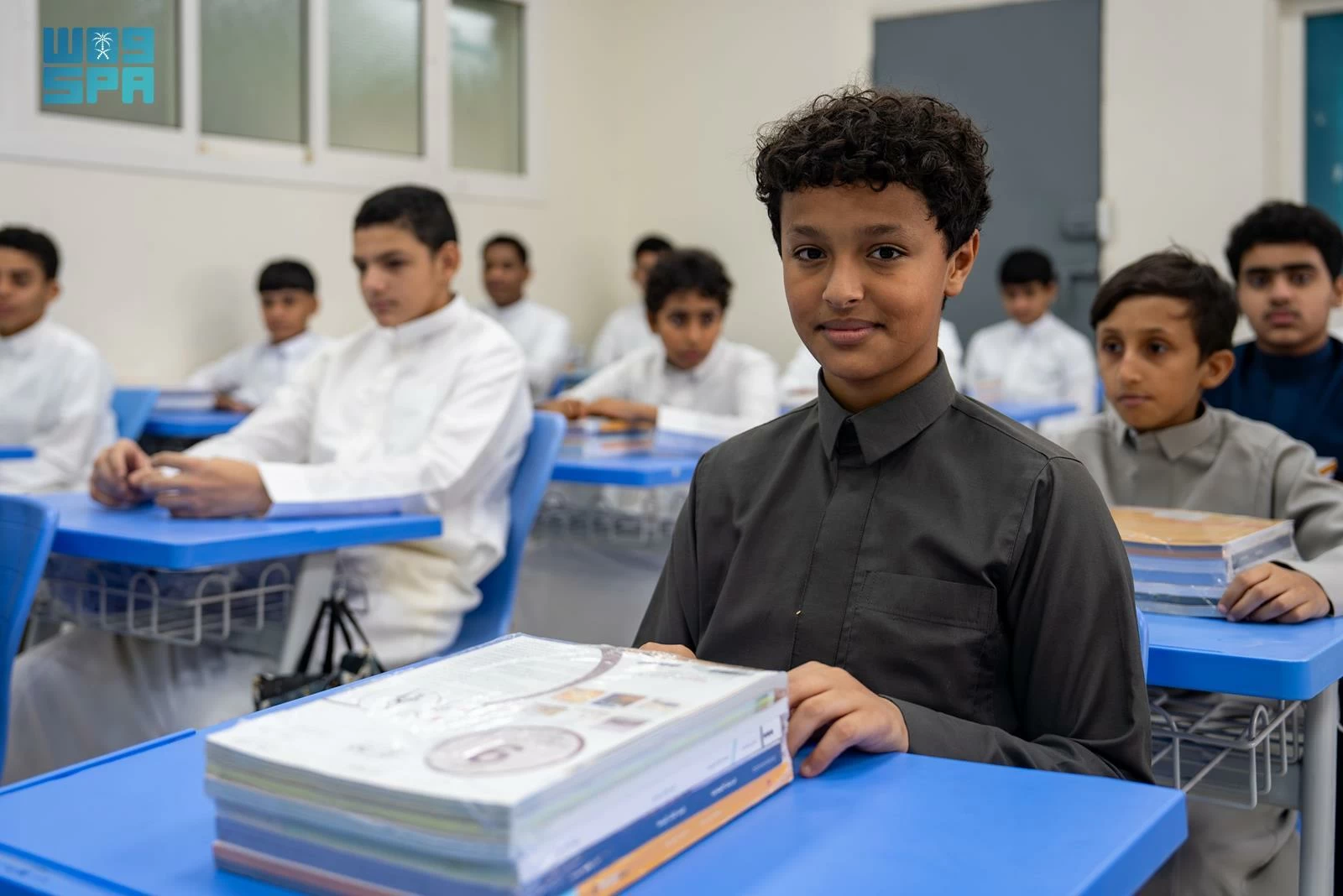
يعودغدا(الأحد) أكثر من أربعة ملايين ونصف المليون من طلاب وطالبات مدارس التعليم العام للبنين والبنات في مناطق ومحافظات السعودية إلى مقاعد الدراسة في انطلاقة العام الدراسي الجديد، باستثناء طلاب وطالبات أربع إدارات تعليمية مستثناة، وهي مكة المكرمة والمدينة المنورة ومحافظتا جدة والطائف، حيث ستكون عودتهم (الأحد) القادم السابع عشر من شهر ربيع الأول. كما يعود اليوم معلمو ومعلمات الإدارات الأربع المستثناة الممارسون فعلياً للتدريس لمباشرة مهامهم بعد تمتعهم بالإجازة الصيفية.
وشددت وزارة التعليم على كافة المدارس بضرورة البداية الجادة منذ اليوم الأول، خصوصاً بعد أن سلمت المدارس الطلاب والطالبات الكتب الدراسية قبل بدء الإجازة الصيفية في خطوة عدها الكثيرون من العاملين في الميدان التعليمي خطوة مهمة لتحقيق الانضباط المدرسي.
وأكدت الوزارة على أهمية متابعة غياب الطلاب والطالبات مع بداية العام والتواصل مع أولياء الأمور بمختلف الوسائل لإبلاغهم بهذا الغياب وتثبيته في نظام «نور» الإلكتروني.
واستبشر المعلمون والمعلمات بإعلان وزير التعليم يوسف البنيان أن الدوام المدرسي لهم عبر تطبيق «حضوري» الإلكتروني سيكون حسب الخطة الدراسية اليومية للمدارس دون اشتراط دوام السبع ساعات الذي صاحب التطبيق منذ انطلاقه جدلاً واسعاً.
وتشهد الفترة القادمة من العام الدراسي الجديد بدء العمل بنظام التعليم العام الجديد الذي صدر المرسوم الملكي بالموافقة عليه في العاشر من شهر صفر الماضي.
توسيع الخيارات التعليمية
يهدف النظام إلى تعزيز إطار حوكمة التعليم العام، وتوفير الممكنات اللازمة لتحقيق مستهدفاته، وتمكينه من رفع جودة البيئة التعليمية ومخرجاتها، إضافة إلى تنظيم دور القطاعين الخاص وغير الربحي بما يواكب مستهدفات رؤية السعودية 2030.
ويعزز النظام حوكمة التعليم العام من خلال تحديد أدوار وزارة التعليم ومجلس شؤون التعليم العام والجهات ذات العلاقة، بما يدعم مواءمة السياسات والخطط والبرامج التعليمية، ويرفع كفاءة اتخاذ القرار، ويمكّن الوزارة من تطوير أدوات التنظيم والمتابعة والإشراف على قطاع التعليم العام، كما يسهم النظام بدعم الاستثمار في التعليم، من خلال تنظيم مشاركة القطاعين الخاص وغير الربحي في تقديم الخدمات التعليمية، وتعزيز جاذبية الاستثمار والشراكات، وفق ضوابط واضحة؛ لرفع جودة الخدمات، وتوسيع الخيارات التعليمية، واستدامة تطوير المؤسسات التعليمية الحكومية والخاصة.
ويؤكد النظام على حماية حقوق الإنسان في التعليم، وحقوق الطلبة والمعلمين، وتوفير بيئة تعليمية آمنة ومحفزة، بما يدعم جودة العملية التعليمية، ويحسّن تجربة الطلاب والطالبات، إلى جانب ترسيخ دور الأسرة في مساندة الرحلة التعليمية.
ويدعم النظام جودة الرعاية والتعليم في مرحلة الطفولة المبكرة، بما يواكب أهمية السنوات الأولى في بناء شخصية الطفل ومهاراته، كما يسهم في تقديم خدمات تعليمية ومساندة أكثر مواءمة لحاجات الطلاب ذوي الإعاقة داخل المؤسسات التعليمية، وكذلك دعم رعاية الطلاب الموهوبين وتنمية قدراتهم، بما يعزز جودة التجربة التعليمية ويراعي تنوع حاجات الطلاب.
Tomorrow (Sunday), more than four and a half million male and female students from public schools across various regions and governorates in Saudi Arabia will return to their classrooms for the start of the new academic year, except for students from four exempt educational administrations: Mecca, Medina, and the governorates of Jeddah and Taif, whose return will be next Sunday, the seventeenth of Rabi' al-Awwal. Today, teachers from the four exempt administrations who are actively teaching will also return to their duties after enjoying their summer vacation.
The Ministry of Education emphasized to all schools the necessity of a serious start from the very first day, especially after schools provided students with textbooks before the summer vacation, a step that many in the educational field consider important for achieving school discipline.
The ministry confirmed the importance of monitoring student absences at the beginning of the year and communicating with parents through various means to inform them of these absences and document them in the "Noor" electronic system.
Teachers expressed their optimism following the announcement by Minister of Education Yusuf Al-Bunyan that their school hours through the "Hadhari" electronic application will follow the daily academic plan of the schools without the requirement of the seven-hour workday that has sparked widespread debate since its launch.
The upcoming period of the new academic year will witness the implementation of the new public education system, which was approved by royal decree on the tenth of Safar last month.
Expanding Educational Options
The system aims to enhance the governance framework of public education, provide the necessary enablers to achieve its objectives, and enable it to improve the quality of the educational environment and its outputs, in addition to organizing the roles of the private and non-profit sectors in line with the goals of Saudi Vision 2030.
The system enhances the governance of public education by defining the roles of the Ministry of Education, the Council of Public Education Affairs, and relevant entities, which supports the alignment of policies, plans, and educational programs, increases decision-making efficiency, and enables the ministry to develop tools for organization, monitoring, and supervision of the public education sector. The system also supports investment in education by organizing the participation of the private and non-profit sectors in providing educational services, enhancing the attractiveness of investment and partnerships, according to clear regulations; to improve service quality, expand educational options, and ensure the sustainable development of both public and private educational institutions.
The system emphasizes the protection of human rights in education, the rights of students and teachers, and the provision of a safe and stimulating educational environment, which supports the quality of the educational process and improves the experience of students, alongside reinforcing the role of the family in supporting the educational journey.
The system supports the quality of care and education in early childhood, recognizing the importance of the early years in shaping a child's personality and skills. It also contributes to providing more tailored educational and supportive services to meet the needs of students with disabilities within educational institutions, as well as supporting the care of gifted students and developing their abilities, thereby enhancing the quality of the educational experience and addressing the diverse needs of students.