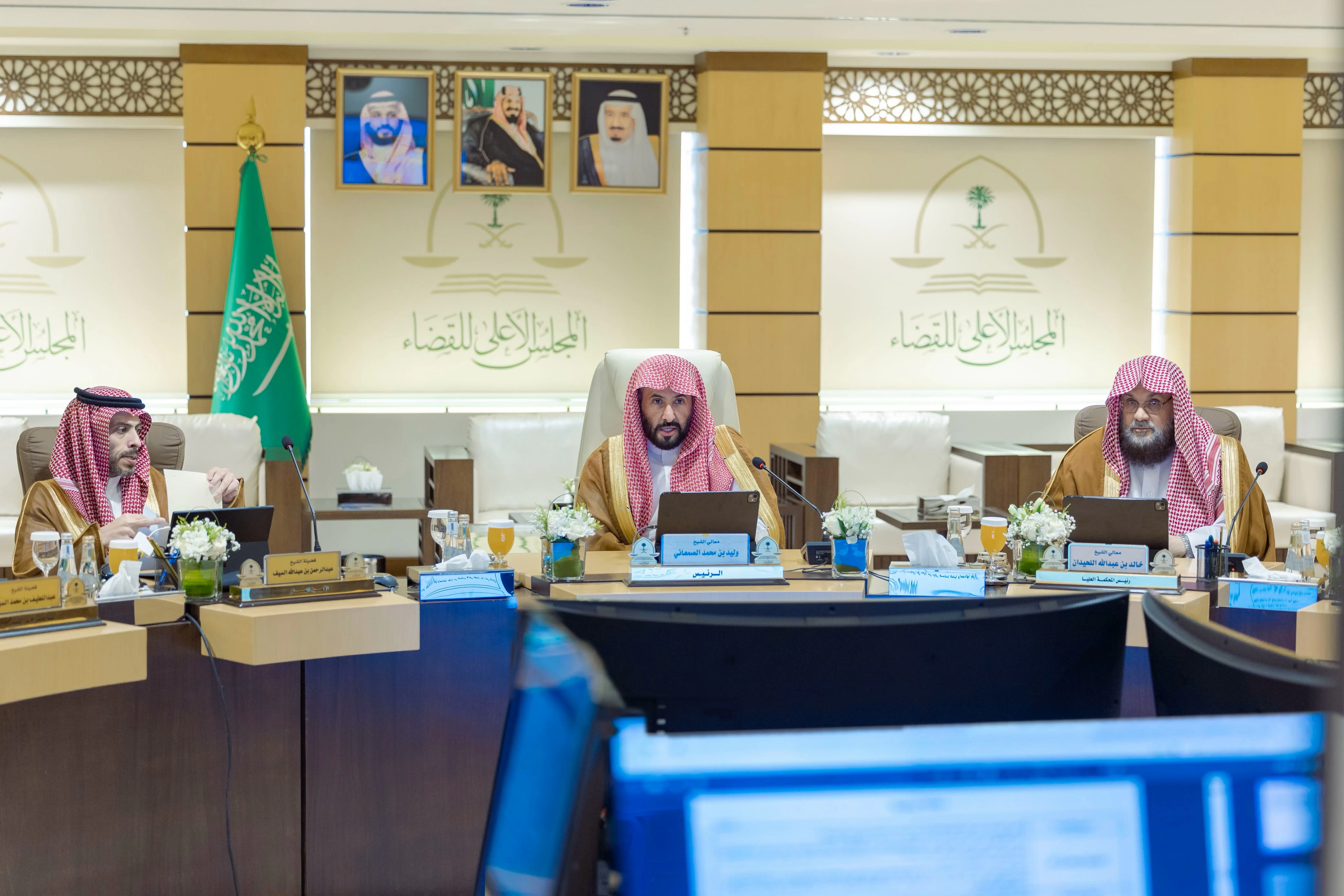
عقد المجلس الأعلى للقضاء اجتماعه في مقر المجلس برئاسة رئيس المجلس الأعلى للقضاء المكلف الشيخ الدكتور وليد محمد الصمعاني، بحضور أعضاء المجلس. وفي مستهل الجلسة، رفع رئيس المجلس شكره وتقديره لخادم الحرمين الشريفين الملك سلمان بن عبدالعزيز، ولولي العهد رئيس مجلس الوزراء الأمير محمد بن سلمان، بمناسبة صدور الأوامر الملكية بترقية وتعيين عدد من القضاة وتسمية أعضاء في المحكمة العليا، مؤكدًا أن الدعم الكبير الذي يحظى به المرفق العدلي يعزز أعمال المجلس ويرفع كفاءة العمل القضائي وجودة المنظومة العدلية.
واستعرض المجلس مجموعة من الموضوعات المتعلقة بتطوير العمل القضائي، شملت حوكمة اختيار القيادات القضائية، وتعزيز برامج التدريب والتأهيل، وتطوير التنظيمات الإدارية وأعمال المجلس، بما يسهم في رفع النضج المؤسسي وتحسين كفاءة الأداء وتعزيز جودة الخدمات القضائية المقدمة للمستفيدين.
كما ناقش المجلس عددًا من الموضوعات المرتبطة بالعمل القضائي، واتخذ بشأنها القرارات اللازمة، بما في ذلك تشكيل دوائر المحكمة العليا، والنظر في موضوعات تتعلق بالشؤون الوظيفية للقضاة، بما يدعم كفاءة المنظومة القضائية، ويرتقي بجودة الأحكام، ويعزز مستوى الخدمة المقدمة للمستفيدين.
The Supreme Judicial Council held its meeting at the council's headquarters, chaired by the Acting President of the Supreme Judicial Council, Sheikh Dr. Walid Mohammed Al-Samaani, with the attendance of council members. At the beginning of the session, the President expressed his gratitude and appreciation to the Custodian of the Two Holy Mosques, King Salman bin Abdulaziz, and to the Crown Prince, Prime Minister Prince Mohammed bin Salman, on the occasion of the royal orders issued for the promotion and appointment of a number of judges and the naming of members to the Supreme Court, emphasizing that the significant support received by the judicial facility enhances the council's work and raises the efficiency of judicial work and the quality of the judicial system.
The council reviewed a number of topics related to the development of judicial work, including the governance of selecting judicial leadership, enhancing training and qualification programs, and developing administrative regulations and the council's operations, which contribute to raising institutional maturity, improving performance efficiency, and enhancing the quality of judicial services provided to beneficiaries.
The council also discussed several topics related to judicial work and made the necessary decisions regarding them, including the formation of Supreme Court chambers and addressing issues related to the employment affairs of judges, which supports the efficiency of the judicial system, elevates the quality of rulings, and enhances the level of service provided to beneficiaries.