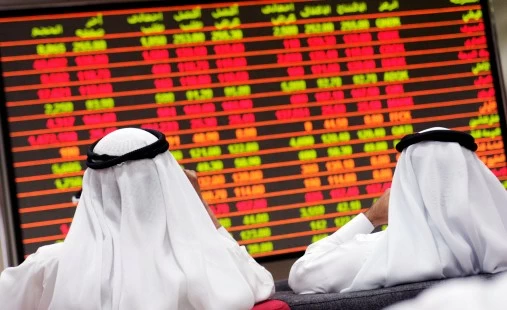
انخفضت معظم أسواق الأسهم في منطقة الخليج اليوم، في ظل قلق المستثمرين من تصعيد الحرب بعد أن شنت القوات الأمريكية هجمات على أهداف عسكرية إيرانية لليلة الحادية عشرة على التوالي. وانخفض المؤشر الرئيسي في دبي 0.5%، متأثراً بهبوط بلغ 1.7% في سهم «بنك الإمارات دبي الوطني» قبل إعلان أرباحه للربع الثاني.
صعود أسهم السعودية
وفي أبوظبي، تراجع المؤشر 0.1%، بينما صعد المؤشر القياسي السعودي 0.7%، مدعوماً بارتفاع سهم «البنك الأهلي السعودي» 2.8%. وانخفض المؤشر القطري 0.4% متأثراً بخسارة سهم «بنك قطر الوطني»، وتراجع المؤشر البحريني 0.1%، ونزل المؤشر الكويتي بالنسبة نفسها أيضاً، في حين ارتفع المؤشر العماني 0.3%. وخارج منطقة الخليج، تراجع مؤشر الأسهم القيادية في مصر 0.1%.
حذر المستثمرين
وأوضح خبراء اقتصاديون أن نتائج أعمال الربع الثاني قد توفر دعماً، لكن من المرجح أن يظل المستثمرون حذرين على المدى القريب.
وأشاروا إلى أن مضيق باب المندب يبرز مصدرَ خطرٍ رئيسي ثانياً إلى جانب مضيق هرمز، مما يزيد من المخاوف من تدفقات الطاقة في المنطقة، لافتين إلى أن أي تصعيد قد يؤدي إلى ارتفاع تكاليف الشحن، ويدفع علاوات مخاطر النفط الخام إلى الأعلى، ويؤجج ضغوط التضخم العالمية.
Most stock markets in the Gulf region declined today, amid investor concerns over the escalation of the war after U.S. forces launched attacks on Iranian military targets for the eleventh consecutive night. The main index in Dubai fell by 0.5%, affected by a drop of 1.7% in the share of "Emirates NBD" ahead of its second-quarter earnings announcement.
Saudi Stocks Rise
In Abu Dhabi, the index decreased by 0.1%, while the Saudi benchmark index rose by 0.7%, supported by a 2.8% increase in the share of "National Commercial Bank". The Qatari index fell by 0.4% due to losses in the share of "Qatar National Bank", the Bahraini index declined by 0.1%, and the Kuwaiti index also dropped by the same percentage, while the Omani index rose by 0.3%. Outside the Gulf region, the leading stock index in Egypt decreased by 0.1%.
Investor Caution
Economic experts clarified that the second-quarter earnings results may provide support, but investors are likely to remain cautious in the near term.
They pointed out that the Bab el-Mandeb Strait represents a second major source of risk alongside the Strait of Hormuz, increasing concerns over energy flows in the region, noting that any escalation could lead to higher shipping costs, push crude oil risk premiums up, and fuel global inflationary pressures.