


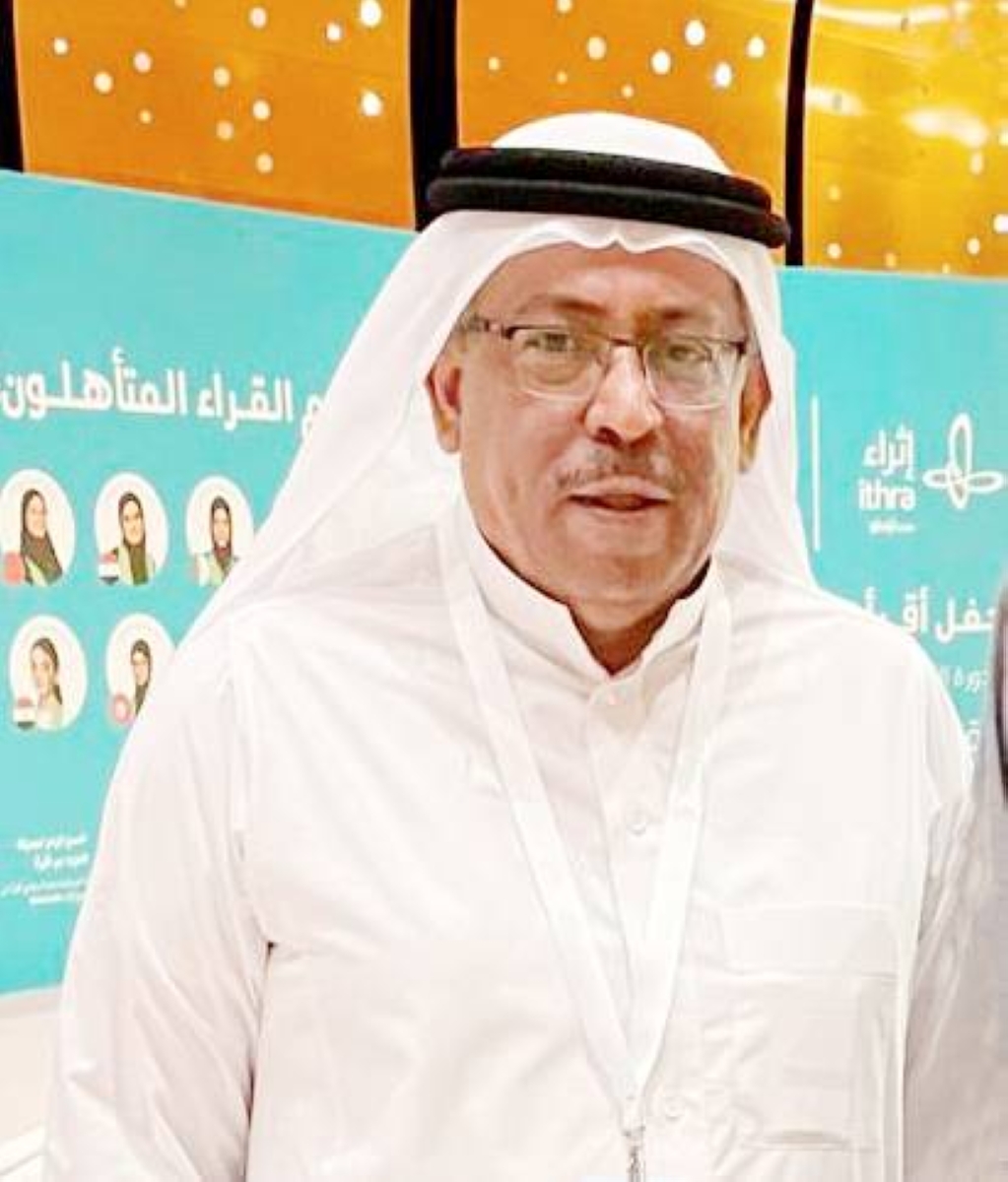


لا يتثاءب الوقتُ في معصم حياة الشاعر الصحفي هاشم الجحدلي، ولا يعبس وجه يومه مهما تغوّلت الهموم والأحزان والمشاغل، كلّما تقرأ له تشعر بمزيد مسؤولية، فالقراءة التي تلبّست «أبو هلا» ليستْ تَرَفاً، بل ولع بالكُتب، وافتتان بالكلمات الطازجة، وعشقٌ لزُرقة الحبر بحكم ما بينه وبين البحر من نسبٍ شجني ممتد.. «الجحدلي» حميم العلاقات، حَسَنُ الظنّ، وإن بدا له لاحقاً أنه بالغ في حُسن ظنّه، صديق النُخب من المستويات كافة، لكنه ضنينٌ بماء وجهه.. وهنا مساحة نحاول بالحوار اقتحامها، كونه لم يقترب منها محاور سابق، فإلى نصّ الحوار:
• ماذا أكسبتك التجربة الصحفيّة؟
•• أنا ابن قرية، وغير جريء في صناعة العلاقات، والإبداع والقراءة عالمي الأثير، وهذه الخصائص تجعلك تائهاً في عالم المدينة المحتدم والسريع الإيقاع الذي يرتكز في بنيته الأساسية على المصلحة والعلاقات، ولكن العمل الصحفي أو التجربة الصحفية، غصباً عنك وليس بإرادتك، تجعلك في قلب كل شيء يخصك أو لا يخصك، خصوصاً إذا كنت مسؤولاً، فهناك من يريد أن يوصل لك معلومة، وهناك من يريد أن يوضح لك التباساً نُشر عبر صفحة تشرف عليها، وهناك من يريد أن يشتكي صحفياً عندك، وهكذا تصبح كل أبواب المدينة بل العالم مفتوحة أمامك، لدرجة أنك من كثر ما تسمع وترى، لم يعد هناك ما يفاجئك مما يفاجئ الآخرين ممن هم في محيطك، التجربة الصحفية صقلتني وأوصلتني إلى الناس، وجعلتني أكثر وعياً بما يحدث ويدور حولي، الصحافة يا صديقي -وأنت في قلب المعمعة- مهنة عظيمة جداً.
• وما الذي خسرته بسببها؟
•• لا أحبُّ التبرير، لأنني لو وازنت المسؤوليات والمشاغل والاهتمامات بجدية وصرامة وحسبتها بعقلانية لم أكن سأخسر شيئاً، ولكن ربما لأنني أحببتها وأخلصت لها أكثر مما يجب أو يفترض، ضاعت بعض راحة البال، وضاع بعض الوقت، وضاعت بعض الفرص، والكثير من الإبداع.
• هل كنتَ تنهمك في العمل اليومي كي تتخلّص من عبء ما؟
•• من أوحى لك بهذا السؤال؟ لأنه يجيء ليكشف ما سترته طوال العمر الذي مضى، ولكن سأصدقك القول: نعم بعض الأحيان كنت أنهمك في العمل هرباً من أعباء لا قدرة على تغييرها ولا تجاهلها، فلا حل سوى الانهماك في أعباء أخرى موازية ومضادة لها، لنبررلأنفسنا وللعالم سبب غيابنا.
• أيُّ مدرسة صحفيّة ترى أنّها نجحت في استقطاب القراء؟
•• في سياقنا المحلي التجارب الصحفية ليست واضحة تماماً، لكي تقول هذه الصحيفة اختطت هذا الاتجاه وتلك ذلك الاتجاه أو الأسلوب، صحفنا هي مجموعة مشارب أو خليط أساليب، تتشابك فيها براعة المحرر، المصدر، «ديسك» التحرير، أسلوب رئيس القسم، إلى أن تصل إلى رؤية رئيس التحرير، ولكن أظن أنجح مظاهر العمل الصحفي عندنا هو ما نجح عند الآخرين «القصة الخبريّة الانفرادية» و«القصة الاستقصائية» مع «شوية من توابل المطبخ الصحفي» التي ربما تنجو من تدخلات رقيب الطبعة، وعموماً ولكي نكون منصفين، القارئ ذكي جداً، ومن يستقصي معدلات التوزيع سوف يجد النموذج الأكثر توزيعاً هو الذي قدم الوجبة كاملة (خبر - قصة خبرية - موضوع استقصائي - رأي ثقيل - كتاب مقالات مميزين).
• متى بدأت علاقتك بالكتاب؟
•• مبكراً جداً جداً بدأت علاقتي بالكتاب، ولو جلست إلى الصبح أتحدث عن هذا الموضوع لن أتوقف، ولكن الفضل الأول والأخير في تعلقي بالكتاب يعود إلى، أبي (يرحمه الله ويغفر له)، ويمكن القول إنني في الثامنة من عمري، بدأت مشوار القراءة، وعند العاشرة صارت القراءة محور حياتي، خصوصاً عندما عشت أربعة أعوام في «جزيرة أبو سعد» حيث لا ونيس لي في ليل الجزيرة غير السياب، والبردوني، وحنا مينا، وألف ليلة وليلة، وهذه بحد ذاتها قصة من قصص حياتي التي أتمنى أن أدونها.
• ما الهاجس الذي يسيطر على ذهنك اليوم؟
•• هاجسي الآن هو كيف أبرر للذين يسألون ويتساءلون: متى تنشر ما وعدت به يا هاشم؟ متى تكشف النقاب عما لم تكشف عنه بعد؟
• تُعدّ من الأسماء الشعريّة الحاضرة منذ الثمانينيات، هل حجبت الصحافة صورة الشاعر عن الضوء؟ •• علينا أن نتحمل المسؤولية ولا نلقي كل أخطائنا على الصحافة أو غيرها، أنا لم أنجح في العدل بين ما تحتاجه القصيدة، وما يستلزمه طموحي الصحفي، فاخترت مؤقتاً الصحافة على أمل أن أعود وأجد القصيدة تنتظرني، والشعر لا يقبل أنصاف الحلول.. أقصد الشعر الحقيقي، أما أن أكتب شعراً والسلام فهذا لا يتماشي مع شخصيتي ولا رؤيتي للقصيدة، ولا ما أريده لهاشم الشاعر.
عموماً أنا لم أغب، أنا توقفت قليلاً، وعندما عدت لم أجد الشعر.. مشت في النهر مياه كثيرة. عموماً سوف يخرج شعري عندما أرى أنه لا بد أن يخرج للنور.
• أي شاعر ترى أنك تأثّرت به؟
•• تأثرتُ بكل الشعراء العظام في تاريخ العربية من المتنبي إلى السياب ودرويش أو حاولت أن أتأثر بهم.
• إلى أي مدى تراعي الطفل الذي في داخلك؟
•• هذا السؤال غير منصف يا علي، وأنت تعرف جيداً أنا أريد وآمل من الطفل الذي في داخلي أن يراعيني ويرفق بي.
• ما رأيك بمن يصفك بـ«الصندوق الأسود» للثقافة والصحافة العربية؟
•• هناك شبهة مبالغة، أو وصف محب تشوبه المفارقة، نعم أنا أعرف سيرة ومسيرة أشياء وأسماء كثيرة في مشهدنا الثقافي السعودي والعربي، وربما لا يعرف خباياها الكثيرون ممن عاصروها، كما أسعدني الحظ وباركني القدر بالاقتراب كثيراً من أسماء مهمة مرت بتجارب استثنائية ما زلت أتذكرها جيداً، ولعل الوقت والظروف والأجواء تسمح بكتابة وتدوين ما يعني القارئ، وبالذات عن بدايات الحركة الأدبية الحديثة، وأسباب صعودها وانكسارها، والأسماء التي غابت من الذاكرة الثقافية.
• هل انتهى زمن الثقافة الصلبة؟
•• يبدو لي أن الثقافة الصلبة هي الأساس المتين والأساسي للثقافة، ولكن هناك موجات ثقافية تروج بين حين وآخر تتباهى بالجماهيرية الشعبوية وتجد من يدعمها لغرض أو لآخر، إلا أنّ موجتها هذه المرة عارمة على العالم أجمع وفي شتى أنواع الفنون.
• كيف تصف علاقتك بالمدرسة النقدية والأدبية في السعودية؟ هل ترى أن الحركة النقدية أنصفت جيلك من الشعراء والكتّاب؟
•• علاقة ممتازة من وجهة نظري. وأرى أن آخر عهد للدور الإيجابي للحركة النقدية كان مع جيلنا والجيل الذي تلاه، عقب ذلك ولأسباب عدة لا يتحملها النقاد وحدهم، فقد الحراك الإبداعي/ النقدي تناغمه، وصار المبدع والناقد «كل في فلك يسبحون»، وهذا ليس في صالح الحركة الأدبية/ الثقافية أبداً، لا حراك إبداعي حقيقياً دون نقد جاد وصارم، وربما أبالغ وأقول ومعياري أحياناً.
• هل تغيّرت رؤيتك للكتابة أو للحياة وأنت على مشارف الستين؟
•• الذي لا يتغير ليس حياً في الأساس، من شرط الحياة التغير، ولكن هناك تغيرات تجيء وكأنها خلاصة كل شيء، فهي لا تحاكم الماضي لأنها لا تستطيع تغييره، ولا ترسم ملامح المستقبل لأنها ربما لا تُوفّق في مواكبة كل جديده، لذلك تكتفي بالتأمل. أما بالنسبة لي، فأنا أحاول أن أعوّض بما أستطيع ما فات، وأستمتع بكل ذرة حياة في الحياة.
• بماذا تصف العائلة؟ وما دورها في حياتك؟
•• العائلة كل شيء، كل شيء بمعنى الكلمة، وأتمنى أن أكون وفياً لها.
• ما الذي تخشاه أكثر؛ نسيان القراء لما كتبته، أم نسيانك أنت لنفسك وسط الركام اليومي للحياة؟
•• القارئ لا ينسى إلا ما يستحق أن يُنسى، هو فطن ولماح ويفرز جيداً ولو بعد حين، أما ما أخشاه فهو يفوق التذكر والنسيان، أخشى سطوة الواقع على آمال الحياة.
• كيف ترى المستقبل القريب للصحافة الثقافية السعودية في ظل التحولات الإعلامية الكبرى؟
•• الوضع صعب، وما يُقدم الآن في صحافتنا المحلية نوع من الجهاد، فلا بد من الدعم والمؤازرة للصحافة الثقافية، بل للصحافة بمجملها وإذا كانت هناك أخطاء تُصوّب.
• ما الأثر الأكبر الذي تركه فيك الشاعر محمد الثبيتي؟
•• الله يرحم «أبو يوسف»، ما الذي أستطيع أن أقول، الثبيتي كان قبساً من نور في حياتي بل في حياتنا الثقافية، ليس مبدعاً فقط بل إنسان وروح.
• في أي شيءٍ تلتقي مع الدكتور سعيد السريحي؟ وكيف دامت علاقتكما طول العمر؟ •• «أبو إقبال» متعدد وهو في علاقتنا مثلما هو في تجليات إبداعه، فهو الأخ الأكبر، والأستاذ في الإبداع، والرئيس في العمل، والصديق في الحياة، وابن العم في القرابة، و و و...، ولكن يمكن أن أفسر علاقتنا بثلاثة أشياء ربما لو سألت الدكتور سعيد لنفاها وربما كان على حق وقال لك غيرها، ولكن من وجهة نظري هي «التقدير، الصدق، شرف الاختلاف».
• ما السرّ الذي تخشى البوح به أو تدوينه؟
•• لن يكون سرّاً حينها.
• من هو المثقف الذي ترى أنه ظُلم كثيراً؟
•• حمزة شحاتة.
تحفّظَ على وصفه بـ«الصندوق الأسود».. ويخشى سطوة الواقع على الآمال
هاشم الجحدلي: لم أعدل بين الشاعر والصحفي
10 أكتوبر 2025 - 03:24
|
آخر تحديث 10 أكتوبر 2025 - 03:24


تابع قناة عكاظ على الواتساب
حاوره: علي الرباعي Al_ARobai@
The time does not yawn in the wrist of the life of the poet and journalist Hashim Al-Jahdali, nor does it frown on the face of his day, no matter how overwhelming the worries, sorrows, and concerns become. Every time you read him, you feel a greater sense of responsibility, for the reading that has engulfed "Abu Hala" is not a luxury, but rather a passion for books, a fascination with fresh words, and a love for the blue of ink due to the emotional kinship he has with the sea... "Al-Jahdali" is warm in relationships, optimistic, and even if it later seems to him that he was overly optimistic, he is a friend to elites from all levels, yet he is stingy with the water of his face... Here is a space we attempt to penetrate through dialogue, as no previous interviewer has approached it, so here is the text of the dialogue:
• What has the journalistic experience given you?
•• I am a son of a village, not bold in making relationships, and creativity and reading are my cherished worlds. These traits make you lost in the bustling and fast-paced urban world, which is fundamentally based on interests and relationships. However, journalistic work or experience, whether you like it or not, places you at the heart of everything that concerns you or does not concern you, especially if you are in a position of responsibility. There are those who want to convey information to you, and there are those who want to clarify a misunderstanding published on a page you oversee, and there are those who want to complain to you about a journalist. Thus, all the doors of the city, and indeed the world, become open to you, to the extent that from the sheer amount you hear and see, nothing surprises you anymore compared to what surprises others around you. The journalistic experience has refined me, brought me closer to people, and made me more aware of what is happening around me. Journalism, my friend—when you are in the midst of chaos—is a truly great profession.
• What have you lost because of it?
•• I do not like to justify, because if I had weighed the responsibilities, concerns, and interests seriously and rigorously and calculated them rationally, I would not have lost anything. But perhaps because I loved it and dedicated myself to it more than I should or was supposed to, some peace of mind was lost, some time was lost, some opportunities were lost, and a lot of creativity.
• Did you immerse yourself in daily work to escape from a burden?
•• Who suggested this question to you? Because it comes to reveal what I have concealed throughout my life. But I will tell you the truth: yes, sometimes I immersed myself in work to escape from burdens that I had no power to change or ignore. There was no solution but to immerse myself in other parallel and opposing burdens, to justify our absence to ourselves and to the world.
• Which journalistic school do you think has succeeded in attracting readers?
•• In our local context, journalistic experiences are not entirely clear, so you cannot say this newspaper has taken this direction and that one has taken that direction or style. Our newspapers are a mix of styles, where the skill of the editor, the source, the editorial desk, the style of the department head, and the vision of the editor-in-chief intertwine. However, I think the most successful aspects of journalistic work here are what has succeeded elsewhere: the "exclusive news story" and the "investigative story," with "a little seasoning from the journalistic kitchen" that might escape the interventions of the print censor. Generally, to be fair, the reader is very intelligent, and those who investigate distribution rates will find that the most widely distributed model is the one that presents the complete meal (news - news story - investigative topic - heavy opinion - distinguished article collections).
• When did your relationship with books begin?
•• My relationship with books began very, very early. If I sat until morning talking about this topic, I would not stop. But the first and last credit for my attachment to books goes to my father (may he rest in peace and be forgiven). You could say that at the age of eight, I began my reading journey, and by the age of ten, reading became the center of my life, especially when I lived for four years on "Abu Saad Island," where my only companion at night was Al-Sayyab, Al-Bardoni, Hanna Mina, and One Thousand and One Nights. This in itself is a story from my life that I hope to document.
• What obsession occupies your mind today?
•• My current obsession is how to justify to those who ask and wonder: When will you publish what you promised, Hashim? When will you unveil what you have not revealed yet?
• You are considered one of the poetic names present since the eighties. Has journalism obscured the poet's image from the light?
•• We must take responsibility and not place all our faults on journalism or others. I did not succeed in balancing what the poem needs with what my journalistic ambition requires, so I temporarily chose journalism in the hope that I would return to find the poem waiting for me. Poetry does not accept half measures... I mean real poetry. As for writing poetry just for the sake of it, that does not align with my personality, my vision for the poem, or what I want for Hashim the poet.
In general, I did not disappear; I just paused for a bit, and when I returned, I found that poetry had moved on. A lot of water has flowed in the river. In general, my poetry will emerge when I see that it must come to light.
• Which poet do you think you were influenced by?
•• I was influenced by all the great poets in the history of Arabic literature, from Al-Mutanabbi to Al-Sayyab and Darwish, or I tried to be influenced by them.
• To what extent do you nurture the child within you?
•• This question is unfair, Ali, and you know well that I want and hope that the child within me will take care of me and be gentle with me.
• What do you think of those who describe you as the "black box" of Arab culture and journalism?
•• There is a hint of exaggeration, or a loving description that is tinged with irony. Yes, I know the biography and journey of many things and names in our Saudi and Arab cultural scene, and perhaps many who lived through it do not know its intricacies. I have been fortunate and blessed to be very close to important names that have gone through exceptional experiences that I still remember well. Perhaps time, circumstances, and the atmosphere will allow for writing and documenting what matters to the reader, especially about the beginnings of the modern literary movement, the reasons for its rise and fall, and the names that have faded from cultural memory.
• Has the era of solid culture come to an end?
•• It seems to me that solid culture is the solid and fundamental basis of culture. However, there are cultural waves that emerge from time to time that boast of populism and find support for one reason or another. Yet, this time, its wave is overwhelming across the entire world and in various types of arts.
• How do you describe your relationship with the critical and literary school in Saudi Arabia? Do you think the critical movement has done justice to your generation of poets and writers?
•• An excellent relationship from my perspective. I believe that the last era of the positive role of the critical movement was with our generation and the generation that followed. After that, for several reasons that critics alone do not bear, the creative/critical movement lost its harmony, and the creator and critic became "each in their own orbit," which is not in favor of the literary/cultural movement at all. There can be no real creative movement without serious and rigorous criticism, and I might exaggerate and say that my criteria sometimes.
• Has your view of writing or life changed as you approach sixty?
•• What does not change is not alive in the first place. Change is a condition of life. However, there are changes that come as if they are the essence of everything; they do not judge the past because they cannot change it, nor do they sketch the features of the future because they may not succeed in keeping up with all its newness. Therefore, they suffice with contemplation. As for me, I try to compensate for what I can for what has passed, and I enjoy every particle of life in life.
• How do you describe family? What role does it play in your life?
•• Family is everything, everything in the literal sense of the word, and I hope to be loyal to it.
• What do you fear more: that readers will forget what you have written, or that you will forget yourself amidst the daily rubble of life?
•• The reader only forgets what deserves to be forgotten; they are perceptive and discerning and can filter well, even if after a while. As for what I fear, it exceeds memory and forgetfulness; I fear the power of reality over the hopes of life.
• How do you see the near future of Saudi cultural journalism in light of major media transformations?
•• The situation is difficult, and what is currently offered in our local journalism is a kind of struggle. There must be support and backing for cultural journalism, indeed for journalism as a whole, and if there are mistakes, they should be corrected.
• What is the greatest impact that the poet Mohammed Al-Thubaiti left on you?
•• May God have mercy on "Abu Yusuf." What can I say? Al-Thubaiti was a beacon of light in my life and in our cultural life, not just a creator but a human being and a spirit.
• In what ways do you connect with Dr. Said Al-Suhaili? How has your relationship lasted throughout your life? •• "Abu Iqbal" is multifaceted, and in our relationship, he is as he is in the manifestations of his creativity: he is the older brother, the teacher in creativity, the boss at work, the friend in life, and the cousin in kinship, and so on... However, I can explain our relationship through three things that perhaps if you asked Dr. Said, he would deny and perhaps he would be right and tell you otherwise, but from my perspective, they are "appreciation, honesty, and the honor of disagreement."
• What secret do you fear to reveal or document?
•• It would not be a secret then.
• Who is the intellectual you believe has been greatly wronged?
•• Hamza Shahat.
• What has the journalistic experience given you?
•• I am a son of a village, not bold in making relationships, and creativity and reading are my cherished worlds. These traits make you lost in the bustling and fast-paced urban world, which is fundamentally based on interests and relationships. However, journalistic work or experience, whether you like it or not, places you at the heart of everything that concerns you or does not concern you, especially if you are in a position of responsibility. There are those who want to convey information to you, and there are those who want to clarify a misunderstanding published on a page you oversee, and there are those who want to complain to you about a journalist. Thus, all the doors of the city, and indeed the world, become open to you, to the extent that from the sheer amount you hear and see, nothing surprises you anymore compared to what surprises others around you. The journalistic experience has refined me, brought me closer to people, and made me more aware of what is happening around me. Journalism, my friend—when you are in the midst of chaos—is a truly great profession.
• What have you lost because of it?
•• I do not like to justify, because if I had weighed the responsibilities, concerns, and interests seriously and rigorously and calculated them rationally, I would not have lost anything. But perhaps because I loved it and dedicated myself to it more than I should or was supposed to, some peace of mind was lost, some time was lost, some opportunities were lost, and a lot of creativity.
• Did you immerse yourself in daily work to escape from a burden?
•• Who suggested this question to you? Because it comes to reveal what I have concealed throughout my life. But I will tell you the truth: yes, sometimes I immersed myself in work to escape from burdens that I had no power to change or ignore. There was no solution but to immerse myself in other parallel and opposing burdens, to justify our absence to ourselves and to the world.
• Which journalistic school do you think has succeeded in attracting readers?
•• In our local context, journalistic experiences are not entirely clear, so you cannot say this newspaper has taken this direction and that one has taken that direction or style. Our newspapers are a mix of styles, where the skill of the editor, the source, the editorial desk, the style of the department head, and the vision of the editor-in-chief intertwine. However, I think the most successful aspects of journalistic work here are what has succeeded elsewhere: the "exclusive news story" and the "investigative story," with "a little seasoning from the journalistic kitchen" that might escape the interventions of the print censor. Generally, to be fair, the reader is very intelligent, and those who investigate distribution rates will find that the most widely distributed model is the one that presents the complete meal (news - news story - investigative topic - heavy opinion - distinguished article collections).
• When did your relationship with books begin?
•• My relationship with books began very, very early. If I sat until morning talking about this topic, I would not stop. But the first and last credit for my attachment to books goes to my father (may he rest in peace and be forgiven). You could say that at the age of eight, I began my reading journey, and by the age of ten, reading became the center of my life, especially when I lived for four years on "Abu Saad Island," where my only companion at night was Al-Sayyab, Al-Bardoni, Hanna Mina, and One Thousand and One Nights. This in itself is a story from my life that I hope to document.
• What obsession occupies your mind today?
•• My current obsession is how to justify to those who ask and wonder: When will you publish what you promised, Hashim? When will you unveil what you have not revealed yet?
• You are considered one of the poetic names present since the eighties. Has journalism obscured the poet's image from the light?
•• We must take responsibility and not place all our faults on journalism or others. I did not succeed in balancing what the poem needs with what my journalistic ambition requires, so I temporarily chose journalism in the hope that I would return to find the poem waiting for me. Poetry does not accept half measures... I mean real poetry. As for writing poetry just for the sake of it, that does not align with my personality, my vision for the poem, or what I want for Hashim the poet.
In general, I did not disappear; I just paused for a bit, and when I returned, I found that poetry had moved on. A lot of water has flowed in the river. In general, my poetry will emerge when I see that it must come to light.
• Which poet do you think you were influenced by?
•• I was influenced by all the great poets in the history of Arabic literature, from Al-Mutanabbi to Al-Sayyab and Darwish, or I tried to be influenced by them.
• To what extent do you nurture the child within you?
•• This question is unfair, Ali, and you know well that I want and hope that the child within me will take care of me and be gentle with me.
• What do you think of those who describe you as the "black box" of Arab culture and journalism?
•• There is a hint of exaggeration, or a loving description that is tinged with irony. Yes, I know the biography and journey of many things and names in our Saudi and Arab cultural scene, and perhaps many who lived through it do not know its intricacies. I have been fortunate and blessed to be very close to important names that have gone through exceptional experiences that I still remember well. Perhaps time, circumstances, and the atmosphere will allow for writing and documenting what matters to the reader, especially about the beginnings of the modern literary movement, the reasons for its rise and fall, and the names that have faded from cultural memory.
• Has the era of solid culture come to an end?
•• It seems to me that solid culture is the solid and fundamental basis of culture. However, there are cultural waves that emerge from time to time that boast of populism and find support for one reason or another. Yet, this time, its wave is overwhelming across the entire world and in various types of arts.
• How do you describe your relationship with the critical and literary school in Saudi Arabia? Do you think the critical movement has done justice to your generation of poets and writers?
•• An excellent relationship from my perspective. I believe that the last era of the positive role of the critical movement was with our generation and the generation that followed. After that, for several reasons that critics alone do not bear, the creative/critical movement lost its harmony, and the creator and critic became "each in their own orbit," which is not in favor of the literary/cultural movement at all. There can be no real creative movement without serious and rigorous criticism, and I might exaggerate and say that my criteria sometimes.
• Has your view of writing or life changed as you approach sixty?
•• What does not change is not alive in the first place. Change is a condition of life. However, there are changes that come as if they are the essence of everything; they do not judge the past because they cannot change it, nor do they sketch the features of the future because they may not succeed in keeping up with all its newness. Therefore, they suffice with contemplation. As for me, I try to compensate for what I can for what has passed, and I enjoy every particle of life in life.
• How do you describe family? What role does it play in your life?
•• Family is everything, everything in the literal sense of the word, and I hope to be loyal to it.
• What do you fear more: that readers will forget what you have written, or that you will forget yourself amidst the daily rubble of life?
•• The reader only forgets what deserves to be forgotten; they are perceptive and discerning and can filter well, even if after a while. As for what I fear, it exceeds memory and forgetfulness; I fear the power of reality over the hopes of life.
• How do you see the near future of Saudi cultural journalism in light of major media transformations?
•• The situation is difficult, and what is currently offered in our local journalism is a kind of struggle. There must be support and backing for cultural journalism, indeed for journalism as a whole, and if there are mistakes, they should be corrected.
• What is the greatest impact that the poet Mohammed Al-Thubaiti left on you?
•• May God have mercy on "Abu Yusuf." What can I say? Al-Thubaiti was a beacon of light in my life and in our cultural life, not just a creator but a human being and a spirit.
• In what ways do you connect with Dr. Said Al-Suhaili? How has your relationship lasted throughout your life? •• "Abu Iqbal" is multifaceted, and in our relationship, he is as he is in the manifestations of his creativity: he is the older brother, the teacher in creativity, the boss at work, the friend in life, and the cousin in kinship, and so on... However, I can explain our relationship through three things that perhaps if you asked Dr. Said, he would deny and perhaps he would be right and tell you otherwise, but from my perspective, they are "appreciation, honesty, and the honor of disagreement."
• What secret do you fear to reveal or document?
•• It would not be a secret then.
• Who is the intellectual you believe has been greatly wronged?
•• Hamza Shahat.


