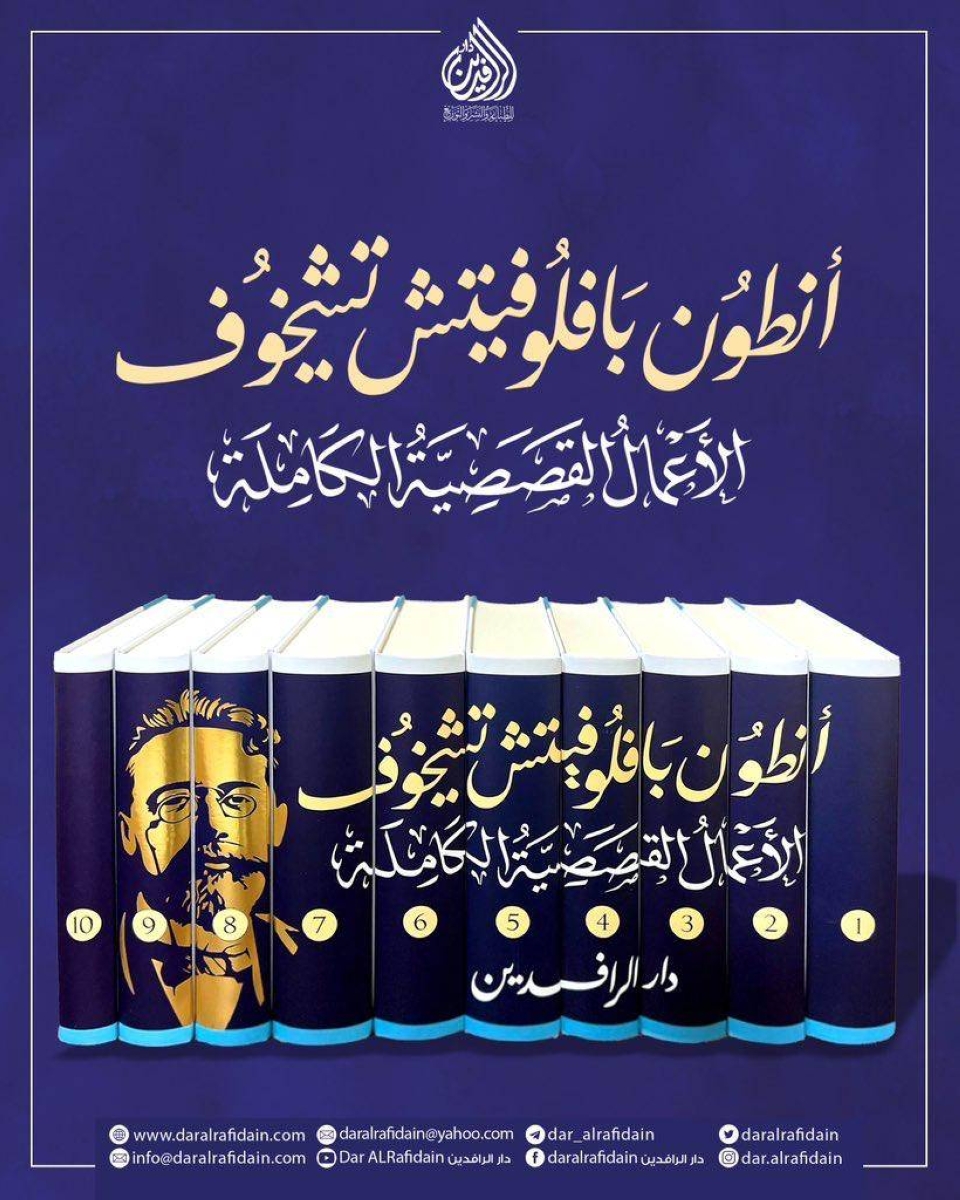
صدرت الأعمال الكاملة للكاتب الروسي أنطوان تشيخوف باللغة العربية، وجاءت النسخة في عشرة مجلدات، ضمت كل نتاجه السردي، بما في ذلك القصص الطويلة التي اقتربت من عتبة الرواية، وطُرحَ هذا المشروع بين أيدي القراء العرب.
الحياة في أكثر صورها إنسانية
وعبّر الناشر الدكتور ثائر زين عن شعوره بالفخر لإسهامه في ترجمة ومراجعة الأعمال إلى جانب كل من فالح الحمراني، فريد الشحف، منذر ملا كاظم، موضحا أن قيمة تشيخوف ليست فقط في جمال أسلوبه، ولا في رهافة عبارته، بل في خلقه من أبسط لحظات الحياة اليومية مرايا تعكس أعقد المسائل الوجودية، وإحالة التفاصيل الصغيرة إلى بوابات معنى واسع، إضافة إلى أن وداعتَه ورقَّتَه الطبيعيتين وعظمةَ روحِهِ صفاتٌ تثير الإعجاب، إذ حين أدرك أنه مريض بالسل، امتنع تماما عن التحدث في المرض، وعن التفكير فيه على الأغلب.
ووصف أعمال تشيخوف التي صدرت عن «دار الرافدين» بأنها «قدّمت لنا الحياة في أكثر صورها إنسانية وإيجازا وصدقا». وكشف زين الدين جوانب من شخصية صاحب «بستان الكرز» منها أنه درس الطب في جامعة موسكو، وكان يرسل القصص الساخرة إلى المجلات الفكاهية، موقّعة باسمٍ مستعار «أنتوشا تشيخونتي» ثم تخرج طبيبا وعمل في مستشفى تشيكينسكايا، وظل وفيّا للكتابة، يُرسل القصص الواحدة تلو الأخرى، لا لهدف الشهرة أو المجد الأدبي، بل بدافع أن يمدّ يد العون لعائلته التي كانت لا تزال تعاني وطأة العوز.
ثائر زين الدين
عملين مسرحيين بارزين
يذكر أنّ تشيخوف أصدر أولى مجموعاته القصصية بعنوان «حكايات ميلبوميني» نهاية القرن التاسع عشر، وأعدّ مواد أطروحته عن الرعاية الطبيّة في روسيا، ثم صدرت مجموعته القصصية «في الشفق»، ونال عنها نصف جائزة بوشكين (500 روبل)، وحققت نجاحا كبيرا، إذ أُعيد طبعها 12 مرة، وتُرجمت إلى عدة لغات أوروبية. ووصفتها صحيفة «سانت بطرسبرغ» بأنها «نتاج شاعر يكتب نثرا، موهبته تنبض بالإنسانية ودفء القلب». ثم صدرت أبرز أعماله، منها «الجندب»، و«معلم الأدب»، و«كمان روتشيلد»، و«النورس»، و«العم فانيا». ثم التقى بالمخرجين ستانيسلافسكي ونيميروفيتش دانتشينكو عند وصول المسرح الفني إلى يالطا، وبدأ تعاونه معهما بعملين مسرحيين بارزين «ثلاث أخوات» و«بستان الكرز». خلال تلك الفترة، تعرّف إلى الممثلة أولغا كنيبر التي أصبحت زوجته في 1901.
وكتب تشيخوف للأطفال، ومن أبرزها «كاشتانكا»، و«فانكا جوكوف»، و«الأحذية المسلوقة» التي وقّعها باسم مستعار.
الترجمة إلى العربيّة
وتُرجمت بعضُ قصصِ تشيخوف إلى العربيّة ونُشرت، منها «الفلاحون» التي أصدرتها المؤسسة العامة للتأليف والنشر في وزارة الثقافة المصرية عامَ 1968، وصدرت مُختاراتٌ في أربعة مجلدات ترجمها الدكتور يوسف أبوبكر عن دار «رادوغا» في موسكو ثمانينات القرن العشرين، ثم ترجمَ عدنان جاموس مختاراتٍ في كتابٍ واحدٍ صدرَ عن اتحاد الكتاب العرب في سورية في التسعينات، ثم عن وزارة الثقافة التي عادت فأصدرت أيضا مختاراتٍ ترجمها خليل الرز في جزءين عام 2007.
The complete works of the Russian writer Anton Chekhov have been published in Arabic, with the edition consisting of ten volumes that encompass all of his narrative output, including long stories that approached the threshold of the novel. This project has been presented to Arab readers.
Life in Its Most Human Forms
Publisher Dr. Thaer Zain expressed his pride in contributing to the translation and review of the works alongside Faleh Al-Hamrani, Farid Al-Shahhaf, and Munther Mulla Kazem, explaining that Chekhov's value lies not only in the beauty of his style and the delicacy of his expression but also in his ability to create mirrors from the simplest moments of daily life that reflect the most complex existential issues, transforming small details into gateways of vast meaning. Additionally, his natural gentleness and grace, along with the greatness of his spirit, are admirable traits; when he realized he was ill with tuberculosis, he completely refrained from discussing the illness and mostly from thinking about it.
Zain described Chekhov's works published by "Dar Al-Rafidain" as having "presented life to us in its most human, concise, and truthful forms." He revealed aspects of the personality of the author of "The Cherry Orchard," noting that he studied medicine at Moscow University and sent humorous stories to comic magazines under the pseudonym "Antosha Chekhonte." He then graduated as a doctor and worked at the Chekhov Hospital, remaining loyal to writing, sending stories one after another, not for the sake of fame or literary glory but out of a desire to support his family, which was still suffering from poverty.
ثائر زين الدين
Two Prominent Plays
It is noted that Chekhov published his first collection of stories titled "Tales of Melpomene" at the end of the 19th century, and prepared materials for his thesis on medical care in Russia. His story collection "In the Twilight" was then published, for which he received half of the Pushkin Prize (500 rubles), achieving great success as it was reprinted 12 times and translated into several European languages. The "Saint Petersburg" newspaper described it as "the work of a poet writing prose, his talent pulsating with humanity and warmth." His most notable works followed, including "The Grasshopper," "The Teacher of Literature," "Rothschild's Violin," "The Seagull," and "Uncle Vanya." He then met directors Stanislavsky and Nemirovich-Danchenko when the Art Theatre arrived in Yalta, beginning his collaboration with them on two prominent plays, "Three Sisters" and "The Cherry Orchard." During that period, he met actress Olga Knipper, who became his wife in 1901.
Chekhov also wrote for children, with notable works including "Kashtanka," "Vanka Zhukov," and "The Cooked Shoes," which he signed with a pseudonym.
Translation into Arabic
Some of Chekhov's stories have been translated into Arabic and published, including "The Peasants," which was issued by the General Authority for Authorship and Publishing in the Egyptian Ministry of Culture in 1968. Selections were published in four volumes translated by Dr. Youssef Aboubakr from "Raduga" in Moscow in the 1980s. Then, Adnan Jamous translated selections into a single book published by the Arab Writers Union in Syria in the 1990s, followed by the Ministry of Culture, which also published selections translated by Khalil Al-Raz in two volumes in 2007.