


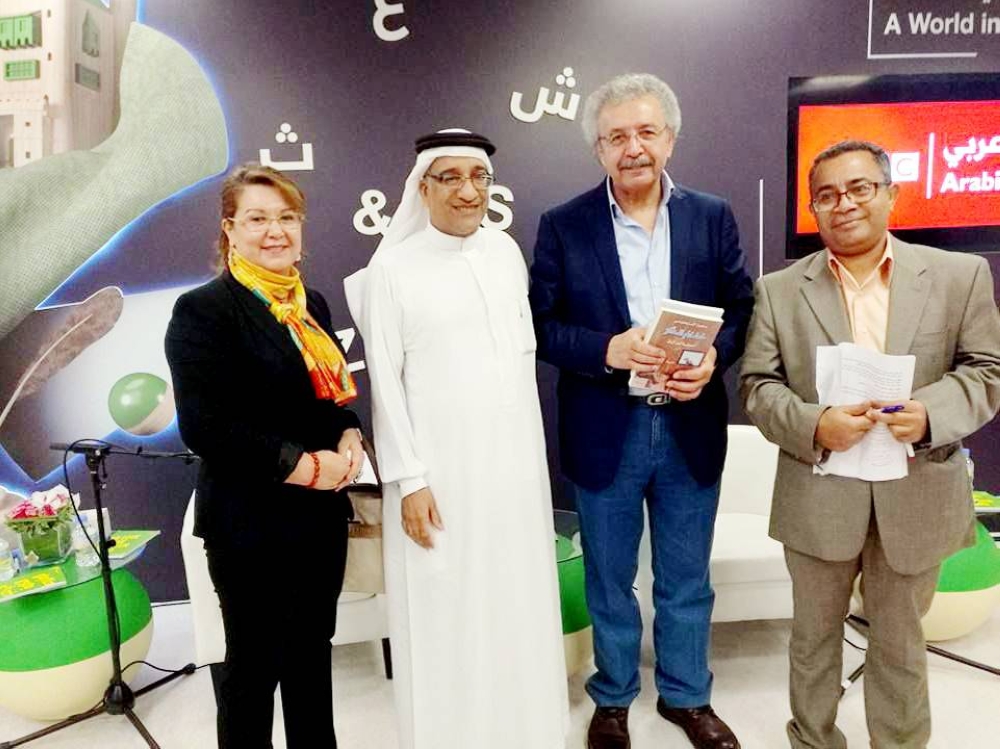
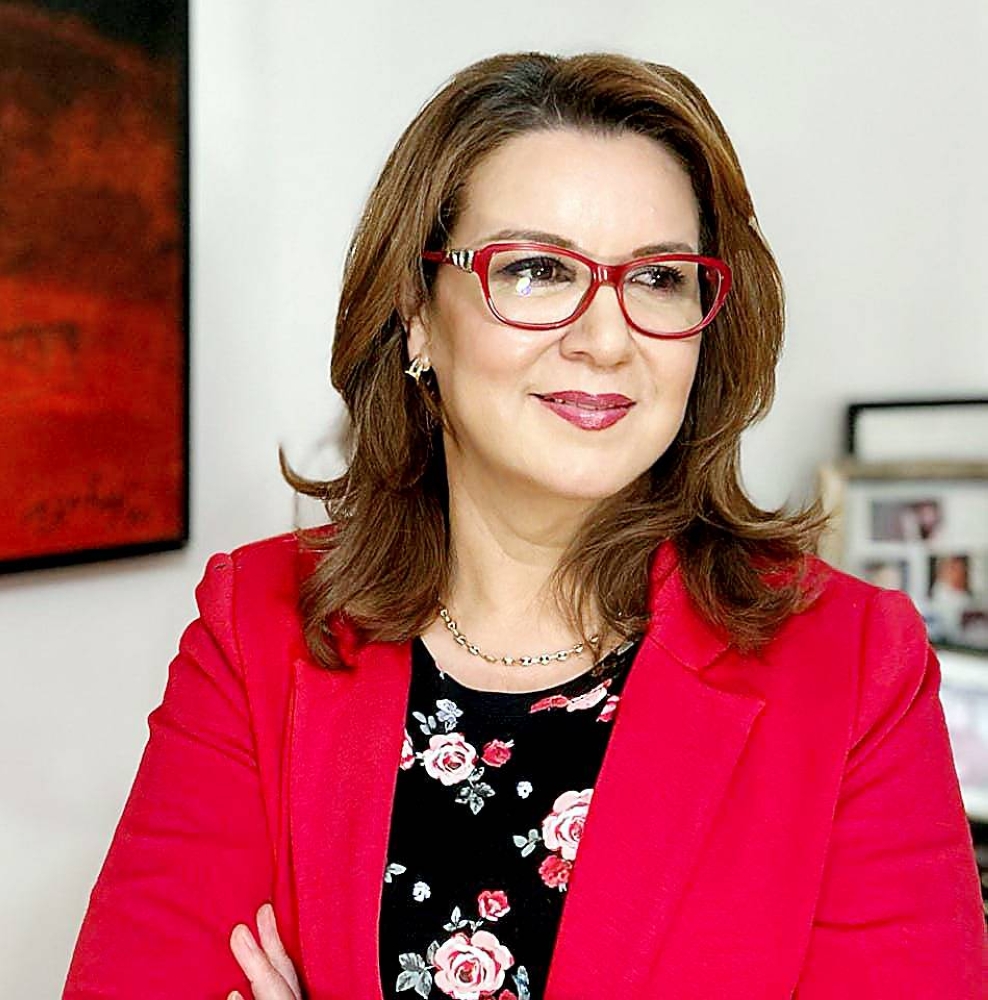
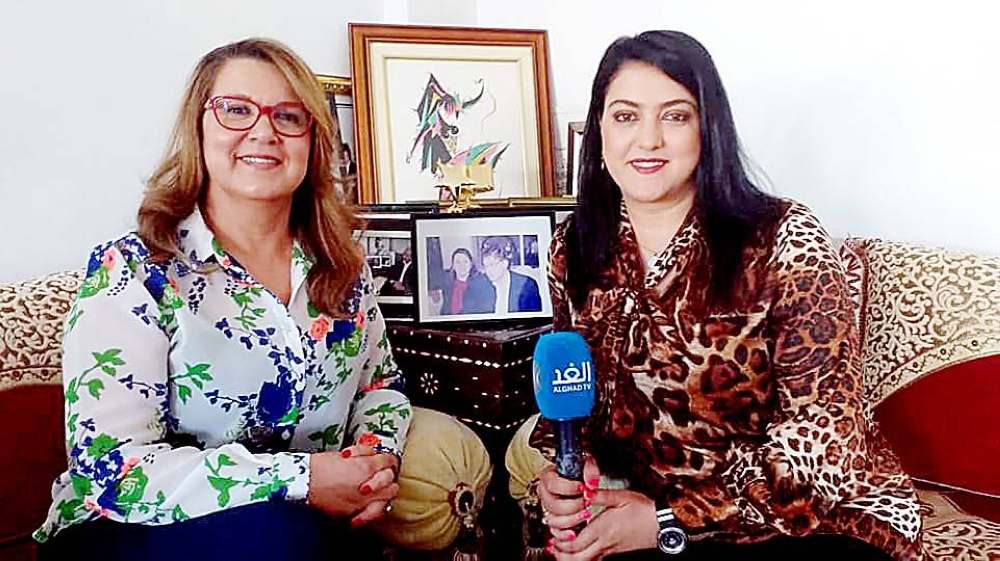
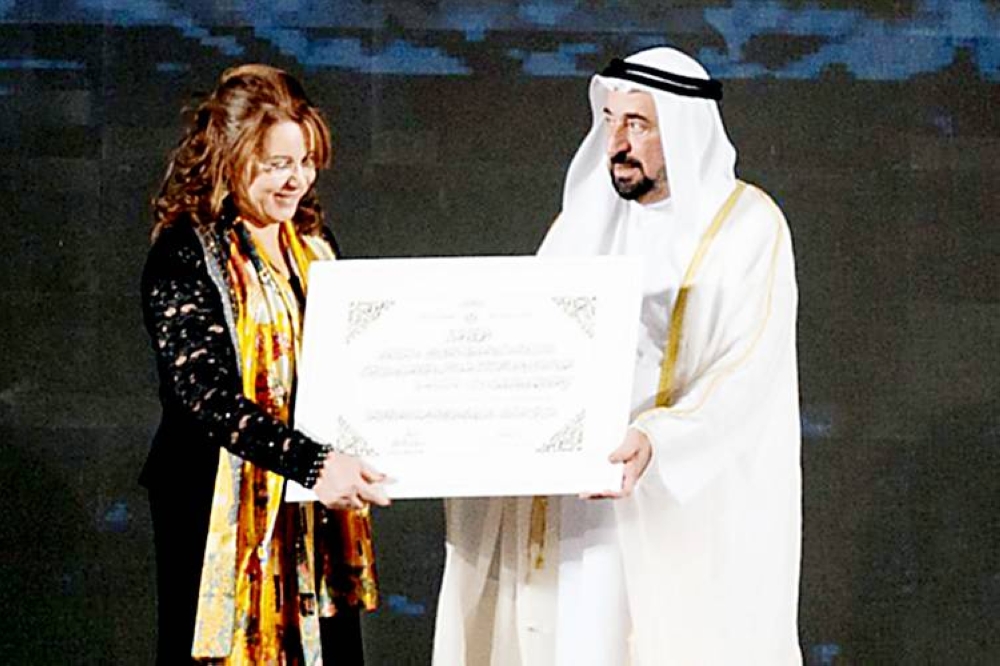
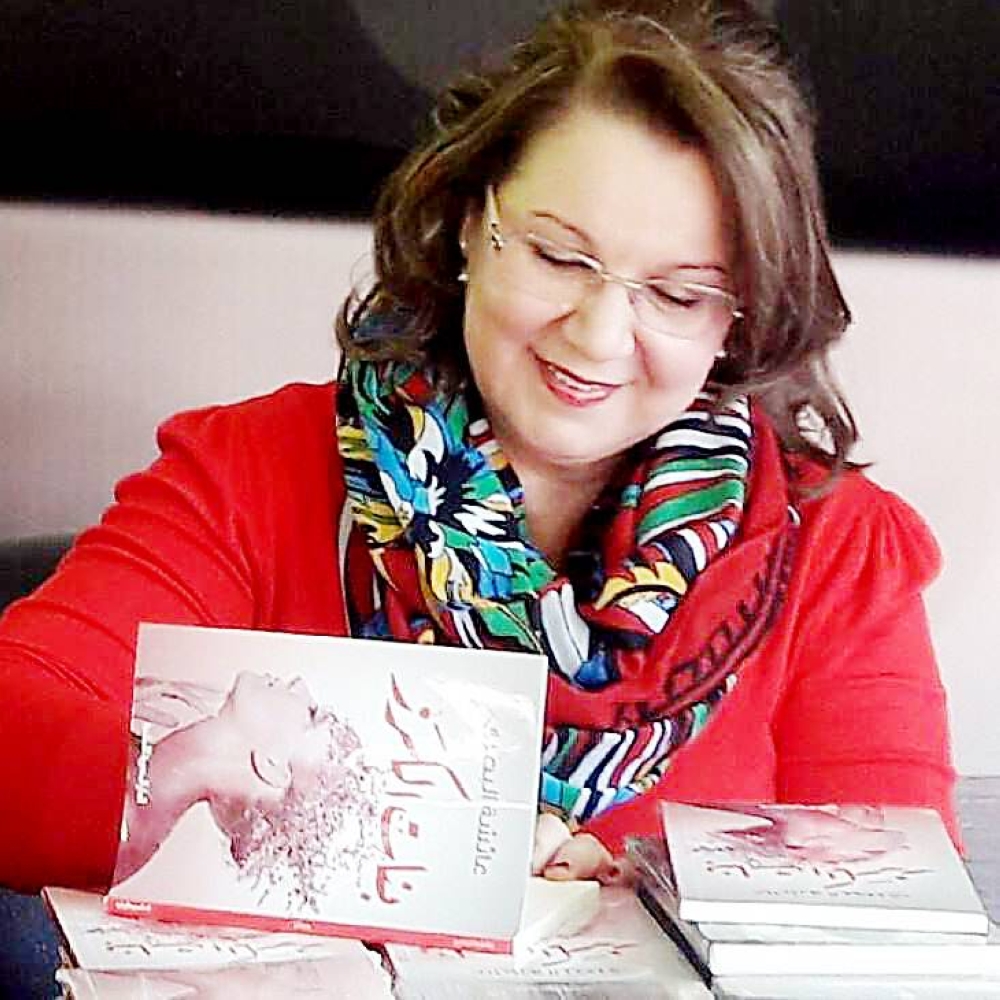
تعدّ الكاتبة المغربية عائشة البصري من الأسماء اللافتة في فضاء الإبداع العربي، فمنذ مجموعتها الشعرية الأولى «مساءات» الصادرة 2001، وهي تراكم التجربة بكتابات وإصدارات فاتنة، ولغة احترافية، لم تتوقف طويلاً عند «أرق الملائكة» لتنتقل إلى «شُرفة مطفأة»، وتعبر إلى «ليلةٍ سريعة العطب»، ثم ترصد «حديث مدفأة» وتنتقل سرديّاً إلى «ليالي الحرير»، وتردفها بـ«حفيدات جريتا جاربو»، وأعمال سكنت الوجدان والذاكرة والوعي، وهنا مساحة للتعرّف على فجر البدايات، ونهارات التفاصيل الدقيقة، لتجربة استحقت عن جدارة التكريم والإشادة من كبار النقاد، وفي ردودها ما يشعرنا بالثقة والسعادة في آنٍ، وحسبُ ذلك دافعاً لقراءة نتاجها الثّر المعبّر عن روح عبرت منعطفات الحياة، وعبّرت عنها بصدق وإخلاص، فإلى نصّ الحوار:
• متى بدأت علاقتك بالكتابة؟
•• لا أذكر أول نص كتبته. نشرت قصصاً قصيرة وقصائد شعرية في مجلات حائطية، ومنشورات الثانوية فترة الدراسة. ملأت- كما فعل زملائي الحالمون بالتأليف- دفاتر أنيقة بخواطر وأشعار. نلت جائزة أحسن نص قصصي. تلتها مرحلة صمت في الجامعة. ثم انشغلت بالألوان، كتبت مقاربات لأعمال تشكيليين مغاربة. ظهرت في الساحة الثقافية المغربية بأول مجموعة شعرية «مساءات» وتلتها مجموعات أخرى مسافة عقد من الزمن قبل أن أدخل صدفة مجال الرواية..
• من وقف وراء هذه التجربة بالدعم والمؤازرة ؟
•• والدي كان قارئاً نهماً باللغتين الفرنسية والعربية، رفيقاً وفيّاً للكتاب. ومكتبة البيت كانت أكبر محفز لي لاكتشاف عوالم الكتاب والكتابة. تلك الكتب المرصوصة على رفوف مكتبة والدي هي أول دعوة لي لعالم الحروف والكلمات، من ذكريات طفولتي، أذكر جلسات المساء الصيفي الطويل، حين كان يجلسنا حوله أنا وإخوتي ويقرأ علينا مقتطفات من روائع الأدب الفرنسي خلال القرنين السابع والثامن عشر، مؤكداً على مخارج الحروف وسلامة النطق بها، دون أن ينسى كونه معلماً للغة الفرنسية، ربما أردت أن أحقق له أمنيته في أن يصبح لنا في العائلة كاتب معروف.
• من يتابع نتاجك يشعر أن الهويّة الكتابية لم ترسُ على برّ، فيها الرواية والشعر، والقصة القصيرة، وربما دراسات نقدية، وكتابات إعلامية، ألا يؤثر ذلك على تراكمية مشروعك الكتابي؟
•• لا بد من الإشارة إلى أن مفهوم الكتابة اليوم أصبح أكبر وأوسع؛ لأن الأمر يتعلق بالحرية الإبداعية والحق في التخييل. تعدد الأجناس إثراء مضاعف للكاتب، وعدد كبير من كتاب الرواية في القرن العشرين قدِموا من الشعر: «خوسي سراماغو» «بول أوستير»، «الطاهر بنجلون» «ميشيل بوتور» «بيتر هاندك» «غونتر غراس» وغيرهم.. فيهم من ظل يكتب الشعر والرواية في نفس الآن، وفيهم من عاد إلى الشعر إثر تحقيق منجزات باهرة في الكتابة الروائية. هناك قضايا وانشغالات تختار شكلها الملائم، أكتب بين الفينة والأخرى مقاربات محبة لبعض النصوص التي تعجبني، لكن تجربتي الإبداعية على العموم تنحصر في الشعر والسرد، ورغم اختلاف الأجناس، أنا أشتغل من داخل اللغة، وهي الشيء الثابت في تجربة كل كاتب..
وتحولي بين السرد والشعر ليس خللاً، أو بحثاً عن شكلٍ يستوعب التجربة، بل استجابة لحالة وجدانية وفكرية. لا يمكن وضع تجربة كاتب ما في صندوق وإغلاقه دون التحولات الفكرية والعاطفية للكاتب وإلا سيكون ذلك قمعاً أدبيّاً. لا أظن أن هذا التعدد قد أضعف مشروعي الإبداعي بل عدد قرائي.. لن أشعر في يوم من الأيام بالذنب لأنني تجاوزت تخصصاً أدبيّاً معيناً لبسته زمناً. لأن الكتابة بالنسبة لي هي رحلة طويلة بمحطات مختلفة.
• بموضوعية أين تجدين نفسك، بين هذه العوالم؟
•• أعتبر نفسي شاعرة وأنتصر للشعر. وعقب أعوام وستة أعمال سردية عدت أخيراً إلى الشعر، بيتي الأول، بديوان شعري تحت عنوان «المياه الكبرى». لم أتوقف يوماً عن كتابة الشعر، كل يوم أدون بيتاً أو شذرة. لكن الرواية كانت تأخذ مني الكثير من الوقت لكي أجلس وأرتب بيتي الشعري. تراكمت القصائد المتناثرة بين الجذاذات والكراسات.. كل مرة أدخل مشروعاً روائيّاً آخر وأعدني بالعودة إلى القصيدة لأنها متنفسي الروحي. مع الأسف الجوائز والتنويهات التي حصلت عليها كانت في الرواية.
• متى شعرتِ بالطمأنينة على مشروعك؟ وما مصدر الإلهام الذي تتكئين عليه؟
•• نهاية الكاتب هو ذلك الشعور المزيف بالاطمئنان. لحد الآن وبعد ستة عشر كتاباً، أبدأ عملاً جديداً بنفس القلق والتوجس، والخوف الذي كتبت به أول كتاب. كما لو أنني لم أكتب من قبل، لنقل أنه «رعب الصفحة البيضاء». القلق هو جزء من عملية الكتابة. الكاتب الذي لا يقلق أو يخاف مما يكتبه على الأرجح لا يكتب شيئاً يستحق على حد قول الكاتب الأمريكي ستيفن كينغ.. مع السنوات وممارسة الكتابة لا يعتمد الكاتب كثيراً على الإلهام لا يجلس أمام الكومبيوتر وينتظر، تصبح الكتابة حرفة وعادة يومية. شخصياً تكون على مكتبي ملفات عدة مفتوحة، أجلس أمام الكومبيوتر وأنخرط في الكتابة حسب مزاجي اليومي.
• ما أثر الشاعر حسن نجمي على تجربتك باعتباره كاتباً لا شريكاً؟
•• ليس هناك تأثير متبادل بيننا في التوجهات الأدبية. أنا وزجي الشاعر والروائي حسن نجمي قارتان متباعدتان مختلفان في الكتابة والإبداع. وربما يستغرب البعض أن زوجي الكاتب والمبدع حسن نجمي لم يقرأ لي يوماً، وأنا منذ أعوام لم أقرأ له شيئاً؛ لأنني أرى أنه ليس من الضروري أن يقرأ الزوج للزوجة أو العكس. الزواج مؤسسة لا تلزم لا المرأة ولا الرجل بالمشاركة الأدبية والفكرية. لدي أفكاري ومواقفي ولدى زوجي أفكار ومواقف تختلف تماماً. زوجي لا يعرف عن رواياتي ولا دواويني الشعرية إلا ما يسمعه من نقاشات جانبية بين الأصدقاء.. نحن مختلفان تماماً في أسلوب الكتابة حتى مرجعياتنا اللغوية تختلف. فبالإضافة إلى اللغة العربية والفرنسية زوجي يقرأ باللغة الإيطالية، وأنا أقرأ بالإسبانية. الاختلاف الأدبي لا يفسد للزواج مودة. حتى المكتبة في البيت لست مشتركة، كل واحد له مكتبته الخاصة. لنقل إنه اتفاق ضمني للحفاظ على الهوية الإبداعية لكل واحد منا.. لا بد من أن يكون للمبدع زاوية ظل، لا يدخلها أحد حتى ولو كان زوجاً أو زوجة.. مهم بالنسبة لي تلك المساحة من الحرية الإبداعية التي أتمتع بها داخل مؤسسة الزواج والتي تفتقدها العديد من الكاتبات.
• بماذا تصفين زواج المبدعين؟
•• بصفة عامة، ليس من السهل اقتسام الحياة مع كاتب بسمات مختلفة إنسانياً وإبداعياً. المساكنة الإبداعية فيها الكثير من المعاناة، إذا أخذنا بعين الاعتبار انتماء المبدعين. ففي مجتمع عربي كمجتمعنا، بكل حمولاته الدينية والاجتماعية والاقتصادية كذلك، غالباً ما تكون المساكنة الإبداعية إعاقة كبيرة بالنسبة للمرأة. يظل الشد والجذب بين الطرفين قائماً إلى أن ينقطع التواصل بينهما. نادراً ما تنجح علاقة في هذا المجال، وهو ما تؤكده نهاية زيجات عديدة في الوسط الثقافي العربي. هناك أربعة أشخاص في زيجة بين مثقفين: المرأة والكاتبة والرجل والكاتب. زحمة وضجيج لا تتحملها مؤسسة الزواج، التي تعرف في واقعنا الحالي تحديات مجتمعية كثيرة.. إذا نجحت هذه الزيجة في أن تعبر السنوات الأولى الخطيرة، فمع الوقت ربما يتقبل الزوج الكاتبة وتتقبل الزوجة الكاتب، الارتباط بكاتب لعنة تتبع المرأة الكاتبة العربية أينما حلت، بحكم النظرة الذكورية الدونية لكل ما تبدعه المرأة، والتشكيك في قدراتها الإبداعية والفكرية. لحد الآن لم يستطع المجتمع العربي ولا حتى الساحة الثقافية التمييز بين مسارين مختلفين في الكتابة. شخصياً، حين أعلنت نفسي كاتبةً، وجدتني أمشي على بقايا ألغام حرب لم أشارك فيها. لهذا أدعو الثنائيات الأدبية الصاعدة أن لا يخضعوا لهذا الابتزاز الثقافي، وأن يستفيدوا من القيمة المضافة للمساكنة الأدبية.
• هل زواج المثقفين من واقع تجربتك مؤهل لمقاومة كل المزعزعات والزوابع؟
•• عطفاً على ما ذكرت، وانطلاقاً من تجارب عديدة لزيجات بين مثقفين فشلت أو تعثرت، أستطيع أن أقول أن مؤسسة الزواج، خصوصاً في العالم العربي، لا تساعد على هذا التداخل، لأسباب منها أن الكاتب والمبدع يمتلك وعياً زائداً بتعقيدات النفس والعلاقات، لكنه أيضاً أكثر عرضة للقلق والتحليل الزائد، وأحياناً للتمرد على الأنماط التقليدية. وهذا لا يخلق دائماً استقراراً، بل ربما يولد صراعاً داخلياً أو بين الطرفين. نرجسية الكاتب أقوى من أي ارتباط أو مؤسسة. للكاتب نرجسية مرتفعة، ما يحدث اصطداماً بين رؤى فكرية مختلفة، كما أنه يتعامل مع العالم كما لو كان نصاً قابلاً للتأويل الدائم، ما ربما أن يعيق التفاعل البسيط والعفوي بين الزوجين، الثقافة تمنح أدوات للفهم والتأمل والتواصل، لكنها لا تُلغي الطبيعة البشرية. وفي أوروبا وأمريكا، هناك القليل من الثنائيات في الأدب والحياة.
• ألا تؤثر الالتزامات الأسرية على النتاج الكتابي؟
•• المرأة في المجتمع العربي، تُحمَّل الجزء الأكبر من أعباء الحياة المنزلية: تربية الأطفال، رعاية الزوج، إدارة البيت. إضافة إلى العمل خارج البيت.. وهذه الانشغالات تستهلك الوقت والجهد الذهني والعاطفي، وتقلّص المساحات الحرة التي يحتاجها الإبداع. الإبداع ليس فعلاً ميكانيكياً، بل يحتاج إلى صفاء، وحدة، ومساحة نفسية، ومكان للكتابة، وهي شروط غالباً ما تكون مهدَّدة في حياة الكاتبة الأم والزوجة. الكتابة فعل فردي وتحتاج مسافة بُعد عن الآخر، كما تحتاج لحرية أكبر، والالتزام المؤسسي يضعها تحت المحك. أعوام طويلة، وأنا لا أستطيع الكتابة إلا في ذلك الوقت الضيق المقتطع من يومي وهو من الخامسة صباحاً إلى الثامنة صباحاً قبل أن يستيقظ مَنْ في البيت. الحقيقة أنه من الصعب خلق توازن بين الكاتبة والزوجة والأم.
• ما نصيب الأعمال الوظيفية والنقابية من يومك؟
•• منذ سنوات تركت الوظيفة، وامتهنت الكتابة، ما عوضني عن وقت للكتابة كنت أفتقده من قبل.
• ما الذي يدفعك للكتابة؟
•• ببساطة، أكتب لأنه ليس لدي ما يكفي من الشجاعة كي أواجه الناس والحياة. في الشعر أختبئ وراء المجاز لأقول ما أريد وبحرية. في الرواية ألبس أقنعة الشخصيات لأدين واقعاً مجحفاً للمرأة، لتحسيس المجتمع باختلالاته وخلخلة هذا الواقع. الكتابة ضرورة وجودية بالنسبة لي كأنثى. لقد جاءت الكتابة في حياتي رد فعل على لحظات فاصلة، بعضها مؤلم، وبعضها مربك، وبعضها تركني في مواجهة نفسي وأسئلتي الكبرى. مررتُ بفترات صمت طويلة، سواء بسبب الأمومة أو الانشغالات الحياتية، لكن اللغة بقيت في داخلي كامنة، تبحث عن مخرج. وعندما عادت، عادت بقوة، كحاجة داخلية لا يمكن التفاوض حولها. الكتابة مساحة للتعبير، للتأمل، وللتصالح أحياناً مع ما لا يمكن التصالح معه. لا أكتب لأنني أملك أجوبة، بل لأنني أبحث عن الأسئلة. أكتب عندما أشعر أن هناك صوتاً غائباً يجب أن يُسمَع، أو ظلّ امرأة منسيّة يجب أن يُروى. الكتابة أيضاً شكل من أشكال الشهادة، وليست فقط تمريناً جمالياً. وقبل جمالية النص، الكتابة فعل متضامن بالأساس، هي وسيلتي للاقتراب من تجارب إنسانية قاسية، رغم أن ذلك لم يكن واضحاً خلف المجاز الشعري في المجموعات الشعرية الأولى، لكنه بدا جلياً في رواياتي. أظن أننا ككاتبات ملزمات بالدفاع عن حقنا ومشروعيتنا في التواجد الثقافي والاجتماعي والسياسي، ففي النهاية نحن نكتب دفاعاً عن قيم، وما الإبداع إلا رسائل عبر آليات التخييل.
• أين جسور التواصل بين مشرقنا العربي ومغربه؟
•• بين المشرق والمغرب جسور ثقافية، كانت على الدوام راسخة ومتعددة الأبعاد رغم اختلاف السياقات التاريخية والجغرافية. هذه الجسور لا تُختزل في الجغرافيا أو اللغة فقط، بل تتعداها إلى عمق التجربة الحضارية المشتركة، وتاريخ طويل من التبادل والتفاعل. أكيد أن اللغة العربية لعبت دوراً مركزياً في هذا التلاقح، باعتبارها الحامل الرمزي والثقافي الذي عبّرت من خلاله المجتمعات عن قضاياها وهواجسها. إلا أن التراث المشترك من الفلسفة إلى التصوف، ومن الشعر إلى الفكر الديني ساهم في بلورة نوع من الوعي الجماعي العربي، الذي لا يمكن فصل روافده المشرقية عن نظيرتها المغربية. هذا الوعي الجماعي توطد أخيراً بفضل أشكال التواصل الحديثة. على سبيل المثال لا الحصر، تأثر الكُتّاب المغاربة بتيارات الحداثة الشعرية والفكرية القادمة من المشرق، من بيروت والقاهرة ودمشق، كما تأثر المشرق بموجات التجديد الغربية التي أعاد صياغتها كتاب المغرب من خلال تجربة محلية خاصة، منفتحة على التعدد الثقافي والهوياتي للمغرب. الآن، لا أحد ينكر أن هناك ندية ثقافية واضحة، ورغم التحديات السياسية والاقتصادية يظل بيننا مشترك ثقافي متجذر وممتد.
• هل عززت مواقع التواصل الاجتماعي وشائج التفاعل بين المثقفين؟
•• رغم المخاطر المترتبة على استعمال هذه الوسائل، أصبحت مواقع التواصل الاجتماعي -خلال العقدين الأخيرين- فضاءً جديداً للتفاعل بين المثقفين العرب، وأعادت رسم حدود العلاقة بين المركز الثقافي والهامش، وبين الكاتب والقارئ، بل وبين المثقفين أنفسهم. لقد عززت هذه الوسائط، إلى حدٍّ كبير، وشائج الحوار والتقاطع، وخلقت نوعاً من الديمقراطية الثقافية غير المسبوقة. لم يعد المثقف العربي تحت رحمة مؤسسات النشر، أو رهين مواعيد الملاحق الثقافية الأسبوعية. أصبحت المنصة الإلكترونية امتداداً لصوته، وأحياناً بديله الأوّل. والفكرة تنتقل من الرباط إلى الرياض، ومن بغداد إلى الجزائر، في لحظات معدودة، مصحوبةً بتفاعلات آنية ونقاشات تتجاوز الجغرافيا والبيروقراطيات الثقافية. من جهة أخرى، أسهمت هذه المنصات في كسر المركزية الثقافية المشرقية التي طالما هيمنت على المشهد العربي، وأتاحت لأصوات مغاربية وخليجية وفلسطينية وسودانية أن تتقاطع في فضاء لغوي مشترك، دون أن يُفرَض عليها معيار جغرافي أو سلطوي.
• ما المنصات والمبادرات التي تحتاجها الثقافة العربية؟
•• ربما لست في موقع يسمح لي باقتراح حلول، لكن في ظل التحوّلات السريعة التي يعرفها المشهد الثقافي العالمي، تبرز الحاجة الملحّة إلى التفكير في منصات عربية ومبادرات ثقافية جديدة تستجيب لمتطلبات العصر، وتعزز التكامل بين الفاعلين الثقافيين من مختلف أقطار الوطن العربي. والعمل على الترجمة ليفهمنا الآخر، والمشاركة في كتابة النص الكوني، بخلق المزيد من المراكز المهتمة بهذا الجانب المهم للثقافة العربية. وإطلاق منصات رقمية للنقد الأدبي. فالملاحظ أن النقد العربي لا يواكب تحولات النص الأدبي الذي عرف طفرة النشر في السنوات الأخيرة. بعض النقاد لم يطوروا أدواتهم النقدية لعدم قدرتهم على مواكبة التجديد، والانخراط في كتابة عالمية حديثة. وأهم من ذلك، التشجيع على القراءة وتربية قارئ مواكب ومهتم بالاعتماد على المناهج مدرسية.
• ما انطباعك عن تحوّل الثقافة الصلبة إلى سائلة أو مسيّلة؟
•• هذا السؤال مرتبط بكيفية تعاملنا مع تقنيات التواصل الحديثة. في زمن لا يكفّ عن التحوّل، لم تعد الثقافة كما عهدناها. نحن اليوم أمام انتقال حقيقي، لا على مستوى الوسائط فقط، بل في طبيعة التلقّي والإنتاج والمكانة الرمزية للمعرفة نفسها، وهو تحوّل يتجاوز التقنية، ليطول جوهر الممارسة الثقافية.
هذا التحول له وجهان، فمن جهة، فتحت الثقافة السائلة المجال أمام فئات أوسع من الناس للتفاعل مع الأفكار والكتب والفنون، بل وأعادت الاعتبار لأصوات كانت مهمّشة أو بعيدة عن «المركز». ومن جهة أخرى، ثمة خطر حقيقي: أن تتحوّل الثقافة إلى «محتوى»، أي إلى شيء سريع الزوال، خفيف، مصمَّم ليُستهلك بسرعة ثم يُنسى. في هذا المشهد، نخشى أن يُفرّغ المعنى من عمقه، وأن تتحوّل المعرفة إلى أداة حضور رمزي بلا مضمون نقدي.
خوفنا الآن، هو أن نكون قد دخلنا زمن هشاشة المفاهيم. أن تفقد الثقافة عمقها، وتتحول إلى لحظة رقمية: سريعة، مختزلة، آنية، تفضّل الانطباع على التحليل، أن نسقط في إغراء السرعة ونخسر المعنى.
• لماذا طغى اسم محمد شكري على النتاج الإبداعي المغربي؟ وهل تعدينه ظاهرة؟
•• لا يمكن إنكار أن محمد شكري مثّل ظاهرة حقيقية في الأدب المغربي والعربي، كاتب خرج من الهامش إلى المتن، ومن العنف إلى اللغة، ومن العزلة إلى الترجمة العالمية، فشكّل صدمة فنية في زمن كان الأدب فيه لا يزال أسير التجميل الثقافي، فجاء هو بلغة الجسد، والانكسار، والنجاة الفردية. «الخبز الحافي» لم تكن رواية فقط، بل كانت انقلاباً على نظرة الناس إلى السيرة الذاتية، وعلى سلطة الرقيب الاجتماعي والأخلاقي والسياسي. لا يمكن الآن اختزال الأدب المغربي في اسم محمد شكري كظاهرة انتعشت أساساً من انبهار الآخر الغربي والشرقي معاً بصورة «الكاتب الملعون»، الخارج عن النظام، المتمرد لغوياً وسلوكاً، فأصبح عند البعض صورة نمطية عن المغرب الثقافي. إن حصر المشهد الروائي المغربي فيه فقط ظلم لأسماء روائية وازنة حققت تراكماً و نجاحاً في العالم العربي والغربي.
• كيف ترين مقولة المغرب يشتهر بمفكريه أكثر من سارديه وشعرائه؟
•• ربما هذه المقولة أصبحت متجاوزة الآن. ففي السنوات الأخيرة لم ينحصر التفوق والشهرة في الجانب الفكري فقط، بل تعداه إلى التفوق في الجانب الإبداعي كذلك. صحيح أن المغرب يتوفر على مفكرين ونقاد وباحثين كبار، وهو الآن يتوفر على كتاب وشعراء ومسرحيين وسيميائيين وفنانين تشكيليين مهمين.. والمشكلة أن النظرة القديمة التي كانت تعتبر المغاربة أهل نحو وفقه ولغة ما زالت سائدة، إلى حدٍّ ما، رغم مجمل التحولات الهائلة في أنظمتنا الثقافية والفكرية والإبداعية والجمالية في المغرب. وكون هذه النظرة التي تعجز عن الاطلاع والمتابعة -عكس ما نقوم به نحن من جهد لمتابعة الإنتاج الفكري والأدبي في الجناح الشرقي لأمتنا -لا يعني أننا لا نتوفر على أدب حقيقي. وإلا ماذا تعني هذه الجوائز العربية الوازنة التي حصل عليها أدباء وشعراء من المغرب. ولا تعوزنا الأسماء والأمثلة المغربية: محمد عابد الجابري، محمد مفتاح، عبدالفتاح كيليطو، محمد الأشعري، محمد بنيس، وغيرهم من الأسماء الشابة والجديدة.
• لمن تقرئين من الكتاب السعوديين؟
•• لدي صديقات وأصدقاء من الكتاب السعوديين. التقيت أغلبهم في مناسبات ثقافية: مهرجانات، معارض الكتب، وهناك من شاركتهم ندوات. رغم أنني لم أشارك في أنشطة بالمملكة السعودية فأنا أواكب إنتاجهم وتحولات الساحة الثقافية التي عرفت أخيراً انفتاحاً وتجديداً ملحوظاً؛ نظراً لعناية المملكة بالجانب الثقافي والفني. ولا بد من التنويه هنا بأن الحداثة الأدبية في السعودية مرت بمراحل مثيرة وثرية، وواجهت تحديات فكرية واجتماعية كبيرة، خصوصاً في ظل السياق المحافظ الذي كان يحيط بالنشاط الثقافي لعقود. ومع ذلك، ظهر جيل من الكتّاب السعوديين الحداثيين الذين لعبوا دوراً بارزاً في زعزعة البنية التقليدية للكتابة وإدخال مفاهيم جديدة في الشكل والمضمون. أتابع إصدارات الكثيرين أذكر بعض الأسماء مع الاعتذار لآخرين قد أسهو عنهم، في الشعر أحمد الملا، علي الحازمي، في الرواية عبدالرحمن منيف، عبده الخال ورجاء عالم، وزينب حفني، في النقد عبدالله الغذامي.
• هل أنصف النقاد تجربتك؟
•• لا أنكر أن الكثير من النقاد اهتموا بتجربتي الإبداعية، أذكر من بينهم الناقد المصري الدكتور صلاح فضل رحمه الله، كما حظيت إصداراتي باحتفاء الكثير من الكتاب كذلك. لكن بحكم ترجمة كتبي إلى لغات أخرى، كانت كتابات الآخرين وتقييمهم للتجربة أكثر إنصافاً، ربما لأنهم احتكموا للنص بغض النظر عن جنس كاتبه أو انتمائه.
عدّت محمد شكري ظاهرة في الأدب المغربي والعربي
عائشة البصري: تعدُّد الأجناس إثراء.. وتنقُّلي بين السرد والشعر ليس خللاً
11 يوليو 2025 - 03:29
|
آخر تحديث 11 يوليو 2025 - 03:29


تابع قناة عكاظ على الواتساب
حاورها: علي الرباعي Al_ARobai@
The Moroccan writer Aisha Al-Basri is one of the notable names in the realm of Arab creativity. Since her first poetry collection "Masa'at," published in 2001, she has been accumulating experience through captivating writings and publications, with a professional language. She did not linger long on "The Angels' Insomnia" before moving on to "An Extinguished Balcony," crossing into "A Night of Rapid Damage," then capturing "The Fireplace Talk" and narratively transitioning to "Silk Nights," followed by "The Granddaughters of Greta Garbo," and works that have settled in the heart, memory, and consciousness. Here is a space to get to know the dawn of beginnings and the days of intricate details, for a journey that has deservedly earned recognition and praise from prominent critics. In her responses, there is a sense of confidence and happiness at once, and that alone is a motivation to read her rich output that expresses a spirit that has crossed the twists and turns of life, and has articulated it with sincerity and fidelity. So, here is the text of the dialogue:
• When did your relationship with writing begin?
•• I don't remember the first text I wrote. I published short stories and poetry in wall magazines and high school publications during my studies. I filled—like my fellow dreamers of authorship—elegant notebooks with thoughts and poems. I won an award for the best narrative text. This was followed by a period of silence in university. Then I became preoccupied with colors, writing approaches to the works of Moroccan artists. I appeared in the Moroccan cultural scene with my first poetry collection "Masa'at," followed by other collections over a decade before I accidentally entered the field of novels..
• Who supported and encouraged this experience?
•• My father was an avid reader in both French and Arabic, a loyal companion to books. The home library was my greatest motivator to discover the worlds of books and writing. Those books lined up on my father's library shelves were my first invitation to the world of letters and words. From my childhood memories, I recall long summer evening sessions when he would gather my siblings and me around him and read excerpts from the masterpieces of French literature from the 17th and 18th centuries, emphasizing the pronunciation of letters and their correct articulation, not forgetting that he was a teacher of the French language. Perhaps I wanted to fulfill his wish for us to have a well-known writer in the family.
• Those who follow your work feel that your writing identity has not settled on solid ground; it includes novels, poetry, short stories, and perhaps critical studies and journalistic writings. Does this not affect the cumulative nature of your writing project?
•• It must be noted that the concept of writing today has become larger and broader; it concerns creative freedom and the right to imagination. The multiplicity of genres is a double enrichment for the writer, and many novelists in the 20th century came from poetry: "José Saramago," "Paul Auster," "Tahar Ben Jelloun," "Michel Butor," "Peter Handke," "Günter Grass," and others. Some continued to write poetry and novels simultaneously, while others returned to poetry after achieving remarkable accomplishments in novel writing. There are issues and concerns that choose their appropriate form. From time to time, I write loving approaches to some texts that I admire, but my creative experience, in general, is confined to poetry and narrative. Despite the differences in genres, I work from within the language, which is the constant element in every writer's experience..
My transition between narrative and poetry is not a flaw or a search for a form that accommodates the experience, but rather a response to an emotional and intellectual state. One cannot place a writer's experience in a box and close it without considering the writer's intellectual and emotional transformations; otherwise, it would be literary oppression. I do not believe that this multiplicity has weakened my creative project; rather, it has multiplied my readers. I will never feel guilty for having surpassed a certain literary specialization that I wore for a time. Because writing, for me, is a long journey with different stations.
• Objectively, where do you find yourself among these worlds?
•• I consider myself a poet and I advocate for poetry. After years and six narrative works, I finally returned to poetry, my first home, with a poetry collection titled "The Great Waters." I have never stopped writing poetry; every day I jot down a verse or a fragment. However, the novel took a lot of my time to sit down and arrange my poetic house. The scattered poems accumulated among scraps and notebooks. Each time I enter another novel project, I promise myself to return to poetry because it is my spiritual outlet. Unfortunately, the awards and mentions I received were in the realm of novels.
• When did you feel reassured about your project? What is the source of inspiration you lean on?
•• The end of the writer is that false feeling of reassurance. Until now, after sixteen books, I begin a new work with the same anxiety, apprehension, and fear with which I wrote my first book. As if I had never written before; let's call it "the terror of the blank page." Anxiety is part of the writing process. A writer who does not feel anxious or afraid of what they write is likely not writing anything worth mentioning, as the American writer Stephen King puts it. Over the years and through the practice of writing, the writer does not rely much on inspiration; they do not sit in front of the computer waiting. Writing becomes a craft and a daily habit. Personally, I have several open files on my desk; I sit in front of the computer and engage in writing according to my daily mood.
• What impact has the poet Hassan Najmi had on your experience as a writer without a partner?
•• There is no mutual influence between us in literary directions. My husband, the poet and novelist Hassan Najmi, and I are two distant continents, different in writing and creativity. Some may be surprised that my husband, the writer and creator Hassan Najmi, has never read my work, and I have not read anything of his for years; because I see that it is not necessary for a spouse to read their partner's work or vice versa. Marriage is an institution that does not obligate either the woman or the man to literary or intellectual participation. I have my ideas and positions, and my husband has ideas and positions that differ completely. My husband knows nothing about my novels or poetry collections except what he hears from side discussions among friends. We are completely different in writing style, and even our linguistic references differ. In addition to Arabic and French, my husband reads in Italian, while I read in Spanish. Literary differences do not spoil the affection of marriage. Even the library at home is not shared; each of us has their own library. Let's say it is an implicit agreement to preserve each of our creative identities. A creator must have a shadow corner that no one enters, even if it is a spouse. That space of creative freedom I enjoy within the institution of marriage is important to me, and many female writers lack it.
• How would you describe the marriage of creators?
•• In general, it is not easy to share life with a writer who has different human and creative traits. Creative cohabitation involves a lot of suffering, especially considering the belonging of creators. In an Arab society like ours, with all its religious, social, and economic burdens, creative cohabitation often poses a significant obstacle for women. The tug-of-war between the two parties continues until communication between them is severed. Rarely does a relationship in this field succeed, which is confirmed by the end of many marriages in the Arab cultural sphere. There are four people in a marriage between intellectuals: the woman, the writer, the man, and the writer. A crowd and noise that marriage cannot bear, which currently faces many societal challenges. If this marriage succeeds in crossing the dangerous early years, over time, perhaps the husband will accept the writer, and the wife will accept the writer. Being linked to a writer is a curse that follows the Arab female writer wherever she goes, due to the male gaze's derogatory view of everything a woman creates and the skepticism about her creative and intellectual abilities. So far, Arab society and even the cultural scene have not been able to distinguish between two different paths in writing. Personally, when I announced myself as a writer, I found myself walking on the remains of landmines from a war I did not participate in. Therefore, I urge emerging literary couples not to succumb to this cultural blackmail and to benefit from the added value of literary cohabitation.
• Is the marriage of intellectuals, based on your experience, qualified to resist all disturbances and storms?
•• In light of what I mentioned and based on numerous experiences of marriages between intellectuals that have failed or stumbled, I can say that the institution of marriage, especially in the Arab world, does not facilitate this overlap. For reasons including that the writer and creator possesses an increased awareness of the complexities of the psyche and relationships, but they are also more susceptible to anxiety and excessive analysis, and sometimes to rebellion against traditional patterns. This does not always create stability; rather, it may generate internal conflict or conflict between the two parties. The writer's narcissism is stronger than any bond or institution. The writer has high narcissism, which creates a collision between different intellectual visions, and they deal with the world as if it were a text subject to constant interpretation, which may hinder simple and spontaneous interaction between spouses. Culture provides tools for understanding, contemplation, and communication, but it does not eliminate human nature. In Europe and America, there are few couples in literature and life.
• Do family obligations affect literary output?
•• Women in Arab society bear the largest share of household burdens: raising children, caring for the husband, managing the home, in addition to working outside the home. These preoccupations consume time, mental and emotional effort, and reduce the free spaces that creativity needs. Creativity is not a mechanical act; it requires clarity, solitude, a psychological space, and a place to write, conditions that are often threatened in the life of a mother and wife writer. Writing is an individual act and requires distance from others, as it needs greater freedom, and institutional commitment puts it to the test. For many years, I could only write during that narrow time slice of my day, from five in the morning to eight in the morning, before those in the house wake up. The truth is that it is difficult to create a balance between being a writer, a wife, and a mother.
• What share do functional and union works have in your day?
•• I left my job years ago and pursued writing, which compensated me for the time I had previously lacked for writing.
• What drives you to write?
•• Simply, I write because I do not have enough courage to face people and life. In poetry, I hide behind metaphor to say what I want freely. In the novel, I wear the masks of characters to condemn an unjust reality for women, to make society aware of its imbalances and to shake this reality. Writing is an existential necessity for me as a woman. Writing came into my life as a reaction to pivotal moments, some painful, some confusing, and some left me facing myself and my big questions. I went through long periods of silence, whether due to motherhood or life preoccupations, but the language remained within me dormant, searching for an outlet. And when it returned, it came back strongly, as an internal need that cannot be negotiated. Writing is a space for expression, contemplation, and sometimes reconciliation with what cannot be reconciled. I do not write because I have answers, but because I am searching for questions. I write when I feel that there is a missing voice that needs to be heard, or a shadow of a forgotten woman that needs to be told. Writing is also a form of testimony, and not just an aesthetic exercise. Before the aesthetics of the text, writing is fundamentally a solidarity act; it is my means to approach harsh human experiences, even though this was not clear behind the poetic metaphor in my early poetry collections, but it became evident in my novels. I believe that we, as women writers, are obliged to defend our right and legitimacy to exist culturally, socially, and politically, for in the end, we write in defense of values, and creativity is nothing but messages conveyed through the mechanisms of imagination.
• Where are the bridges of communication between our Arab East and West?
•• Between the East and the West, there are cultural bridges that have always been solid and multidimensional despite the differences in historical and geographical contexts. These bridges are not limited to geography or language alone, but extend to the depth of the shared civilizational experience and a long history of exchange and interaction. Certainly, the Arabic language has played a central role in this mingling, as it is the symbolic and cultural carrier through which societies have expressed their issues and concerns. However, the shared heritage from philosophy to mysticism, from poetry to religious thought has contributed to the crystallization of a kind of Arab collective consciousness, which cannot be separated from its Eastern and Moroccan tributaries. This collective consciousness has recently solidified thanks to modern forms of communication. For example, Moroccan writers have been influenced by the currents of poetic and intellectual modernity coming from the East, from Beirut, Cairo, and Damascus, just as the East has been influenced by the waves of Western renewal that Moroccan writers have reshaped through a unique local experience, open to the cultural and identity multiplicity of Morocco. Now, no one can deny that there is a clear cultural parity, and despite the political and economic challenges, there remains a rooted and extended cultural commonality between us.
• Have social media strengthened the bonds of interaction among intellectuals?
•• Despite the risks associated with using these means, social media has become, over the past two decades, a new space for interaction among Arab intellectuals, reshaping the boundaries of the relationship between the cultural center and the periphery, between the writer and the reader, and even among intellectuals themselves. These platforms have significantly strengthened the ties of dialogue and intersection, creating a kind of unprecedented cultural democracy. The Arab intellectual is no longer at the mercy of publishing institutions or dependent on the schedules of weekly cultural supplements. The electronic platform has become an extension of their voice, and sometimes their first alternative. Ideas travel from Rabat to Riyadh, and from Baghdad to Algiers, in moments, accompanied by immediate interactions and discussions that transcend geography and cultural bureaucracies. On the other hand, these platforms have contributed to breaking the cultural centrality of the East that has long dominated the Arab scene, allowing Maghreb, Gulf, Palestinian, and Sudanese voices to intersect in a shared linguistic space, without being imposed a geographic or authoritative standard.
• What platforms and initiatives does Arab culture need?
•• Perhaps I am not in a position to propose solutions, but in light of the rapid transformations that the global cultural scene is experiencing, there is an urgent need to think about new Arab platforms and cultural initiatives that respond to the demands of the era and enhance integration among cultural actors from various parts of the Arab world. Working on translation to help others understand us, and participating in writing the universal text, by creating more centers interested in this important aspect of Arab culture. Launching digital platforms for literary criticism is also essential. It is noticeable that Arab criticism has not kept pace with the transformations of literary texts that have witnessed a publishing boom in recent years. Some critics have not developed their critical tools due to their inability to keep up with renewal and engage in modern global writing. More importantly, encouraging reading and nurturing an engaged and interested reader based on school curricula is crucial.
• What is your impression of the transformation of solid culture into liquid or fluid culture?
•• This question is related to how we deal with modern communication techniques. In a time that does not cease to transform, culture is no longer as we once knew it. We are now facing a real transition, not only at the level of media but also in the nature of reception, production, and the symbolic status of knowledge itself, which is a transformation that transcends technique to touch the essence of cultural practice.
This transformation has two faces; on one hand, liquid culture has opened the field for a wider range of people to interact with ideas, books, and arts, and has restored value to voices that were marginalized or distant from the "center." On the other hand, there is a real danger: that culture may turn into "content," something fleeting, light, designed to be consumed quickly and then forgotten. In this scene, we fear that meaning will be stripped of its depth, and knowledge will become a tool for symbolic presence without critical substance.
Our fear now is that we have entered an era of conceptual fragility. That culture loses its depth and transforms into a digital moment: fast, condensed, immediate, favoring impression over analysis, falling into the temptation of speed and losing meaning.
• Why has the name Muhammad Shukri overshadowed Moroccan creative output? Do you consider him a phenomenon?
•• It cannot be denied that Muhammad Shukri represented a real phenomenon in Moroccan and Arab literature, a writer who emerged from the margins to the center, from violence to language, from isolation to global translation, creating an artistic shock at a time when literature was still a prisoner of cultural beautification. He came with the language of the body, fracture, and individual survival. "For Bread Alone" was not just a novel, but a revolution against people's perceptions of autobiography and the authority of social, moral, and political censorship. It is now impossible to reduce Moroccan literature to the name of Muhammad Shukri as a phenomenon that primarily thrived on the fascination of both the Western and Eastern other with the image of the "damned writer," the one who is outside the system, linguistically and behaviorally rebellious, thus becoming, for some, a stereotype of Moroccan culture. Limiting the Moroccan narrative scene to him alone is an injustice to significant narrative names that have achieved accumulation and success in the Arab and Western worlds.
• How do you see the saying that Morocco is more famous for its thinkers than its narrators and poets?
•• Perhaps this saying has become outdated now. In recent years, excellence and fame have not been confined to the intellectual side only, but have also extended to excellence in the creative aspect. It is true that Morocco has great thinkers, critics, and researchers, and now it has important writers, poets, playwrights, semioticians, and visual artists. The problem is that the old perception, which considered Moroccans as people of grammar, jurisprudence, and language, still somewhat prevails, despite the enormous transformations in our cultural, intellectual, creative, and aesthetic systems in Morocco. The fact that this perception fails to engage and follow—unlike the effort we make to keep up with the intellectual and literary production in the eastern wing of our nation—does not mean that we do not have genuine literature. Otherwise, what do these significant Arab awards won by Moroccan writers and poets mean? We are not short of Moroccan names and examples: Muhammad Abed al-Jabri, Muhammad Miftah, Abdelfattah Kilito, Muhammad Ash'ari, Muhammad Bennis, and others among the young and new names.
• Whom do you read among Saudi writers?
•• I have friends among Saudi writers. I met most of them at cultural events: festivals, book fairs, and some I shared seminars with. Although I have not participated in activities in the Kingdom of Saudi Arabia, I follow their production and the transformations of the cultural scene, which has recently witnessed notable openness and renewal, due to the Kingdom's attention to the cultural and artistic aspect. It is worth noting here that literary modernity in Saudi Arabia has gone through exciting and rich stages, facing significant intellectual and social challenges, especially in light of the conservative context that surrounded cultural activity for decades. Nevertheless, a generation of modern Saudi writers has emerged who played a prominent role in shaking the traditional structure of writing and introducing new concepts in form and content. I follow the publications of many, mentioning some names while apologizing to others I may overlook: in poetry, Ahmad Al-Mulla, Ali Al-Hazmi; in novels, Abdul Rahman Munif, Abdu Khal, Rajaa Alem, and Zaynab Hafni; in criticism, Abdullah Al-Ghadhami.
• Have critics done justice to your experience?
•• I do not deny that many critics have shown interest in my creative experience, including the Egyptian critic Dr. Salah Fadl, may he rest in peace, and my publications have been celebrated by many writers as well. However, due to the translation of my books into other languages, the writings of others and their evaluations of my experience have been more just, perhaps because they judged the text regardless of the gender of its author or their affiliation.
• When did your relationship with writing begin?
•• I don't remember the first text I wrote. I published short stories and poetry in wall magazines and high school publications during my studies. I filled—like my fellow dreamers of authorship—elegant notebooks with thoughts and poems. I won an award for the best narrative text. This was followed by a period of silence in university. Then I became preoccupied with colors, writing approaches to the works of Moroccan artists. I appeared in the Moroccan cultural scene with my first poetry collection "Masa'at," followed by other collections over a decade before I accidentally entered the field of novels..
• Who supported and encouraged this experience?
•• My father was an avid reader in both French and Arabic, a loyal companion to books. The home library was my greatest motivator to discover the worlds of books and writing. Those books lined up on my father's library shelves were my first invitation to the world of letters and words. From my childhood memories, I recall long summer evening sessions when he would gather my siblings and me around him and read excerpts from the masterpieces of French literature from the 17th and 18th centuries, emphasizing the pronunciation of letters and their correct articulation, not forgetting that he was a teacher of the French language. Perhaps I wanted to fulfill his wish for us to have a well-known writer in the family.
• Those who follow your work feel that your writing identity has not settled on solid ground; it includes novels, poetry, short stories, and perhaps critical studies and journalistic writings. Does this not affect the cumulative nature of your writing project?
•• It must be noted that the concept of writing today has become larger and broader; it concerns creative freedom and the right to imagination. The multiplicity of genres is a double enrichment for the writer, and many novelists in the 20th century came from poetry: "José Saramago," "Paul Auster," "Tahar Ben Jelloun," "Michel Butor," "Peter Handke," "Günter Grass," and others. Some continued to write poetry and novels simultaneously, while others returned to poetry after achieving remarkable accomplishments in novel writing. There are issues and concerns that choose their appropriate form. From time to time, I write loving approaches to some texts that I admire, but my creative experience, in general, is confined to poetry and narrative. Despite the differences in genres, I work from within the language, which is the constant element in every writer's experience..
My transition between narrative and poetry is not a flaw or a search for a form that accommodates the experience, but rather a response to an emotional and intellectual state. One cannot place a writer's experience in a box and close it without considering the writer's intellectual and emotional transformations; otherwise, it would be literary oppression. I do not believe that this multiplicity has weakened my creative project; rather, it has multiplied my readers. I will never feel guilty for having surpassed a certain literary specialization that I wore for a time. Because writing, for me, is a long journey with different stations.
• Objectively, where do you find yourself among these worlds?
•• I consider myself a poet and I advocate for poetry. After years and six narrative works, I finally returned to poetry, my first home, with a poetry collection titled "The Great Waters." I have never stopped writing poetry; every day I jot down a verse or a fragment. However, the novel took a lot of my time to sit down and arrange my poetic house. The scattered poems accumulated among scraps and notebooks. Each time I enter another novel project, I promise myself to return to poetry because it is my spiritual outlet. Unfortunately, the awards and mentions I received were in the realm of novels.
• When did you feel reassured about your project? What is the source of inspiration you lean on?
•• The end of the writer is that false feeling of reassurance. Until now, after sixteen books, I begin a new work with the same anxiety, apprehension, and fear with which I wrote my first book. As if I had never written before; let's call it "the terror of the blank page." Anxiety is part of the writing process. A writer who does not feel anxious or afraid of what they write is likely not writing anything worth mentioning, as the American writer Stephen King puts it. Over the years and through the practice of writing, the writer does not rely much on inspiration; they do not sit in front of the computer waiting. Writing becomes a craft and a daily habit. Personally, I have several open files on my desk; I sit in front of the computer and engage in writing according to my daily mood.
• What impact has the poet Hassan Najmi had on your experience as a writer without a partner?
•• There is no mutual influence between us in literary directions. My husband, the poet and novelist Hassan Najmi, and I are two distant continents, different in writing and creativity. Some may be surprised that my husband, the writer and creator Hassan Najmi, has never read my work, and I have not read anything of his for years; because I see that it is not necessary for a spouse to read their partner's work or vice versa. Marriage is an institution that does not obligate either the woman or the man to literary or intellectual participation. I have my ideas and positions, and my husband has ideas and positions that differ completely. My husband knows nothing about my novels or poetry collections except what he hears from side discussions among friends. We are completely different in writing style, and even our linguistic references differ. In addition to Arabic and French, my husband reads in Italian, while I read in Spanish. Literary differences do not spoil the affection of marriage. Even the library at home is not shared; each of us has their own library. Let's say it is an implicit agreement to preserve each of our creative identities. A creator must have a shadow corner that no one enters, even if it is a spouse. That space of creative freedom I enjoy within the institution of marriage is important to me, and many female writers lack it.
• How would you describe the marriage of creators?
•• In general, it is not easy to share life with a writer who has different human and creative traits. Creative cohabitation involves a lot of suffering, especially considering the belonging of creators. In an Arab society like ours, with all its religious, social, and economic burdens, creative cohabitation often poses a significant obstacle for women. The tug-of-war between the two parties continues until communication between them is severed. Rarely does a relationship in this field succeed, which is confirmed by the end of many marriages in the Arab cultural sphere. There are four people in a marriage between intellectuals: the woman, the writer, the man, and the writer. A crowd and noise that marriage cannot bear, which currently faces many societal challenges. If this marriage succeeds in crossing the dangerous early years, over time, perhaps the husband will accept the writer, and the wife will accept the writer. Being linked to a writer is a curse that follows the Arab female writer wherever she goes, due to the male gaze's derogatory view of everything a woman creates and the skepticism about her creative and intellectual abilities. So far, Arab society and even the cultural scene have not been able to distinguish between two different paths in writing. Personally, when I announced myself as a writer, I found myself walking on the remains of landmines from a war I did not participate in. Therefore, I urge emerging literary couples not to succumb to this cultural blackmail and to benefit from the added value of literary cohabitation.
• Is the marriage of intellectuals, based on your experience, qualified to resist all disturbances and storms?
•• In light of what I mentioned and based on numerous experiences of marriages between intellectuals that have failed or stumbled, I can say that the institution of marriage, especially in the Arab world, does not facilitate this overlap. For reasons including that the writer and creator possesses an increased awareness of the complexities of the psyche and relationships, but they are also more susceptible to anxiety and excessive analysis, and sometimes to rebellion against traditional patterns. This does not always create stability; rather, it may generate internal conflict or conflict between the two parties. The writer's narcissism is stronger than any bond or institution. The writer has high narcissism, which creates a collision between different intellectual visions, and they deal with the world as if it were a text subject to constant interpretation, which may hinder simple and spontaneous interaction between spouses. Culture provides tools for understanding, contemplation, and communication, but it does not eliminate human nature. In Europe and America, there are few couples in literature and life.
• Do family obligations affect literary output?
•• Women in Arab society bear the largest share of household burdens: raising children, caring for the husband, managing the home, in addition to working outside the home. These preoccupations consume time, mental and emotional effort, and reduce the free spaces that creativity needs. Creativity is not a mechanical act; it requires clarity, solitude, a psychological space, and a place to write, conditions that are often threatened in the life of a mother and wife writer. Writing is an individual act and requires distance from others, as it needs greater freedom, and institutional commitment puts it to the test. For many years, I could only write during that narrow time slice of my day, from five in the morning to eight in the morning, before those in the house wake up. The truth is that it is difficult to create a balance between being a writer, a wife, and a mother.
• What share do functional and union works have in your day?
•• I left my job years ago and pursued writing, which compensated me for the time I had previously lacked for writing.
• What drives you to write?
•• Simply, I write because I do not have enough courage to face people and life. In poetry, I hide behind metaphor to say what I want freely. In the novel, I wear the masks of characters to condemn an unjust reality for women, to make society aware of its imbalances and to shake this reality. Writing is an existential necessity for me as a woman. Writing came into my life as a reaction to pivotal moments, some painful, some confusing, and some left me facing myself and my big questions. I went through long periods of silence, whether due to motherhood or life preoccupations, but the language remained within me dormant, searching for an outlet. And when it returned, it came back strongly, as an internal need that cannot be negotiated. Writing is a space for expression, contemplation, and sometimes reconciliation with what cannot be reconciled. I do not write because I have answers, but because I am searching for questions. I write when I feel that there is a missing voice that needs to be heard, or a shadow of a forgotten woman that needs to be told. Writing is also a form of testimony, and not just an aesthetic exercise. Before the aesthetics of the text, writing is fundamentally a solidarity act; it is my means to approach harsh human experiences, even though this was not clear behind the poetic metaphor in my early poetry collections, but it became evident in my novels. I believe that we, as women writers, are obliged to defend our right and legitimacy to exist culturally, socially, and politically, for in the end, we write in defense of values, and creativity is nothing but messages conveyed through the mechanisms of imagination.
• Where are the bridges of communication between our Arab East and West?
•• Between the East and the West, there are cultural bridges that have always been solid and multidimensional despite the differences in historical and geographical contexts. These bridges are not limited to geography or language alone, but extend to the depth of the shared civilizational experience and a long history of exchange and interaction. Certainly, the Arabic language has played a central role in this mingling, as it is the symbolic and cultural carrier through which societies have expressed their issues and concerns. However, the shared heritage from philosophy to mysticism, from poetry to religious thought has contributed to the crystallization of a kind of Arab collective consciousness, which cannot be separated from its Eastern and Moroccan tributaries. This collective consciousness has recently solidified thanks to modern forms of communication. For example, Moroccan writers have been influenced by the currents of poetic and intellectual modernity coming from the East, from Beirut, Cairo, and Damascus, just as the East has been influenced by the waves of Western renewal that Moroccan writers have reshaped through a unique local experience, open to the cultural and identity multiplicity of Morocco. Now, no one can deny that there is a clear cultural parity, and despite the political and economic challenges, there remains a rooted and extended cultural commonality between us.
• Have social media strengthened the bonds of interaction among intellectuals?
•• Despite the risks associated with using these means, social media has become, over the past two decades, a new space for interaction among Arab intellectuals, reshaping the boundaries of the relationship between the cultural center and the periphery, between the writer and the reader, and even among intellectuals themselves. These platforms have significantly strengthened the ties of dialogue and intersection, creating a kind of unprecedented cultural democracy. The Arab intellectual is no longer at the mercy of publishing institutions or dependent on the schedules of weekly cultural supplements. The electronic platform has become an extension of their voice, and sometimes their first alternative. Ideas travel from Rabat to Riyadh, and from Baghdad to Algiers, in moments, accompanied by immediate interactions and discussions that transcend geography and cultural bureaucracies. On the other hand, these platforms have contributed to breaking the cultural centrality of the East that has long dominated the Arab scene, allowing Maghreb, Gulf, Palestinian, and Sudanese voices to intersect in a shared linguistic space, without being imposed a geographic or authoritative standard.
• What platforms and initiatives does Arab culture need?
•• Perhaps I am not in a position to propose solutions, but in light of the rapid transformations that the global cultural scene is experiencing, there is an urgent need to think about new Arab platforms and cultural initiatives that respond to the demands of the era and enhance integration among cultural actors from various parts of the Arab world. Working on translation to help others understand us, and participating in writing the universal text, by creating more centers interested in this important aspect of Arab culture. Launching digital platforms for literary criticism is also essential. It is noticeable that Arab criticism has not kept pace with the transformations of literary texts that have witnessed a publishing boom in recent years. Some critics have not developed their critical tools due to their inability to keep up with renewal and engage in modern global writing. More importantly, encouraging reading and nurturing an engaged and interested reader based on school curricula is crucial.
• What is your impression of the transformation of solid culture into liquid or fluid culture?
•• This question is related to how we deal with modern communication techniques. In a time that does not cease to transform, culture is no longer as we once knew it. We are now facing a real transition, not only at the level of media but also in the nature of reception, production, and the symbolic status of knowledge itself, which is a transformation that transcends technique to touch the essence of cultural practice.
This transformation has two faces; on one hand, liquid culture has opened the field for a wider range of people to interact with ideas, books, and arts, and has restored value to voices that were marginalized or distant from the "center." On the other hand, there is a real danger: that culture may turn into "content," something fleeting, light, designed to be consumed quickly and then forgotten. In this scene, we fear that meaning will be stripped of its depth, and knowledge will become a tool for symbolic presence without critical substance.
Our fear now is that we have entered an era of conceptual fragility. That culture loses its depth and transforms into a digital moment: fast, condensed, immediate, favoring impression over analysis, falling into the temptation of speed and losing meaning.
• Why has the name Muhammad Shukri overshadowed Moroccan creative output? Do you consider him a phenomenon?
•• It cannot be denied that Muhammad Shukri represented a real phenomenon in Moroccan and Arab literature, a writer who emerged from the margins to the center, from violence to language, from isolation to global translation, creating an artistic shock at a time when literature was still a prisoner of cultural beautification. He came with the language of the body, fracture, and individual survival. "For Bread Alone" was not just a novel, but a revolution against people's perceptions of autobiography and the authority of social, moral, and political censorship. It is now impossible to reduce Moroccan literature to the name of Muhammad Shukri as a phenomenon that primarily thrived on the fascination of both the Western and Eastern other with the image of the "damned writer," the one who is outside the system, linguistically and behaviorally rebellious, thus becoming, for some, a stereotype of Moroccan culture. Limiting the Moroccan narrative scene to him alone is an injustice to significant narrative names that have achieved accumulation and success in the Arab and Western worlds.
• How do you see the saying that Morocco is more famous for its thinkers than its narrators and poets?
•• Perhaps this saying has become outdated now. In recent years, excellence and fame have not been confined to the intellectual side only, but have also extended to excellence in the creative aspect. It is true that Morocco has great thinkers, critics, and researchers, and now it has important writers, poets, playwrights, semioticians, and visual artists. The problem is that the old perception, which considered Moroccans as people of grammar, jurisprudence, and language, still somewhat prevails, despite the enormous transformations in our cultural, intellectual, creative, and aesthetic systems in Morocco. The fact that this perception fails to engage and follow—unlike the effort we make to keep up with the intellectual and literary production in the eastern wing of our nation—does not mean that we do not have genuine literature. Otherwise, what do these significant Arab awards won by Moroccan writers and poets mean? We are not short of Moroccan names and examples: Muhammad Abed al-Jabri, Muhammad Miftah, Abdelfattah Kilito, Muhammad Ash'ari, Muhammad Bennis, and others among the young and new names.
• Whom do you read among Saudi writers?
•• I have friends among Saudi writers. I met most of them at cultural events: festivals, book fairs, and some I shared seminars with. Although I have not participated in activities in the Kingdom of Saudi Arabia, I follow their production and the transformations of the cultural scene, which has recently witnessed notable openness and renewal, due to the Kingdom's attention to the cultural and artistic aspect. It is worth noting here that literary modernity in Saudi Arabia has gone through exciting and rich stages, facing significant intellectual and social challenges, especially in light of the conservative context that surrounded cultural activity for decades. Nevertheless, a generation of modern Saudi writers has emerged who played a prominent role in shaking the traditional structure of writing and introducing new concepts in form and content. I follow the publications of many, mentioning some names while apologizing to others I may overlook: in poetry, Ahmad Al-Mulla, Ali Al-Hazmi; in novels, Abdul Rahman Munif, Abdu Khal, Rajaa Alem, and Zaynab Hafni; in criticism, Abdullah Al-Ghadhami.
• Have critics done justice to your experience?
•• I do not deny that many critics have shown interest in my creative experience, including the Egyptian critic Dr. Salah Fadl, may he rest in peace, and my publications have been celebrated by many writers as well. However, due to the translation of my books into other languages, the writings of others and their evaluations of my experience have been more just, perhaps because they judged the text regardless of the gender of its author or their affiliation.


