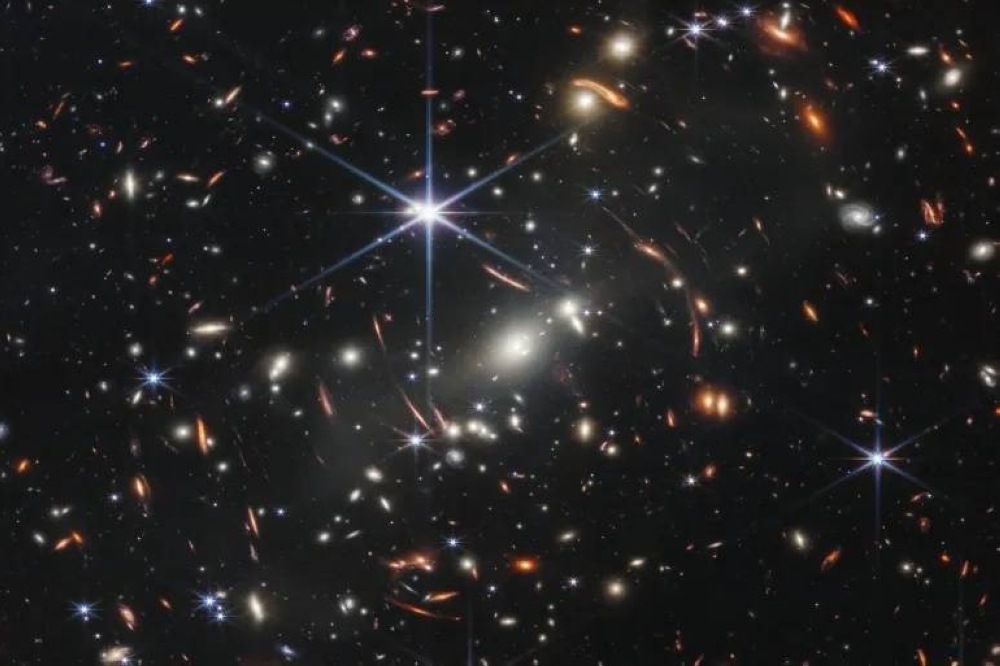
كشف التلسكوب الفضائي «جيمس ويب» مجرّات تشكَّلت في الماضي البعيد في عملية رصد تُعدّ الأبعد له حتى اليوم لرصد أعماق الكون.
وأعلنت وكالة الفضاء الأوروبية في بيان أن ما يثير اهتمام العلماء هو تلك الأقواس المشوَّهة التي تدور حول «أبيل إس 1063»، وبما أنَّ رصد أعماق الكون يعني أيضاً العودة بالزمن إلى الوراء، يأمل العلماء فَهْم كيفية تشكُّل المجرّات الأولى، خلال مرحلة تُعرف بـ«الفجر الكوني».
وعدت الوكالة أن ما تحقَّق يُعدّ أعمق عملية رصد يُجريها التلسكوب جيمس ويب لهدف واحد حتى اليوم، ما يجعل هذه اللقطة الجديدة واحدة من أعمق الصور التي التُقطت للكون على الإطلاق.
وذكرت أنه بفضل تأثير عدسة الجاذبية، كشفت عملية المراقبة هذه عن أولى المجرّات والنجوم التي تشكَّلت خلال المليار سنة الأولى من تاريخ الكون، لافتة النظر إلى أن التلسكوب احتاج إلى 120 ساعة من الرصد لالتقاط هذه الصورة الجديدة، وهي أطول مدة يركّز فيها «جيمس ويب» على هدف واحد حتى الآن.
وأشارت إلى أنه تظهر في وسط الصورة «أبيل إس 1063»، وهي مجموعة ضخمة من المجرات تقع على بُعد 4.5 مليار سنة ضوئية من الأرض، مبينة تمتَّع هذه الأجرام السماوية العملاقة بقدرة على انحناء الضوء الصادر عن الأجسام الواقعة خلفها، مولّدة نوعاً من العدسة المكبّرة الكونية يُعرف بـ«عدسة الجاذبية».
The James Webb Space Telescope has revealed galaxies that formed in the distant past in what is considered its farthest observation to date of the depths of the universe.
The European Space Agency announced in a statement that what intrigues scientists are the distorted arcs surrounding "Abell S1063." Since observing the depths of the universe also means looking back in time, scientists hope to understand how the first galaxies formed during a phase known as the "cosmic dawn."
The agency promised that what has been achieved is the deepest observation conducted by the James Webb Telescope on a single target to date, making this new snapshot one of the deepest images ever captured of the universe.
It was noted that thanks to gravitational lensing, this observation revealed the first galaxies and stars that formed during the first billion years of the universe's history, highlighting that the telescope required 120 hours of observation to capture this new image, which is the longest duration that "James Webb" has focused on a single target so far.
It pointed out that in the center of the image is "Abell S1063," a massive cluster of galaxies located 4.5 billion light-years from Earth, indicating that these giant celestial bodies have the ability to bend the light emitted by objects behind them, creating a type of cosmic magnifying lens known as "gravitational lensing."