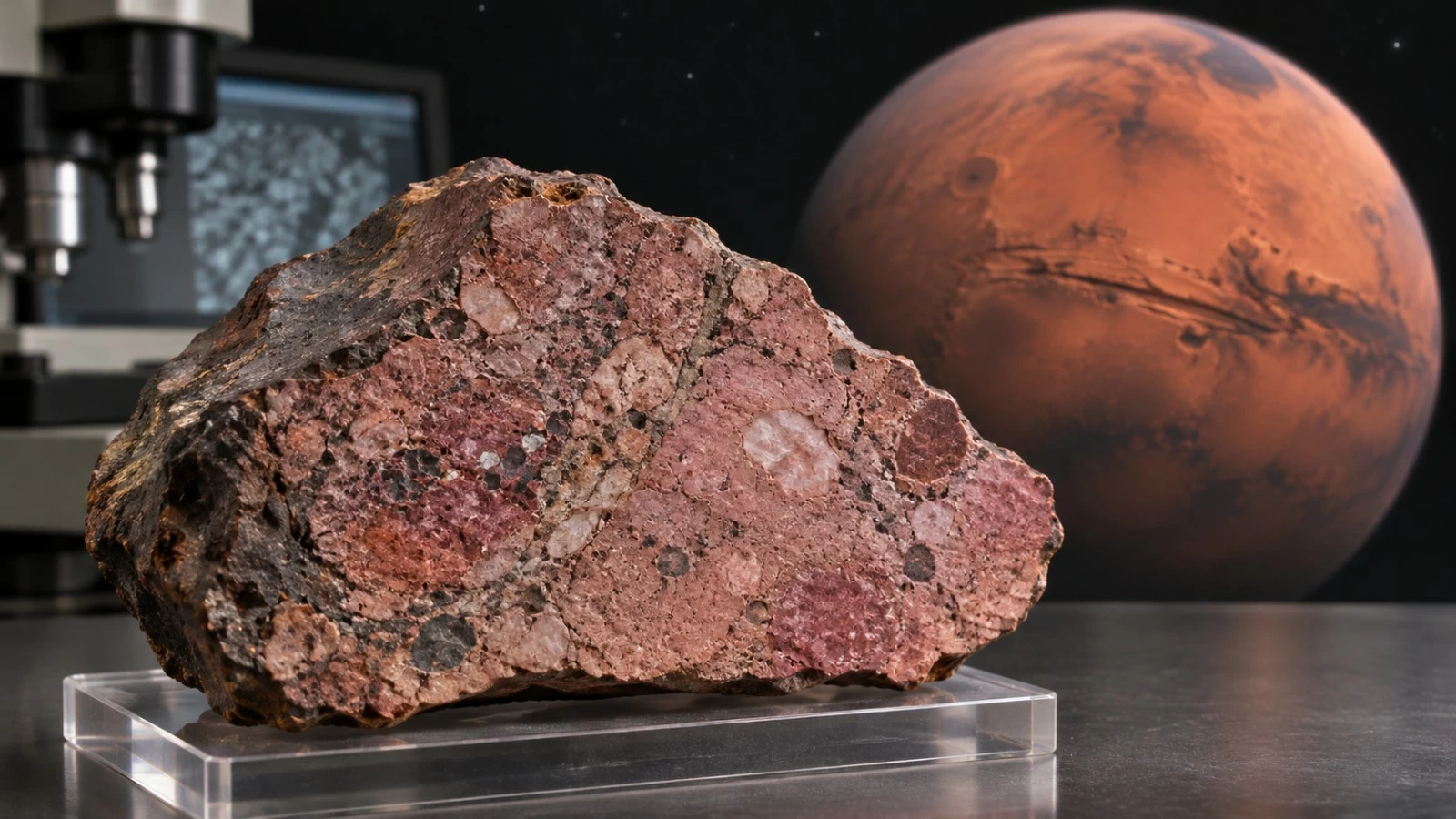
كشف علماء أن نيزكًا وردي اللون عُثر عليه في الصحراء الكبرى قبل أربعة أعوام هو قطعة من قشرة المريخ يزيد عمرها على 4.1 مليار عام، ليصبح واحدًا من أقدم النيازك المريخية المكتشفة على الأرض، ويوفر للباحثين نافذة نادرة على تاريخ الكوكب الأحمر المبكر.
وعُثر على النيزك، الذي أطلق عليه اسم «Teghaza 001»، عام 2022 في مالي قرب سهل تيغازا الملحي، ويبلغ وزنه نحو 800 غرام.
وأظهرت التحليلات التي موّلتها وكالة الفضاء الأمريكية «ناسا» أن الصخرة جاءت من المريخ، بعد مقارنة خصائصها الكيميائية والمعدنية بالبيانات التي جمعتها بعثات ومركبات الوكالة على سطح الكوكب.
بين أقدم نيازك المريخ
وحدد العلماء عمر النيزك باستخدام بلورات «الزركون» وتقنيات دقيقة لتأريخ المعادن، ليتبين أن عمره يتجاوز 4.1 مليار عام، ما يضعه بين أقدم ثلاثة نيازك مريخية عُثر عليها على الأرض.
وقال الباحثون إن الصخرة قد تكون تشكلت في فترة أقدم من ذلك، فيما تحمل بنيتها المعدنية سجلًا لكيفية تشكل قشرة المريخ من الصهارة التي بردت في المراحل الأولى من تاريخ الكوكب.
آثار مياه قديمة
وأظهرت الدراسة أن النيزك تعرض لتغيرات بفعل المياه على المريخ قبل نحو 4.1 مليار عام، ما يوفر أدلة إضافية على وجود دورة مائية أكثر نشاطًا على الكوكب الأحمر في ماضيه السحيق.
كما عثر العلماء داخله على مزيج نادر من المعادن البركانية، تتطابق خصائصه مع مناطق في المرتفعات الجنوبية للمريخ رصدتها مركبة «Mars Reconnaissance Orbiter».
13 موقعًا محتملاً لمصدره
وحدد الفريق 13 منطقة على سطح المريخ تتطابق خصائصها المعدنية والكيميائية مع النيزك، إلا أن العلماء أكدوا أنه من غير الممكن تحديد الموقع الدقيق الذي انطلقت منه الصخرة.
ويرجح أن النيزك انفصل عن سطح المريخ بفعل اصطدام قوي، قبل أن يسافر عبر الفضاء ويصل في النهاية إلى الأرض.
وأكد الباحثون أن الدراسات الحالية ليست سوى بداية لتحليل «Teghaza 001»، إذ قد يساعد النيزك في كشف مزيد من التفاصيل عن المياه القديمة والغلاف الجوي وتطور قشرة المريخ خلال مراحله الأولى.
Scientists have revealed that a pink-colored meteorite found in the Sahara Desert four years ago is a piece of Mars' crust that is over 4.1 billion years old, making it one of the oldest Martian meteorites discovered on Earth, providing researchers with a rare window into the early history of the Red Planet.
The meteorite, named "Teghaza 001," was discovered in 2022 in Mali near the salt flats of Teghaza, weighing about 800 grams.
Analyses funded by the American space agency NASA showed that the rock originated from Mars, after comparing its chemical and mineral properties with data collected by the agency's missions and rovers on the planet's surface.
Among the Oldest Martian Meteorites
Scientists determined the age of the meteorite using zircon crystals and precise techniques for dating minerals, revealing that its age exceeds 4.1 billion years, placing it among the three oldest Martian meteorites found on Earth.
Researchers stated that the rock may have formed even earlier, while its mineral structure carries a record of how Mars' crust formed from magma that cooled in the early stages of the planet's history.
Evidence of Ancient Water
The study showed that the meteorite underwent changes due to water on Mars about 4.1 billion years ago, providing additional evidence of a more active water cycle on the Red Planet in its distant past.
Scientists also found a rare mixture of volcanic minerals inside it, whose properties match those of regions in the southern highlands of Mars observed by the Mars Reconnaissance Orbiter.
13 Potential Source Locations
The team identified 13 areas on the surface of Mars whose mineral and chemical properties match those of the meteorite, but scientists confirmed that it is impossible to determine the exact location from which the rock originated.
It is likely that the meteorite separated from the surface of Mars due to a strong impact before traveling through space and eventually reaching Earth.
Researchers emphasized that current studies are just the beginning of analyzing "Teghaza 001," as the meteorite may help uncover more details about ancient water, the atmosphere, and the evolution of Mars' crust during its early stages.