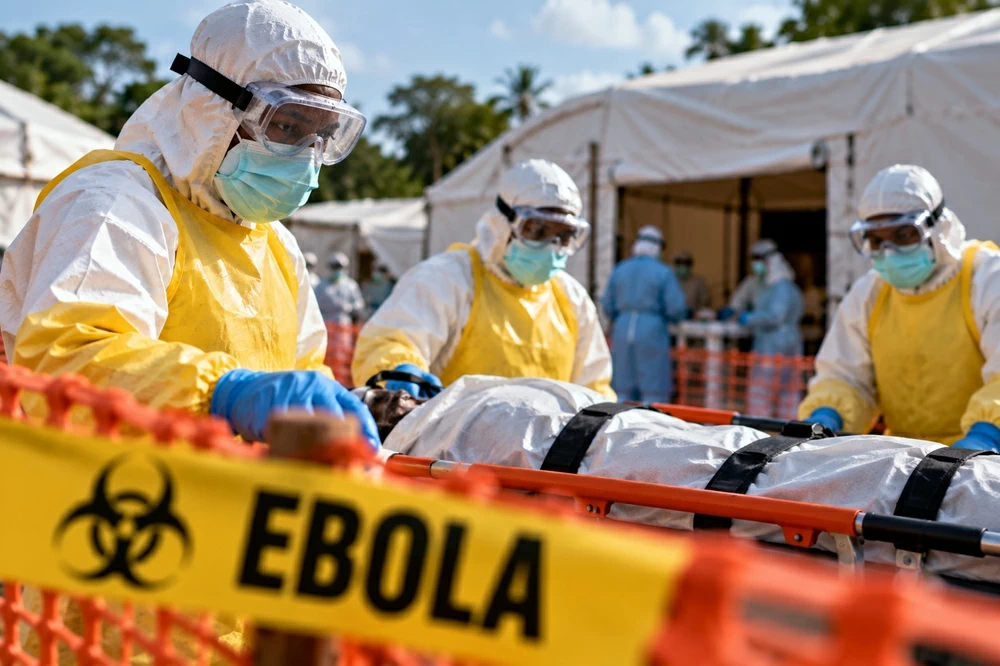
أعلنت منظمة الصحة العالمية ارتفاع حصيلة تفشي مرض فايروس إيبولا بونديبوجيو في جمهورية الكونغو الديمقراطية إلى 9704 إصابات مؤكدة بينها 4687 وفاة، بنسبة وفيات بلغت 48.3%، مع اتساع انتشار الوباء إلى 66 منطقة في ثمان مقاطعات.
وأوضحت المنظمة أن انتقال العدوى لا يزال مستمراً بمستويات مرتفعة، وسجلت غالبية الوفيات خارج مراكز العلاج، ما يعكس صعوبة الكشف المبكر عن الإصابات والوصول إلى الرعاية الصحية.
وعلى الصعيد الإقليمي، أعلنت المنظمة تسجيل تسع إصابات في كينيا بينها وفاة واحدة، بعد اكتشاف أول حالة وافدة من جمهورية الكونغو الديمقراطية، وسجلت الإصابات الثماني الإضافية بين مخالطي الحالة الأولى.
وأكدت نيجيريا تسجيل أول إصابة وافدة في العاصمة أبوجا لشخص قادم من أوغندا يخضع حالياً للعزل والعلاج، وتتواصل التحقيقات لتحديد مصدر العدوى.
وشددت منظمة الصحة العالمية على ضرورة تعزيز المراقبة الصحية عبر الحدود والكشف المبكر والاستعداد الإقليمي لاحتواء الوباء، مؤكدة أنها لا توصي بفرض قيود على السفر أو التجارة مع البلدان المتضررة.
The World Health Organization announced that the toll of the Ebola virus outbreak in the Democratic Republic of the Congo has risen to 9,704 confirmed cases, including 4,687 deaths, with a fatality rate of 48.3%, as the epidemic spreads to 66 areas across eight provinces.
The organization clarified that the transmission of the infection is still ongoing at high levels, and the majority of deaths have been recorded outside treatment centers, reflecting the difficulty of early detection of cases and access to healthcare.
Regionally, the organization announced the registration of nine cases in Kenya, including one death, following the discovery of the first imported case from the Democratic Republic of the Congo, with the additional eight cases recorded among contacts of the first case.
Nigeria confirmed the registration of its first imported case in the capital Abuja of a person coming from Uganda who is currently under isolation and treatment, with investigations ongoing to determine the source of the infection.
The World Health Organization emphasized the need to strengthen cross-border health surveillance, early detection, and regional preparedness to contain the epidemic, confirming that it does not recommend imposing travel or trade restrictions with affected countries.