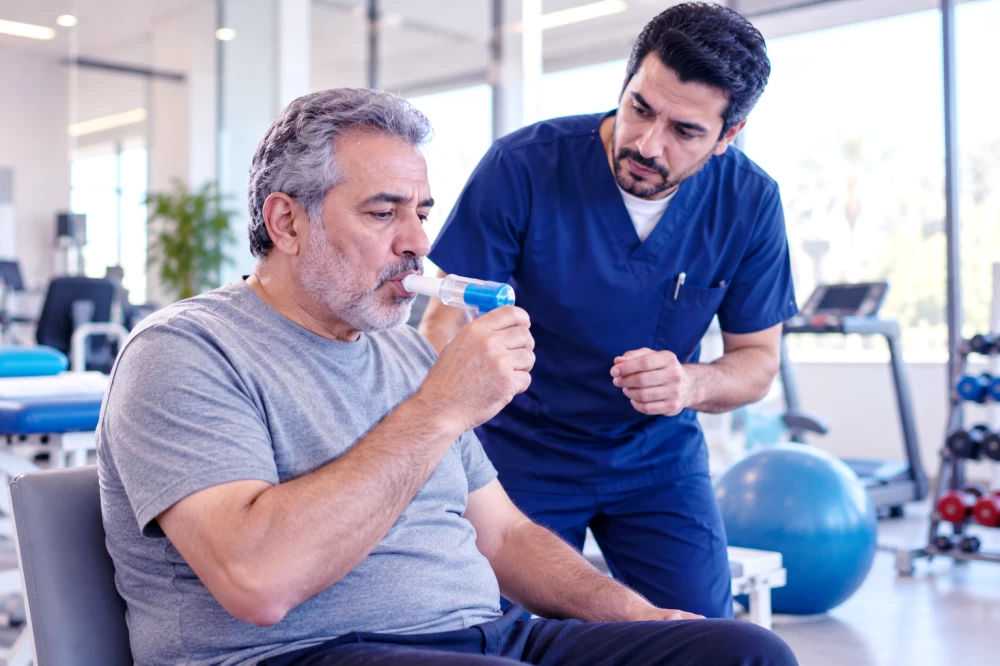
تتجاوز كفاءة التنفس سلامة الرئتين وحدهما، إذ تؤدي عضلات الحجاب الحاجز والصدر دوراً أساسياً في إدخال الهواء وإخراجه، فيما تضع أبحاث التأهيل التنفسي قوة هذه العضلات ضمن العوامل المؤثرة في تحمل المجهود والقدرة على أداء الأنشطة اليومية.
وتشير مراجعات علمية تناولت تدريب عضلات الشهيق إلى أن استخدام تمارين وأجهزة مقاومة مخصصة قد يساعد على تحسين قوة العضلات التنفسية لدى بعض الفئات، خصوصاً المصابين بأمراض تنفسية مزمنة أو الذين يعانون ضعفاً في القدرة البدنية.
ويعتمد التدريب على التنفس في مواجهة مقاومة محسوبة، بما يشبه تمارين تقوية العضلات الأخرى، مع اختلاف شدة التمرين ومدته وفق الحالة الصحية والهدف العلاجي.
ويؤكد متخصصون أن تحسّن قوة عضلات التنفس لا يعني بالضرورة تحسن وظائف الرئة نفسها، كما تختلف النتائج المتعلقة بضيق النفس وتحمل النشاط من دراسة إلى أخرى.
وتبقى هذه التمارين جزءاً مساعداً من برامج التأهيل عند الحاجة، وليست بديلاً عن العلاج الطبي أو النشاط البدني المعتاد، فيما يستدعي ضيق التنفس المستمر أو غير المبرر تقييماً طبياً لتحديد أسبابه.
The efficiency of breathing goes beyond the mere health of the lungs, as the diaphragm and chest muscles play a crucial role in inhaling and exhaling air. Research in respiratory rehabilitation highlights the strength of these muscles as one of the factors influencing endurance and the ability to perform daily activities.
Scientific reviews addressing inspiratory muscle training indicate that using specialized resistance exercises and devices may help improve the strength of respiratory muscles in certain groups, particularly those suffering from chronic respiratory diseases or those with reduced physical capacity.
Breathing training relies on facing calculated resistance, similar to exercises for strengthening other muscles, with variations in the intensity and duration of the exercise based on health status and therapeutic goals.
Experts emphasize that an improvement in the strength of respiratory muscles does not necessarily mean an improvement in lung function itself, and the results related to shortness of breath and activity tolerance can vary from one study to another.
These exercises remain a supportive part of rehabilitation programs when needed, and are not a substitute for medical treatment or regular physical activity, while persistent or unexplained shortness of breath requires a medical evaluation to determine its causes.