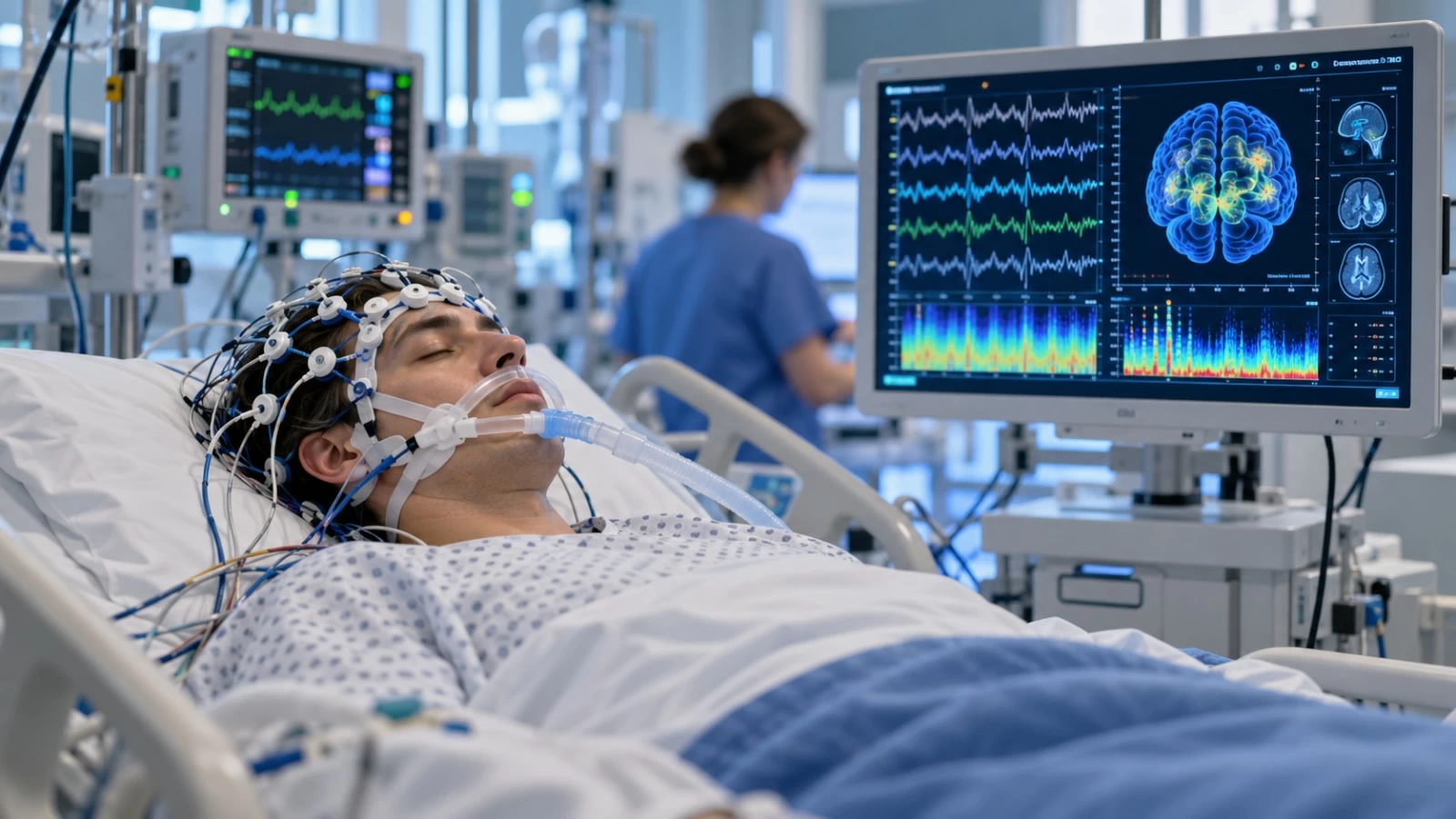
طوّر باحثون أمريكيون واجهة تربط الدماغ بالكمبيوتر، تتيح لبعض المرضى الفاقدين للوعي التحكم في أصوات إلكترونية باستخدام نشاط أدمغتهم فقط، في خطوة قد تفتح مستقبلاً باباً جديداً للتواصل مع المرضى غير القادرين على الكلام أو الحركة.
وشملت التجارب، التي أجراها باحثون في جامعة كولومبيا بالولايات المتحدة، 41 مريضاً غير مستجيب سريرياً، بعد أيام قليلة من دخولهم المستشفى إثر إصابات دماغية حادة، وتمكن نحو ثلثهم من تغيير تردد نغمات صوتية عبر إشارات الدماغ، من دون زرع شرائح إلكترونية أو إجراء تدخلات جراحية.
إشارات الدماغ تتحول إلى أوامر
وتعتمد التقنية على أقطاب كهربائية غير جراحية تُثبت على فروة الرأس لتسجيل النشاط الكهربائي للدماغ، فيما يحلل برنامج حاسوبي هذه الإشارات لحظياً ويحوّلها إلى أوامر تتحكم في الأصوات.
ويسمح هذا النظام للباحثين بالتعرف على محاولات المرضى تنفيذ التعليمات، حتى في الحالات التي لا تظهر فيها استجابة جسدية واضحة.
وعي رغم غياب الاستجابة
وقال الباحث الرئيسي في الدراسة، يان كلاسن، أستاذ علم الأعصاب بكلية فاجيلوس للأطباء والجراحين في جامعة كولومبيا، إن أبحاث العقد الماضي أظهرت أن كثيراً من المصابين بإصابات دماغية حادة ممن يبدون في حالة من الغيبوبة قد يحتفظون بدرجات من الوعي، رغم عدم قدرتهم على التواصل بالكلام أو تحريك الأطراف والعينين.
وكان باحثون بقيادة كلاسن قد كشفوا عام 2019، باستخدام تخطيط كهربائية الدماغ وتقنيات الذكاء الاصطناعي، عن علامات للوعي الخفي لدى 15% من المرضى غير المستجيبين بعد إصابات دماغية، رغم عجزهم عن تنفيذ أوامر بسيطة.
التحكم في النغمات بالأفكار
وخلال التجربة الجديدة، وضع الباحثون سماعات على آذان المرضى وشغّلوا نغمات إلكترونية مصحوبة بتعليمات صوتية، تطلب منهم محاولة فتح أيديهم وإغلاقها بهدف تغيير تردد الصوت.
وكانت إشارات الدماغ تنتقل إلى الكمبيوتر، الذي يحللها ويعدل النغمات وفق استجابة المريض، مع تقديم تشجيع صوتي عند اقترابه من تحقيق الهدف.
وتمكن واحد من كل ثلاثة مشاركين من التحكم في النغمات بأفكارهم وحدها، بمن فيهم جميع المرضى الذين اكتُشف لديهم الانفصال المعرفي الحركي من خلال اختبار مستقل.
خطوة أولى نحو رسائل مفهومة
واقترح المرضى المشاركون وأفراد أسرهم تحسين النظام بإضافة أصوات مألوفة، مثل صوت أحد الأقارب، ومراعاة الخصائص الثقافية والشخصية، إلى جانب تطوير وظائف تسمح بالتعبير عن الألم والجوع ومستوى الإدراك.
ورغم النتائج المشجعة، أكد الباحثون أن التحكم في النغمات لا يعني أن المرضى أصبحوا قادرين بالفعل على إجراء محادثات.
ويأمل الفريق أن تسمح التطورات المستقبلية بتحويل هذه الاستجابات الدماغية البسيطة إلى رسائل مفهومة تعبّر عما يشعر به المرضى.
American researchers have developed an interface that connects the brain to a computer, allowing some patients who are unconscious to control electronic sounds using only their brain activity, in a step that could open a new door for communication with patients who are unable to speak or move.
The experiments, conducted by researchers at Columbia University in the United States, involved 41 clinically unresponsive patients, just days after they were hospitalized due to severe brain injuries. About one-third of them were able to change the frequency of sound tones through brain signals, without the need for implanted electronic chips or surgical interventions.
Brain signals transformed into commands
The technique relies on non-invasive electrodes placed on the scalp to record the brain's electrical activity, while a computer program analyzes these signals in real-time and converts them into commands that control the sounds.
This system allows researchers to recognize patients' attempts to follow instructions, even in cases where there is no clear physical response.
Awareness despite lack of response
The lead researcher in the study, Jan Classen, a professor of neuroscience at the Vagelos College of Physicians and Surgeons at Columbia University, stated that research over the past decade has shown that many individuals with severe brain injuries who appear to be in a coma may retain degrees of awareness, despite their inability to communicate verbally or move their limbs and eyes.
Researchers led by Classen revealed in 2019, using electroencephalography and artificial intelligence techniques, signs of hidden awareness in 15% of unresponsive patients after brain injuries, despite their inability to follow simple commands.
Controlling tones with thoughts
During the new experiment, researchers placed headphones on the patients and played electronic tones accompanied by verbal instructions, asking them to try to open and close their hands in order to change the sound frequency.
The brain signals were transmitted to the computer, which analyzed them and adjusted the tones according to the patient's response, providing verbal encouragement as they approached achieving the goal.
One in three participants was able to control the tones with their thoughts alone, including all patients who were found to have cognitive-motor dissociation through an independent test.
A first step towards understandable messages
Participating patients and their family members suggested improving the system by adding familiar sounds, such as the voice of a relative, and considering cultural and personal characteristics, along with developing functions that allow expression of pain, hunger, and levels of awareness.
Despite the encouraging results, researchers emphasized that controlling the tones does not mean that patients are actually capable of having conversations.
The team hopes that future developments will allow these simple brain responses to be transformed into understandable messages that express what patients are feeling.