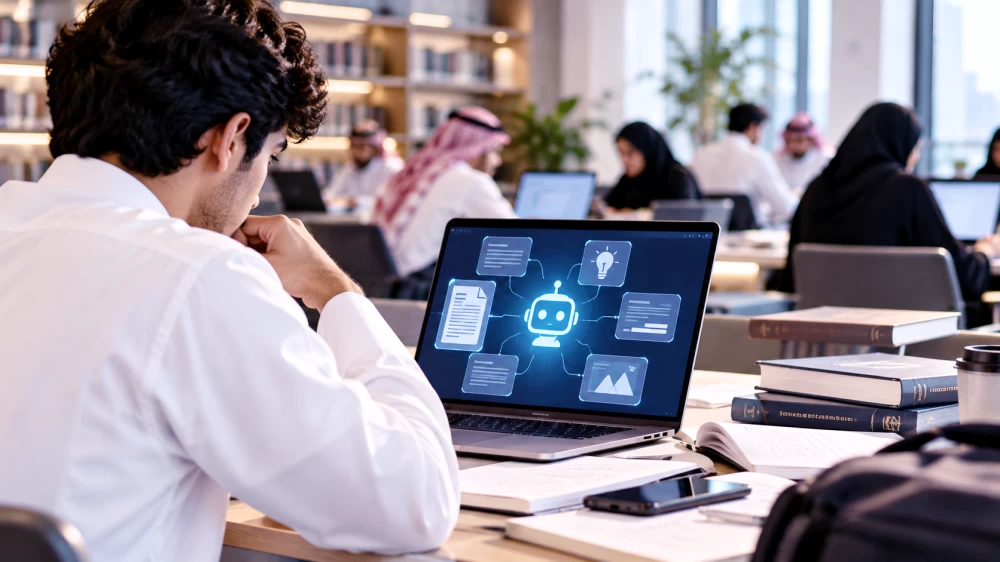
يكتب الطالب سؤالاً على شاشة الحاسوب، فتصل الإجابة خلال ثوانٍ؛ شرح منظم، ومراجع مقترحة، وحلول جاهزة، وربما بحث متكامل يحتاج إعداده تقليدياً إلى ساعات. مشهد يعكس تحوّلاً عميقاً في البيئة التعليمية، بعدما أصبح الذكاء الاصطناعي شريكاً يومياً في إنجاز الواجبات والمشاريع والمهام الأكاديمية، وفتح باباً واسعاً للتساؤل عن حدود المساعدة التقنية ومستقبل التفكير المستقل.
تمنح الأدوات الذكية الطلاب فرصاً لتبسيط المفاهيم المعقدة، وتطوير مهارات البحث، والحصول على شروح تتناسب مع مستوياتهم، فضلاً عن اختصار الوقت في جمع المعلومات وتنظيمها. لكن هذه المزايا تحمل مفارقة تعليمية؛ فكلما أصبحت الإجابة أسهل وصولاً، ازدادت أهمية التأكد من أن الطالب اكتسب المعرفة التي تقف خلفها.
وتبرز الإشكالية عندما تتحوّل التقنية من وسيلة للفهم إلى بديل عن الجهد الذهني. فالواجب الذي كان يتطلب قراءة وتحليلاً ومقارنة وصياغة رأي، يمكن إنجازه اليوم بأوامر مختصرة، بينما تتراجع فرصة الطالب في ممارسة المهارات التي صُمّمت المهمة التعليمية لتنميتها أساساً.
وتتجاوز القضية النزاهة الأكاديمية إلى طبيعة التعلم نفسه. فالتفكير النقدي يتشكل عبر التساؤل والتجربة والخطأ ومراجعة الاستنتاجات، وهي عمليات قد تختصرها الإجابات الجاهزة عندما يتعامل معها الطالب بوصفها نتائج نهائية.
وفي المقابل، تضع هذه التحوّلات المؤسسات التعليمية أمام مسؤولية مراجعة أساليب التقييم، والانتقال من قياس جودة النصوص المقدمة إلى اختبار قدرة الطالب على تفسير أفكاره والدفاع عنها وتطبيقها، مع تعزيز مهارات التحقق من المعلومات واكتشاف الأخطاء.
وتزداد حساسية المشهد مع قدرة الأنظمة الذكية على إنتاج إجابات مقنعة لغوياً، حتى عندما تتضمّن معلومات غير دقيقة، ما يجعل التمييز بين الصياغة الجيدة والمعرفة الصحيحة مهارة تعليمية أساسية.
وتكمن المفارقة الأعمق في أن المؤسسة التعليمية قد تحصل على واجبات أكثر إتقاناً، بينما تمتلك مؤشرات أقل وضوحاً على مستوى الفهم الحقيقي لدى أصحابها. فالتحدي الذي يفرضه الذكاء الاصطناعي يتجاوز مراقبة استخدامه، إلى ضمان بقاء التفكير والتحليل والاستنتاج مهارات يمارسها الطالب بنفسه، بدلاً من الاكتفاء بتسليم نتائج أنتجتها الآلة.
The student types a question on the computer screen, and the answer arrives within seconds; an organized explanation, suggested references, ready-made solutions, and perhaps a complete research paper that would traditionally take hours to prepare. This scene reflects a profound transformation in the educational environment, as artificial intelligence has become a daily partner in completing assignments, projects, and academic tasks, opening a wide door for questioning the limits of technical assistance and the future of independent thinking.
Smart tools provide students with opportunities to simplify complex concepts, develop research skills, and receive explanations that match their levels, in addition to saving time in gathering and organizing information. However, these advantages carry an educational paradox; the easier the answer becomes to access, the more important it is to ensure that the student has acquired the knowledge behind it.
The issue becomes prominent when technology shifts from a means of understanding to a substitute for mental effort. The assignment that once required reading, analysis, comparison, and formulating an opinion can now be accomplished with brief commands, while the student's opportunity to practice the skills that the educational task was originally designed to develop diminishes.
The matter transcends academic integrity to the nature of learning itself. Critical thinking is formed through questioning, experimentation, trial and error, and reviewing conclusions, processes that ready-made answers may shorten when the student treats them as final results.
Conversely, these transformations place educational institutions under the responsibility of reviewing assessment methods, shifting from measuring the quality of submitted texts to testing the student's ability to interpret, defend, and apply their ideas, while enhancing skills in verifying information and discovering errors.
The sensitivity of the scene increases with the ability of intelligent systems to produce linguistically convincing answers, even when they contain inaccurate information, making the distinction between good phrasing and correct knowledge an essential educational skill.
The deeper paradox lies in the fact that the educational institution may receive more polished assignments while having less clear indicators of the true understanding of their owners. The challenge posed by artificial intelligence goes beyond monitoring its use to ensuring that thinking, analysis, and conclusion remain skills practiced by the student themselves, rather than merely submitting results produced by a machine.