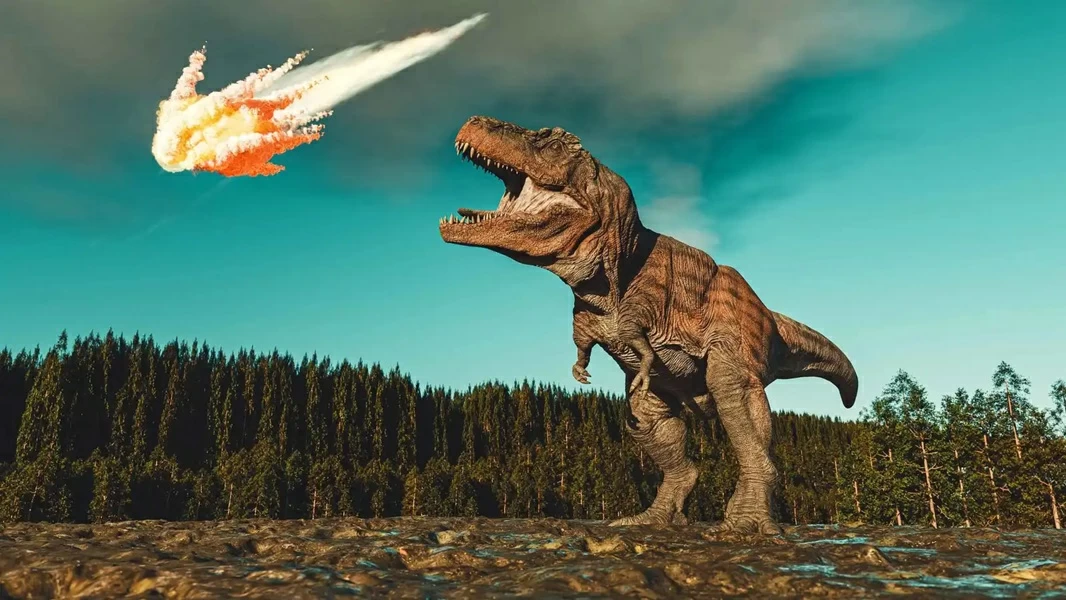
طوال عقود طويلة، كان يُعتقد أن انقراض الديناصورات قبل 66 مليون عام ناتج عن حادثة كونية تقليدية؛ بسبب اصطدام نيزك ضخم بالأرض. غير أن دراسة حديثة نُشرت في مجلة «ساينس أدفانسز» كشفت مفاجأة مذهلة؛ إذ تبين أن نهاية تلك الكائنات العملاقة لم تكن بسبب النيزك وحده، بل نتيجة اجتماع «سلسلة من الظروف النادرة القاتلة» في لحظة واحدة.
كشف التحليل الجيولوجي المتقدم أن الكويكب الذي أنهى عصر الديناصورات لم يكن من النيازك العادية، بل ينتمي إلى فئة فائقة الندرة تُعرف بـ«النيازك الكربونية من نوع أورنانس»:
فئة لا تتكرر: لا تمثل النيازك الكربونية سوى أقل من 5% من الأجسام الفضائية التي تسقط على الأرض، بينما تُعد مجموعة (CO) نسبة مجهرية ونادرة جداً حتى داخل هذه الفئة الضئيلة.
اختراق حماية المشتري: جاءت هذه الصخرة القاتلة من أعماق سحيقة في النظام الشمسي، وتجاوزت الجاذبية الهائلة لكوكب المشتري، الذي يعمل عادة كـ«درع حماية» يمنع الأجسام البعيدة من الوصول إلى الأرض.
سوء حظ كوني: أكد فيليب كلايس، عالم الجيولوجيا بجامعة «فريجي بروكسل»، أن شحّ عينات هذه النيازك في المتاحف يؤكد أن وصول هذا الجسم بالذات وفي ذلك التوقيت يمثل ذروة «سوء الحظ الكوني» للديناصورات.
ولم تقتصر الخطورة على نوع الصخرة الفضائية فحسب، بل لعبت جغرافية الاصطدام وتوقيته الزمني دور الحسم في إبادة الحياة، إذ سقط الكويكب في شبه جزيرة «يوكاتان» بالمكسيك، مما أثار موجات تسونامي عارمة، وحرائق غابات شاسعة، ونشاطاً بركانياً وزلزالياً. كما حدث الاصطدام في منتصف فصل الربيع بالنصف الشمالي للكرة الأرضية، وهو التوقيت الفعلي لدورات التكاثر والنمو، مما حال دون قدرة الأنواع على التكيف أو السيطرة. وتسبب الغبار والحطام في حجب الشمس وانخفاض الحرارة لسنوات، مما أدى لانهيار السلاسل الغذائية واختفاء نحو 75% من الكائنات الحية.
ولتحديد هوية النيزك بدقة، أجرى الفريق البحثي تحليلاً دقيقاً لعينات مأخوذة من الطبقة الجيولوجية الفاصلة بين العصرين الطباشيري والباليوجيني في خمسة مواقع أوروبية، إذ ركز الباحثون على نظائر عنصر النيكل، الذي يتواجد بتركيزات فريدة في النيازك البدائية. كما أظهرت النتائج تطابقاً كيميائياً تاماً مع نيازك (CO)، لتنهي عقوداً من التكهنات وتحسم السر الحقيقي لليوم الأخير في عصر الديناصورات.
ويمكن الخلوص إلى أن النيزك لو كان قد تأخر قليلاً، أو اصطدم بزاوية أخرى، أو سقط في محيط أعمق، لربما كانت الديناصورات تحكم الأرض حتى يومنا هذا، لكنها كانت ضحية التحام نادر بين صخرة جاءت من أقاصي الفضاء وتوقيت هو الأشد قسوة في تاريخ الكوكب.
For decades, it was believed that the extinction of the dinosaurs 66 million years ago was due to a traditional cosmic incident; caused by a massive asteroid colliding with the Earth. However, a recent study published in the journal "Science Advances" revealed a stunning surprise; it turned out that the end of those giant creatures was not solely due to the asteroid, but the result of a combination of "a series of rare lethal conditions" occurring simultaneously.
Advanced geological analysis revealed that the asteroid that ended the age of the dinosaurs was not an ordinary meteorite, but belonged to an extremely rare class known as "carbonaceous chondrites":
A class that does not repeat: carbonaceous meteorites account for less than 5% of the celestial bodies that fall to Earth, while the (CO) group is a microscopic and very rare fraction even within this tiny class.
Breaking through Jupiter's protection: This deadly rock came from deep within the solar system and overcame the immense gravity of Jupiter, which usually acts as a "protective shield" preventing distant bodies from reaching Earth.
Cosmic misfortune: Philippe Claeys, a geologist at the "Free University of Brussels," confirmed that the scarcity of samples of these meteorites in museums indicates that the arrival of this particular body at that time represents the peak of the "cosmic misfortune" for the dinosaurs.
The danger was not limited to the type of space rock alone; the geography of the impact and its timing played a decisive role in the annihilation of life. The asteroid struck the Yucatán Peninsula in Mexico, triggering massive tsunami waves, extensive wildfires, and volcanic and seismic activity. The impact occurred in mid-spring in the Northern Hemisphere, which is the actual timing for reproduction and growth cycles, preventing species from adapting or coping. The dust and debris blocked sunlight and lowered temperatures for years, leading to the collapse of food chains and the disappearance of about 75% of living organisms.
To accurately identify the meteorite, the research team conducted a detailed analysis of samples taken from the geological layer separating the Cretaceous and Paleogene periods at five European sites, focusing on the isotopes of nickel, which are found in unique concentrations in primitive meteorites. The results also showed a complete chemical match with (CO) meteorites, ending decades of speculation and revealing the true mystery of the last day in the age of dinosaurs.
It can be concluded that if the meteorite had been delayed slightly, or had collided at a different angle, or had fallen into a deeper ocean, perhaps the dinosaurs would still rule the Earth to this day, but they were victims of a rare convergence between a rock that came from the far reaches of space and a timing that was the harshest in the planet's history.