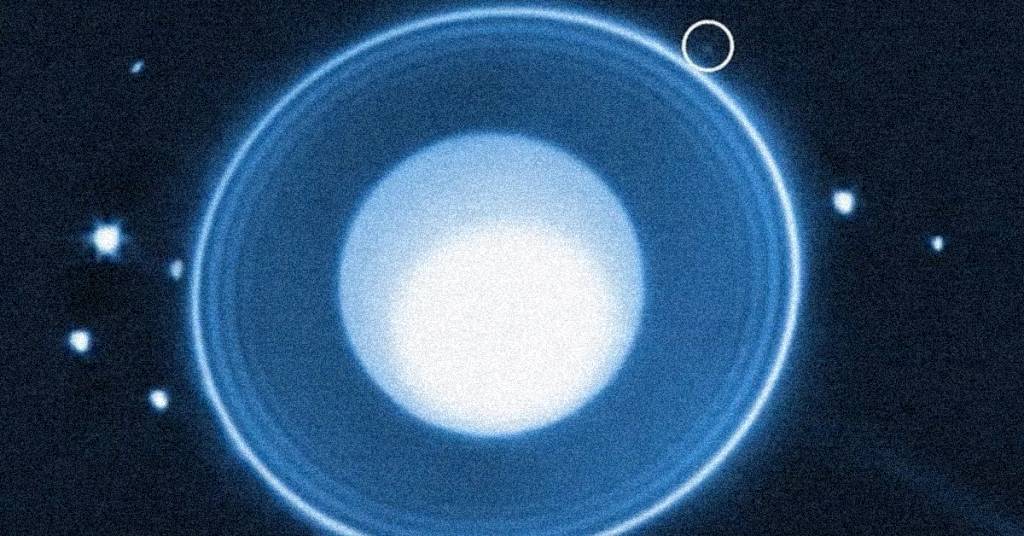
أعلن علماء الفلك اكتشاف قمر صغير جديد يدور في مدار أورانوس، بعد أن التقطه تلسكوب جيمس ويب الفضائي.
القمر الجديد، الذي أُطلق عليه مؤقتًا اسم S/2025 U1، يبلغ قطره نحو ستة أميال فقط، وهو حجم ضئيل جعله يفلت من رصد مركبة «فوييجر 2» عندما مرت بالقرب من أورانوس عام 1986.
وبهذا الاكتشاف يرتفع عدد الأقمار المعروفة حول أورانوس إلى 29 قمرًا، فيما يرجّح العلماء أن الكوكب يخفي المزيد من الأقمار الصغيرة التي لم يُكشف عنها بعد. ويدور القمر المكتشف على بُعد نحو 35 ألف ميل من مركز الكوكب، أي على حافة حلقات أورانوس الداخلية المليئة بالحطام والتداخلات المعقدة.
وقالت الباحثة مريم المعتمد من معهد أبحاث الجنوب الغربي: «إن هذا القمر صغير الحجم، لكنه اكتشاف مهم يضيف دليلًا جديدًا على أن نظام أورانوس أكثر تعقيدًا مما كان يُعتقد، وأن أقمار الكوكب ربما تعيش في دورة مستمرة من التصادم وإعادة التشكل».
ويأتي هذا الإنجاز ليكمل ما بدأته مركبة «فوييجر 2» قبل نحو 40 عامًا. ويؤكد أن دراسة أطراف النظام الشمسي لا تزال تكشف مفاجآت جديدة. ومن المنتظر أن يحصل القمر على اسم رسمي لاحقًا، أسوة ببقية أقمار أورانوس التي تحمل في معظمها أسماء مستوحاة من مسرحيات شكسبير.
Astronomers have announced the discovery of a new small moon orbiting Uranus, after it was captured by the James Webb Space Telescope.
The new moon, temporarily named S/2025 U1, has a diameter of about six miles, a tiny size that allowed it to escape detection by the Voyager 2 spacecraft when it passed near Uranus in 1986.
With this discovery, the number of known moons around Uranus rises to 29, while scientists believe that the planet may be hiding more small moons that have yet to be uncovered. The discovered moon orbits at a distance of about 35,000 miles from the planet's center, right at the edge of Uranus's inner rings, which are filled with debris and complex interactions.
Researcher Mariam Al-Mu'tamid from the Southwest Research Institute stated, "This moon is small in size, but it is an important discovery that adds new evidence that the Uranus system is more complex than previously thought, and that the planet's moons may be living in a continuous cycle of collisions and reshaping."
This achievement complements what the Voyager 2 spacecraft began nearly 40 years ago. It confirms that studying the edges of the solar system continues to reveal new surprises. The moon is expected to receive an official name later, similar to the other moons of Uranus, most of which are named after characters from Shakespeare's plays.