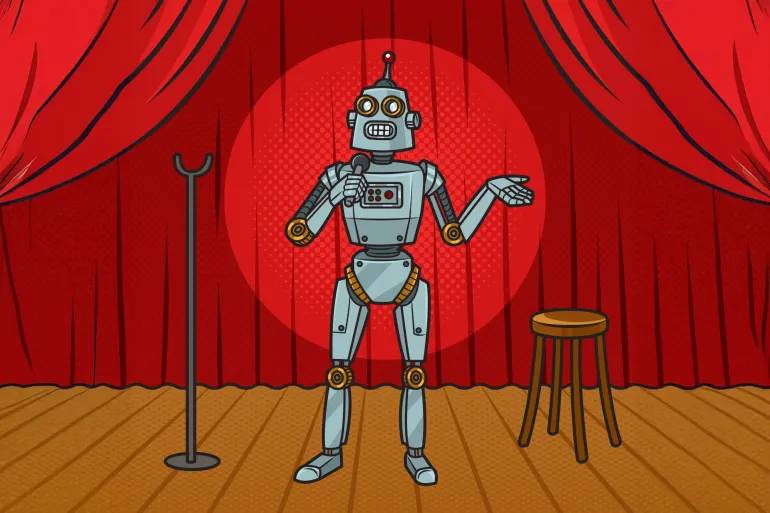
كشفت تجارب حديثة أن الذكاء الاصطناعي قادر على توليد نكات كوميدية تقترب كثيراً من جودة نكات البشر، وذلك من خلال أدوات متخصصة مثل تطبيق «ويت سكريبت» الذي طوّره الكاتب الكوميدي جو توبلين، بناءً على خبرته الطويلة في الكتابة الساخرة والعمل التلفزيوني مع مشاهير مثل ديفيد ليترمان وجاي لينو.
اختبر توبلين قدرة الأداة في منافسة مباشرة مع نفسه استمرت ثلاثة أيام، من خلال توليد نكات عن 8 مواضيع إخبارية وعرضها على جمهور حي في لوس أنجلوس دون الكشف عن مصدر النكات. وأظهرت النتائج تشابهاً كبيراً في تأثير النكات سواء كانت مكتوبة من قِبل الإنسان أو الذكاء الاصطناعي، بحسب دراسة نشرتها مجلة سميثسونيان.
وفي تجربة أخرى، تبيّن أن نموذج «شات جي بي تي 3.5» استطاع محاكاة الأسلوب الساخر لمجلة «ذا أونيون» بعد تدريبه على مجموعة من عناوينها، ما يشير إلى قدرة هذه النماذج على التقاط بنية الفكاهة وتكرارها بأسلوب مقنع.
ورغم ذلك، يرى خبراء مثل درو غورينز وتريستان ميلر أن الذكاء الاصطناعي لا يمتلك الوعي أو التقدير العاطفي الذي يحتاجه حس الدعابة الحقيقي، كما أن بعض النكات قد تعيد تدوير أنماط نمطية أو محتوى غير مناسب بسبب اعتمادها على بيانات الإنترنت.
وأكد التقرير أن تقييم النكات التي ينتجها الذكاء الاصطناعي لا يزال يعتمد على مراجعة بشرية، كما حدث مع توبلين الذي اختار بنفسه أفضل النكات من التي أنتجها التطبيق. ويؤكد الباحثون أن الفكاهة واحدة من أكثر جوانب اللغة تعقيداً وإنسانية، لأنها ترتبط بالنوايا والسياق والوعي الثقافي، وهي أمور يصعب على الذكاء الاصطناعي محاكاتها بدقة.
ومع التقدم المتسارع في تقنيات الذكاء الاصطناعي وتطور قدراته في إنتاج النصوص، يبقى السؤال مفتوحاً: هل سنصل إلى لحظة يستطيع فيها الروبوت ليس فقط أن يُضحكنا، بل أن يُضحكنا بذكاء إنساني حقيقي؟
Recent experiments have revealed that artificial intelligence is capable of generating comedic jokes that come very close to the quality of human jokes, using specialized tools like the "Wit Script" app developed by comedian Joe Tobin, based on his extensive experience in satirical writing and television work with celebrities like David Letterman and Jay Leno.
Tobin tested the tool's ability in a direct competition with himself that lasted three days, by generating jokes on 8 news topics and presenting them to a live audience in Los Angeles without revealing the source of the jokes. The results showed a significant similarity in the impact of the jokes, whether written by a human or artificial intelligence, according to a study published by Smithsonian magazine.
In another experiment, it was found that the "Chat GPT 3.5" model was able to mimic the satirical style of "The Onion" magazine after being trained on a set of its headlines, indicating the ability of these models to capture the structure of humor and replicate it convincingly.
However, experts like Drew Gorin and Tristan Miller believe that artificial intelligence lacks the awareness or emotional appreciation needed for true humor, and that some jokes may recycle stereotypes or inappropriate content due to their reliance on internet data.
The report confirmed that the evaluation of jokes produced by artificial intelligence still depends on human review, as was the case with Tobin, who personally selected the best jokes from those generated by the app. Researchers assert that humor is one of the most complex and human aspects of language, as it relates to intentions, context, and cultural awareness—elements that are difficult for artificial intelligence to accurately mimic.
With the rapid advancement in artificial intelligence technologies and the evolution of its capabilities in text generation, the question remains open: Will we reach a moment when a robot can not only make us laugh but do so with genuine human intelligence?