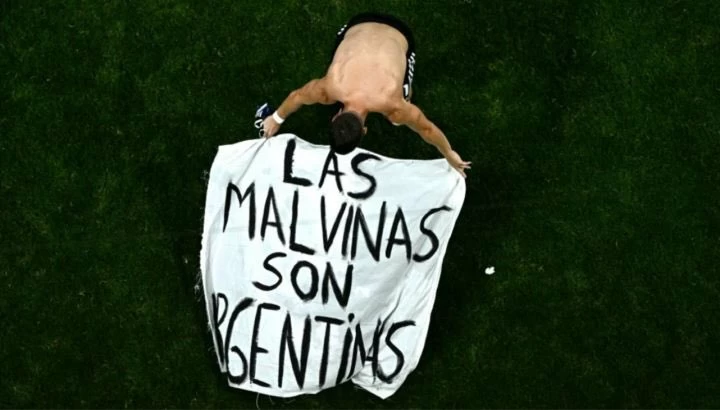
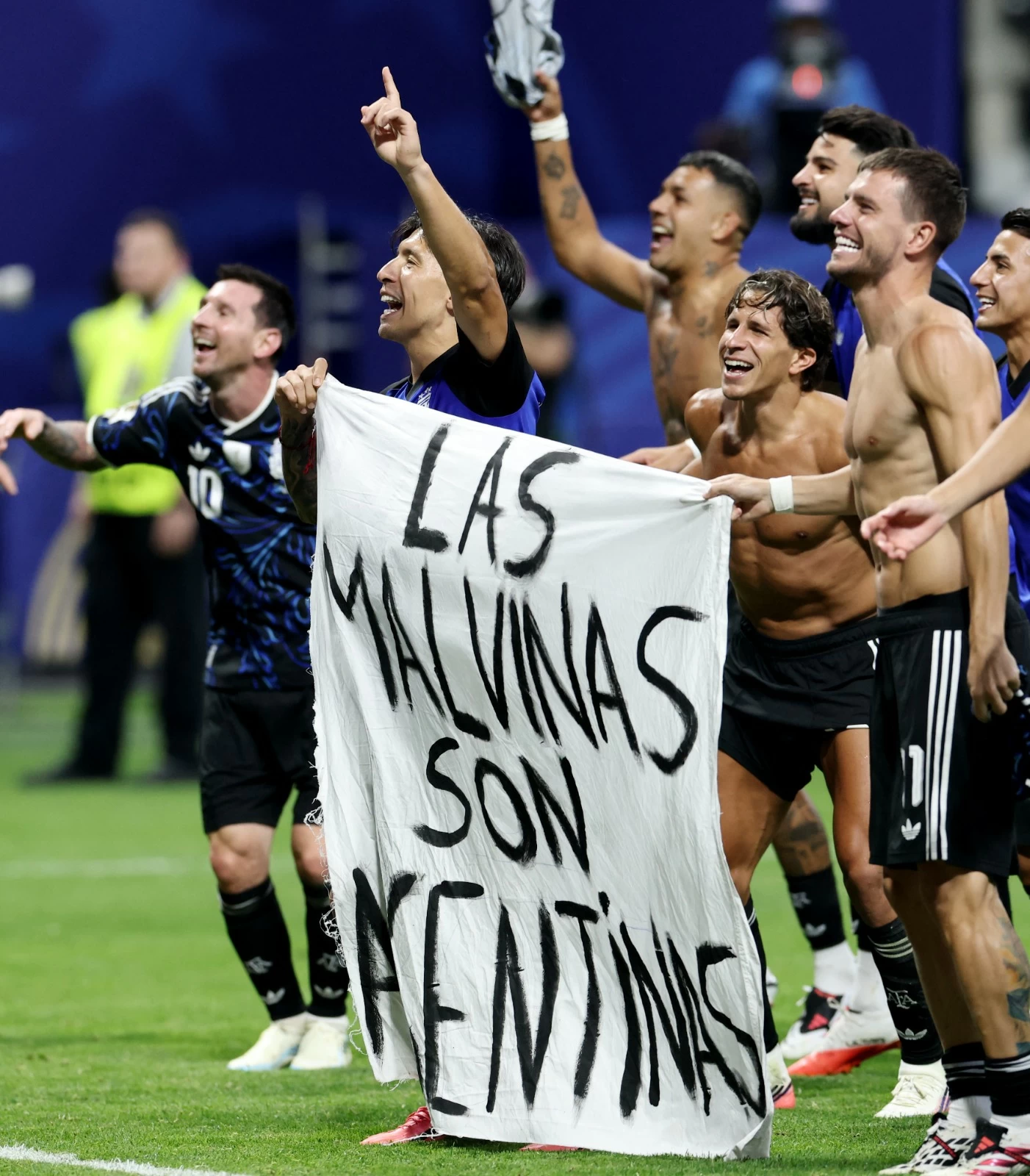
أعاد احتفال لاعبي منتخب الأرجنتين برفع لافتة كتب عليها «جزر مالفيناس أرجنتينية» عقب الفوز على منتخب إنجلترا في نصف نهائي كأس العالم 2026، إلى الواجهة واحدة من أكثر الوقائع إثارة للجدل في تاريخ الكرة الأرجنتينية، بعدما تبين أن هذه ليست المرة الأولى التي يُرفع فيها الشعار في مناسبة كروية كبرى.
فبعد ساعات من انتشار صور الاحتفال، استحضر متابعون ووسائل إعلام واقعة مماثلة تعود إلى كأس العالم 2014 في البرازيل، عندما رفع لاعبو المنتخب الأرجنتيني لافتة تحمل الرسالة ذاتها خلال إحدى الحصص التدريبية، وهو ما دفع الاتحاد الدولي لكرة القدم (فيفا) آنذاك إلى اتخاذ إجراءات تأديبية بحق الاتحاد الأرجنتيني.
وفي تلك الواقعة، اعتبر «فيفا» أن استخدام رسالة ذات طابع سياسي أو إقليمي خلال فعاليات البطولة يخالف اللوائح التي تحظر استغلال المنافسات الرياضية للتعبير عن مواقف سياسية، وفرض عقوبة على الاتحاد الأرجنتيني، مع التأكيد على ضرورة الالتزام بمبدأ الفصل بين الرياضة والقضايا السياسية.
وتأتي الواقعة الجديدة في سياق مباراة حملت حساسية تاريخية خاصة، إذ جمعت الأرجنتين بإنجلترا، الدولة التي تخوض معها بوينس آيرس نزاعاً سيادياً طويل الأمد حول جزر مالفيناس، وهو ما منح الاحتفال أبعاداً تجاوزت حدود الإنجاز الرياضي، وأعاد النقاش حول مدى توافق مثل هذه الرسائل مع لوائح الاتحاد الدولي لكرة القدم.
وتُعرف الجزر باسم جزر مالفيناس في الأرجنتين، بينما تُعرف دولياً باسم جزر فوكلاند، وهي أرخبيل يقع في جنوب المحيط الأطلسي وتخضع لإدارة المملكة المتحدة، في حين تؤكد الأرجنتين أنها جزء من أراضيها وتطالب باستعادة السيادة عليها.
ويعود النزاع إلى القرن التاسع عشر، لكنه بلغ ذروته عام 1982 عندما اندلعت حرب استمرت نحو عشرة أسابيع بين الأرجنتين وبريطانيا، وانتهت باستعادة القوات البريطانية السيطرة على الجزر، مع بقاء الخلاف السياسي والدبلوماسي قائماً حتى اليوم.
ويحظر الاتحاد الدولي لكرة القدم (فيفا) والعديد من الاتحادات الرياضية الدولية استخدام البطولات والمباريات الرسمية للترويج لرسائل أو شعارات ذات طابع سياسي أو ديني أو أيديولوجي، انطلاقاً من مبدأ حياد الرياضة، وهو ما أدى في مناسبات مختلفة إلى فرض عقوبات على اتحادات أو منتخبات بسبب لافتات أو رسائل اعتُبرت مخالفة للوائح المنظمة للمسابقات.
The celebration of the Argentine national team players raising a banner that read "Las Malvinas are Argentine" after their victory over England in the semi-finals of the 2026 World Cup has brought to the forefront one of the most controversial incidents in the history of Argentine football, as it became clear that this is not the first time the slogan has been raised at a major football event.
Hours after the celebration photos spread, followers and media recalled a similar incident from the 2014 World Cup in Brazil, when Argentine players raised a banner with the same message during a training session, which led FIFA at the time to take disciplinary action against the Argentine Football Association.
In that incident, FIFA considered that using a message with a political or regional nature during the tournament activities violated regulations that prohibit the exploitation of sporting competitions to express political positions, and imposed a penalty on the Argentine association, emphasizing the necessity of adhering to the principle of separating sports from political issues.
The new incident comes in the context of a match that carried a special historical sensitivity, as it brought together Argentina and England, the country with which Buenos Aires has a long-standing sovereignty dispute over the Malvinas Islands, which gave the celebration dimensions that transcended the boundaries of sporting achievement and reignited the debate over the compatibility of such messages with FIFA regulations.
The islands are known as the Malvinas in Argentina, while they are internationally referred to as the Falkland Islands. They are an archipelago located in the South Atlantic Ocean and are administered by the United Kingdom, while Argentina asserts that they are part of its territory and demands the restoration of sovereignty over them.
The dispute dates back to the 19th century but reached its peak in 1982 when a war broke out that lasted about ten weeks between Argentina and Britain, ending with British forces regaining control of the islands, while the political and diplomatic disagreement remains unresolved to this day.
FIFA and many international sports federations prohibit the use of official tournaments and matches to promote messages or slogans of a political, religious, or ideological nature, based on the principle of sports neutrality, which has led on various occasions to penalties imposed on federations or teams due to banners or messages deemed to violate the regulations governing competitions.