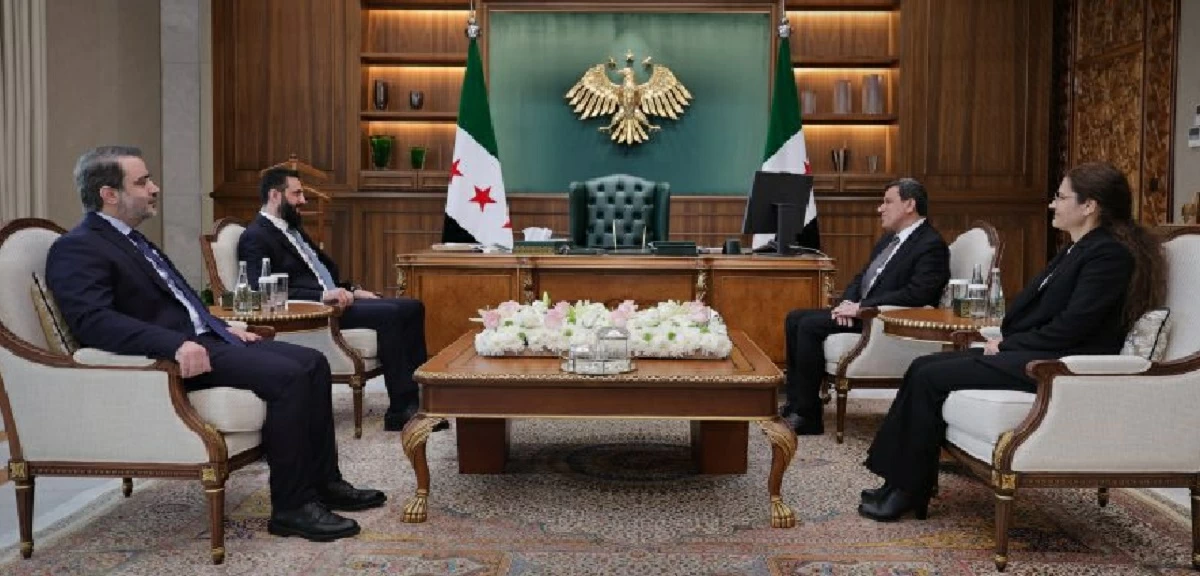
استقبل الرئيس السوري أحمد الشرع، اليوم (الخميس)، قائد قوات سورية الديمقراطية (قسد) مظلوم عبدي، والقيادية في التنظيم إلهام أحمد، لبحث استكمال عملية دمج القوات والمؤسسات ضمن مؤسسات الدولة، وفقاً لما ذكرته وكالة الأنباء السورية «سانا».
ويأتي اللقاء في سياق متابعة تنفيذ التفاهمات التي تم التوصل إليها بين الحكومة السورية و«قسد»، والتي نصت على وقف إطلاق النار، والانطلاق في مسار تدريجي لإعادة دمج البنى العسكرية والإدارية في شمال وشرق البلاد ضمن مؤسسات الدولة.
وقف إطلاق نار ومسار دمج تدريجي
وكانت الحكومة السورية قد أعلنت في 29 يناير الماضي التوصل إلى اتفاق مع قوات سورية الديمقراطية يقضي بوقف إطلاق النار، إلى جانب إطلاق مسار شامل لدمج القوات العسكرية والإدارية التابعة للطرفين.
وتضمن الاتفاق دخول قوات الأمن التابعة لوزارة الداخلية إلى مركز مدينتي الحسكة والقامشلي، وتسليم الدولة جميع المؤسسات المدنية والحكومية والمعابر والمنافذ، ضمن ترتيبات تهدف إلى توحيد إدارة المناطق الخارجة عن سيطرة دمشق.
ترتيبات أمنية وإعادة انتشار في الشمال الشرقي
وبحسب بنود الاتفاق، فقد شملت التفاهمات انسحاب القوات العسكرية من نقاط التماس، ودخول قوات الأمن الداخلي إلى مراكز المدن، بهدف تعزيز الاستقرار وتهيئة الظروف لمرحلة دمج أوسع.
كما نص الاتفاق على تشكيل وحدات عسكرية جديدة تضم عناصر من «قسد»، بينها فرقة تتألف من 3 ألوية، إضافة إلى لواء خاص بقوات كوباني (عين العرب) ضمن تشكيلات تتبع لمحافظة حلب.
دمج إداري وتسوية ملفات مدنية
وتضمن الاتفاق كذلك دمج مؤسسات الإدارة الذاتية ضمن مؤسسات الدولة السورية، مع تثبيت الموظفين المدنيين العاملين فيها، إلى جانب بحث تسوية الحقوق المدنية والتربوية للمجتمع الكردي.
كما نص على ضمان عودة النازحين إلى مناطقهم، في إطار ترتيبات تهدف إلى معالجة الملفات الإنسانية والإدارية العالقة في الشمال الشرقي.
وأكدت البنود أن عملية الدمج العسكري والأمني ستتم بشكل فردي ومنظم، بحيث تتسلم الدولة جميع المؤسسات والمعابر والمنافذ، بما يضمن عدم بقاء أي منطقة خارج سيطرة مؤسساتها الرسمية.
مسار معقد بين دمشق و«قسد»
تشهد العلاقة بين الحكومة السورية وقوات سورية الديمقراطية مساراً متقلباً منذ سنوات، اتسم بمزيج من التفاهمات الجزئية والتباينات حول مستقبل الإدارة في شمال وشرق البلاد.
ويُعد اتفاق 29 يناير أحد أبرز محاولات تنظيم العلاقة بين الطرفين، عبر وضع إطار تدريجي لإعادة دمج المؤسسات الأمنية والإدارية، في ظل تعقيدات ميدانية وسياسية تشمل تعدد القوى الفاعلة على الأرض وتداخل النفوذ المحلي والإقليمي والدولي.
ويأتي اللقاء الأخير في دمشق ليعكس استمرار العمل على تفعيل هذا المسار، وسط تحديات تتعلق بآليات التنفيذ، ومستقبل الترتيبات الأمنية والإدارية في المناطق الخاضعة لسيطرة «قسد».
The Syrian President Ahmad al-Shara received today (Thursday) the commander of the Syrian Democratic Forces (SDF) Mazloum Abdi, and the organization's leader Ilham Ahmed, to discuss the completion of the integration of forces and institutions within the state institutions, according to the Syrian news agency "SANA."
The meeting comes in the context of following up on the implementation of the understandings reached between the Syrian government and the SDF, which stipulated a ceasefire and the initiation of a gradual path for the reintegration of military and administrative structures in the north and east of the country within state institutions.
Ceasefire and Gradual Integration Path
The Syrian government announced on January 29 that it had reached an agreement with the Syrian Democratic Forces that includes a ceasefire, along with launching a comprehensive path for the integration of military and administrative forces from both sides.
The agreement included the entry of security forces from the Ministry of Interior into the centers of the cities of Hasakah and Qamishli, and the handover of all civil, governmental institutions, crossings, and outlets to the state, as part of arrangements aimed at unifying the administration of areas outside the control of Damascus.
Security Arrangements and Redeployment in the Northeast
According to the terms of the agreement, the understandings included the withdrawal of military forces from contact points and the entry of internal security forces into city centers, with the aim of enhancing stability and preparing the conditions for a broader integration phase.
The agreement also stipulated the formation of new military units that include elements from the SDF, including a division consisting of 3 brigades, in addition to a special brigade for the Kobani (Ayn al-Arab) forces within formations affiliated with Aleppo Governorate.
Administrative Integration and Settlement of Civil Files
The agreement also included the integration of self-administration institutions within the Syrian state institutions, with the stabilization of the civilian employees working in them, in addition to discussing the settlement of civil and educational rights for the Kurdish community.
It also stipulated ensuring the return of displaced persons to their areas, as part of arrangements aimed at addressing the humanitarian and administrative files pending in the northeast.
The terms confirmed that the military and security integration process will be carried out individually and systematically, so that the state takes over all institutions, crossings, and outlets, ensuring that no area remains outside the control of its official institutions.
A Complex Path Between Damascus and the SDF
The relationship between the Syrian government and the Syrian Democratic Forces has witnessed a fluctuating path for years, characterized by a mix of partial understandings and differences regarding the future administration in the north and east of the country.
The January 29 agreement is considered one of the most prominent attempts to organize the relationship between the two parties, by establishing a gradual framework for the reintegration of security and administrative institutions, amid field and political complexities that include the multiplicity of active forces on the ground and the overlap of local, regional, and international influences.
The recent meeting in Damascus reflects the ongoing efforts to activate this path, amidst challenges related to implementation mechanisms and the future of security and administrative arrangements in areas under the control of the SDF.