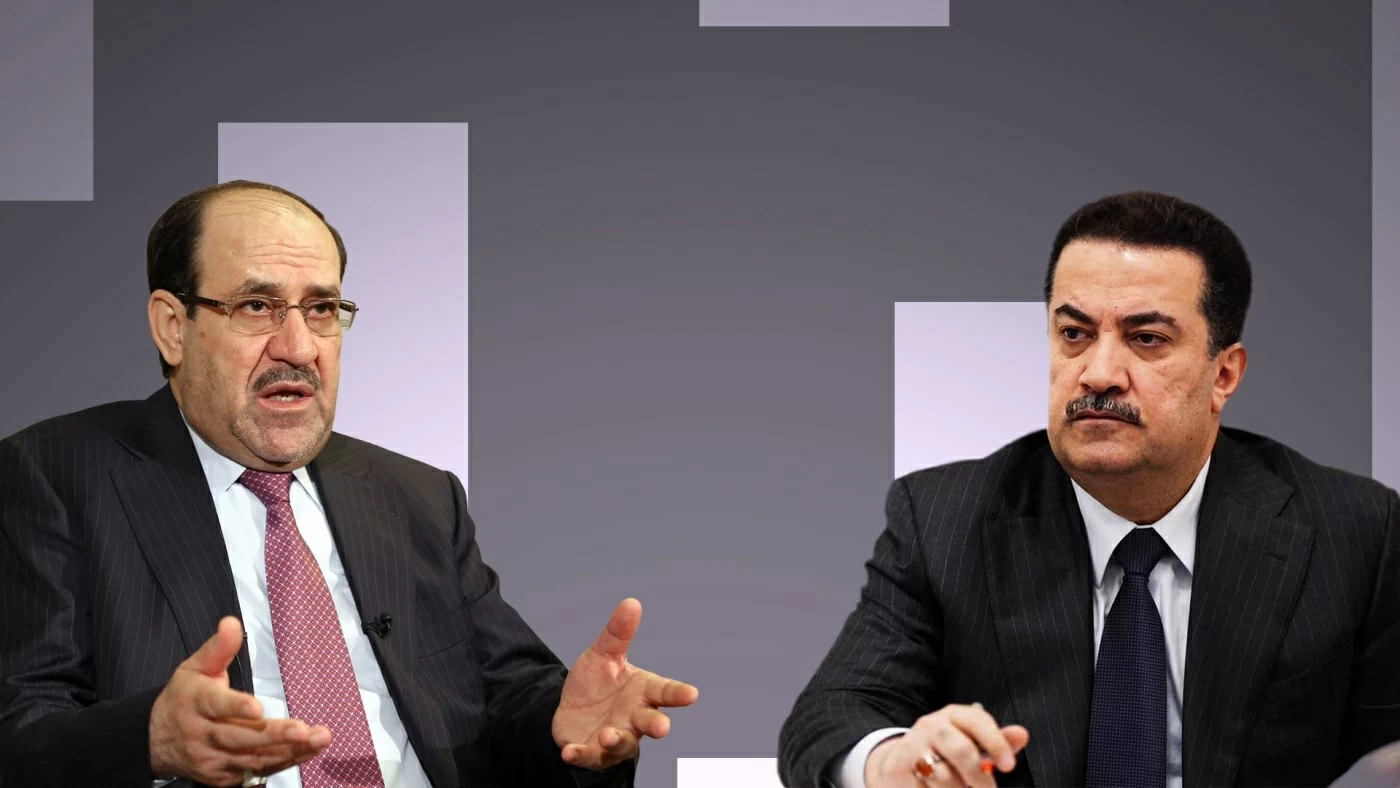
انعكست سخونة الأوضاع الأمنية في العراق على المواقف السياسية بعد تهديدات من أنصار زعيم دولة القانون نوري المالكي في البرلمان، بإسقاط ترشيح رئيس الحالي محمد شياع السوداني لولاية ثانية.
هذه التهديدات جعلت محاولات تشكيل الحكومة الجديدة أكثر تعقيداً بعد مؤشرات على نجاح فريق المالكي في تشكيل ما يشبه «الثلث المعطل» داخل مجلس النواب وهو ما قد يعرقل محاولات تجديد الولاية ثانية للسوداني.
وبينما تتصاعد التوترات الأمنية في البلاد مع استهداف قيادات في الفصائل المسلحة وتصاعد الهجمات على المصالح الأمريكية، يحاول طرفا الصراع داخل التحالف الحاكم استثمار تلك التطورات لتعزيز فرص مرشحيهما في معركة السلطة المستمرة منذ نحو ثلاثة أشهر.
ونجح المالكي في جمع 125 نائباً وقعوا تعهدات برفض التجديد للسوداني، وهو ما يمكن أن يشكل الثلث المعطل داخل البرلمان، ويعني ذلك عملياً صعوبة تمرير الاستحقاقات الدستورية المرتبطة بتشكيل الحكومة إذ يتطلب انتخاب رئيس الجمهورية الذي يكلف بدوره مرشح الكتلة الأكبر بتشكيل الحكومة أغلبية الثلثين في البرلمان (220 نائباً على الأقل).
في خضم هذا الصراع، عاد الجدل حول مفهوم الكتلة الأكبر إلى الواجهة بعد انتقادات متكررة أطلقها رئيس مجلس القضاء فائق زيدان وصف فيها الجدل المستمر حول هذا المفهوم بأنه خطيئة سياسية تسببت بتكرار أزمات تشكيل الحكومات في العراق.
ورأى مراقبون أن تصريحات زيدان تمثل محاولة للخروج من الأزمة السياسية الحالية، واعتبرها محللون أقرب إلى دعم موقف السوداني الذي حصد تحالفه أكبر عدد من المقاعد في الانتخابات الأخيرة قبل أن يتنازل لصالح المالكي مطلع العام الحالي.
هذا الموقف سرعان ما تبعه ما وصفته أوساط سياسية بـ«انقلاب سياسي» داخل الإطار التنسيقي بعد أن بدأت شخصيات بارزة كانت قد أيدت ترشيح المالكي تميل إلى خيار التجديد للسوداني.
وفي هذا السياق، قال القيادي في تيار الحكمة حسن فدعم: إن القوى السياسية قد تحسم اسم مرشح رئاسة الحكومة خلال الأيام القادمة، لكنها ما تزال تنتظر موقف القوى الكردية من مرشح رئاسة الجمهورية قبل المضي في الخطوات الدستورية اللاحقة.
وكان «الإطار التنسيقي» قد أخفق في عقد اجتماع كان مقرراً الإثنين الماضي، لمناقشة إعلان سحب ترشيح المالكي واستبداله بالسوداني.
ووفقاً لما تقوله عالية نصيف النائبة في الفريق الداعم للسوداني فإن كلاً من عمار الحكيم زعيم تيار الحكمة وقيس الخزعلي زعيم عصائب أهل الحق إضافة إلى هادي العامري، يدعمون ترشيح السوداني لولاية ثانية وهو موقف ما تزال بعض الأوساط تبدي تشككاً حياله.
The heated security situation in Iraq has reflected on political stances following threats from supporters of State of Law leader Nouri al-Maliki in parliament to topple the current president Mohammed Shia' al-Sudani's nomination for a second term.
These threats have made attempts to form a new government more complicated after indications of al-Maliki's team successfully forming what resembles a "blocking third" within the House of Representatives, which could hinder efforts to renew al-Sudani's term.
As security tensions escalate in the country with attacks targeting leaders of armed factions and an increase in assaults on American interests, both sides of the conflict within the ruling coalition are trying to leverage these developments to enhance their candidates' chances in the ongoing power struggle that has lasted for nearly three months.
Al-Maliki has succeeded in gathering 125 deputies who signed pledges to reject the renewal for al-Sudani, which could constitute the blocking third within parliament. This practically means that passing the constitutional requirements related to forming the government will be difficult, as electing the president requires a two-thirds majority in parliament (at least 220 deputies).
Amid this conflict, the debate over the concept of the "largest bloc" has resurfaced following repeated criticisms from the head of the judiciary, Faik Zidan, who described the ongoing debate over this concept as a political sin that has caused repeated crises in forming governments in Iraq.
Observers believe that Zidan's statements represent an attempt to exit the current political crisis, and analysts consider them closer to supporting al-Sudani's position, whose coalition won the largest number of seats in the recent elections before conceding in favor of al-Maliki earlier this year.
This position was quickly followed by what political circles described as a "political coup" within the coordination framework after prominent figures who had supported al-Maliki's nomination began to lean towards renewing for al-Sudani.
In this context, Wisdom Movement leader Hassan Fadham stated that political forces may finalize the name of the prime ministerial candidate in the coming days, but they are still waiting for the Kurdish forces' stance on the presidential candidate before proceeding with subsequent constitutional steps.
The "coordination framework" had failed to hold a meeting that was scheduled for last Monday to discuss the announcement of withdrawing al-Maliki's nomination and replacing him with al-Sudani.
According to what MP Alia Nassif, a member of the supporting team for al-Sudani, says, both Ammar al-Hakim, leader of the Wisdom Movement, and Qais al-Khazali, leader of the Asa'ib Ahl al-Haq, in addition to Hadi al-Amiri, support al-Sudani's nomination for a second term, a position that some circles still express skepticism about.