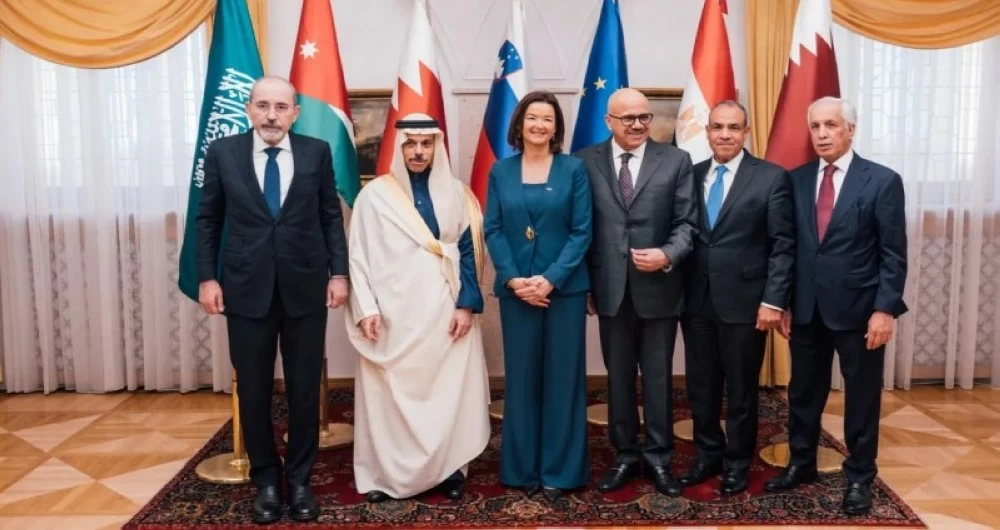
عقدت اللجنة الوزارية العربية الإسلامية بشأن غزة، اليوم (الجمعة)، اجتماعاً في العاصمة السلوفينية ليوبليانا، لبحث تطورات الأوضاع في الشرق الأوسط، وفي مقدمتها الجهود الرامية إلى تثبيت اتفاق وقف إطلاق النار في قطاع غزة، ودفع مسار السلام الإقليمي على أساس حل الدولتين.
وعُقد الاجتماع بدعوة من وزيرة الخارجية السلوفينية، تانيا فايون، وشارك فيه كل من وزير الخارجية السعودي، الأمير فيصل بن فرحان، ووزير الخارجية الأردني، أيمن الصفدي، ووزير الخارجية المصري، بدر عبد العاطي، ووزير الخارجية البحريني، عبد اللطيف بن راشد الزياني، ووزير الدولة للشؤون الخارجية بدولة قطر، سلطان بن سعد المريخي.
مناقشة خطة ترمب للسلام
أكد وزير الخارجية السعودي، الأمير فيصل بن فرحان، خلال المؤتمر صحفي مشترك، أن الاجتماع ناقش كيفية دعم خطة ترمب للسلام في غزة وكيفية إنهاء القتل في القطاع، بما يسهم في تحقيق الاستقرار في قطاع غزة، مشيراً إلى أهمية دور الإدارة الأمريكية في عملية السلام.
وأوضح أن «هناك تحديات لا تزال قائمة فيما يتعلق بتدفق المساعدات الإنسانية إلى القطاع وإعادة إعماره».
بدورها، أكدت وزيرة الخارجية السلوفينية، تانيا فايون، خلال مؤتمر صحافي، أهمية منع تدهور اتفاق وقف إطلاق النار في غزة، مشددة على ضرورة عدم إغفال ما يجري في الضفة الغربية بالتوازي مع التركيز على الأوضاع الإنسانية في القطاع.
ورحبت وزيرة الخارجية السلوفينية، بفتح معبر رفح، لما له من دور في تسهيل حركة الفلسطينيين، وضمان وصول المساعدات، مشيدة بجهود مجموعة الاتصال العربية في جذب الاهتمام الدولي بالأزمة الإنسانية في غزة والدفاع عن حقوق الشعب الفلسطيني، مؤكدة التزام بلادها بالقانون الدولي والقانون الدولي الإنساني وحق شعوب المنطقة في العيش بسلام.
الموقف المصري ثابت
من جانبه، أكد وزير الخارجية المصري، بدر عبد العاطي تقدير مصر للمواقف السلوفينية الداعمة للشعب الفلسطيني وحقوقه المشروعة، بما في ذلك اعترافها بدولة فلسطين ومواقفها المتسقة داخل المحافل الدولية، مؤكداً الموقف المصري الثابت الداعم لحقوق الشعب الفلسطيني غير القابلة للتصرف، وعلى رأسها حق تقرير المصير وإقامة دولته المستقلة على خطوط الرابع من يونيو 1967 وعاصمتها القدس الشرقية، مع التأكيد على ضرورة الحفاظ على وحدة الأراضي الفلسطينية وضمان التواصل الجغرافي والديموجرافي بين قطاع غزة والضفة الغربية، ورفض أي محاولات لتقسيم القطاع أو فصله عن باقي الأراضي الفلسطينية.
وشدد عبد العاطي، على «أهمية استكمال تنفيذ استحقاقات المرحلة الثانية من خطة الرئيس الأمريكي دونالد ترمب»، مثمناً الجهود المبذولة لإنهاء الحرب في غزة وتحقيق السلام والاستقرار في المنطقة.
وأعلن دعم مصر للخطة الشاملة لتسوية النزاع، ولقرار مجلس الأمن رقم 2803 وما يتضمنه من ترتيبات انتقالية لإدارة القطاع، مؤكداً دعم القاهرة الكامل لعمل اللجنة الوطنية لإدارة قطاع غزة برئاسة علي شعث.
ولفت إلى أهمية الدور المنوط بها في إدارة الشئون اليومية لسكان القطاع وتلبية احتياجاتهم الأساسية خلال المرحلة الانتقالية، مشدداً على أهمية مواصلة تدفق المساعدات الإنسانية والإغاثية إلى القطاع، وتشكيل ونشر قوة الاستقرار الدولية لمراقبة وقف إطلاق النار.
وجدد وزير الخارجية المصري، التأكيد على أن التعامل مع الأزمة الإنسانية في غزة يجب أن يسير جنباً إلى جنب مع معالجة جوهر القضية الفلسطينية في إطارها الشامل، مشدداً على أن «السلام المستدام لا يمكن تحقيقه إلا من خلال معالجة الأسباب الجذرية للصراع»، وأن مصر ملتزمة بمواصلة الانخراط البنّاء مع كافة الشركاء الإقليميين والدوليين للتوصل لحل عادل وشامل للقضية الفلسطينية.
حل سياسي شامل
من جهته ثانية، قال وزير الخارجية الأردني أيمن الصفدي، إن أولويات الأردن تتركز في المرحلة الحالية على التطلع إلى الأمام وتنفيذ خطة الرئيس الأمريكي دونالد ترمب للسلام، بما يسهم في تحقيق الاستقرار في قطاع غزة، مثمناً الدور الذي تضطلع به سلوفينيا في إيصال المساعدات الإنسانية إلى القطاع عبر الاتحاد الأوروبي.
وأشار إلى أن سلوفينيا كانت شريكاً فاعلاً في الجهود الرامية إلى وقف الحرب على غزة، مبيناً أن الأولوية العاجلة تتمثل في تثبيت اتفاق وقف إطلاق النار وضمان وصول المساعدات الإغاثية إلى أهالي قطاع غزة دون أي عوائق، في ظل الأوضاع الإنسانية الصعبة التي يمر بها القطاع.
وشدد الصفدي أهمية الدفع نحو حل سياسي شامل يقوم على أساس حل الدولتين، بما يفضي إلى إقامة الدولة الفلسطينية المستقلة ويحقق الأمن والاستقرار في المنطقة.
The Arab Islamic Ministerial Committee on Gaza held a meeting today (Friday) in the Slovenian capital, Ljubljana, to discuss developments in the Middle East, primarily the efforts aimed at solidifying the ceasefire agreement in the Gaza Strip and advancing the regional peace process based on the two-state solution.
The meeting was convened at the invitation of Slovenian Foreign Minister Tanja Fajon, and was attended by Saudi Foreign Minister Prince Faisal bin Farhan, Jordanian Foreign Minister Ayman Safadi, Egyptian Foreign Minister Badr Abdel Atti, Bahraini Foreign Minister Abdullatif bin Rashid Al Zayani, and Qatar's Minister of State for Foreign Affairs Sultan bin Saad Al Muraikhi.
Discussion of Trump's Peace Plan
During a joint press conference, Saudi Foreign Minister Prince Faisal bin Farhan confirmed that the meeting discussed how to support Trump's peace plan for Gaza and how to end the killing in the Strip, contributing to stability in the Gaza Strip, emphasizing the importance of the U.S. administration's role in the peace process.
He explained that "there are still challenges regarding the flow of humanitarian aid to the Strip and its reconstruction."
For her part, Slovenian Foreign Minister Tanja Fajon emphasized during a press conference the importance of preventing the deterioration of the ceasefire agreement in Gaza, stressing the need not to overlook what is happening in the West Bank while focusing on the humanitarian situation in the Strip.
She welcomed the opening of the Rafah crossing, given its role in facilitating the movement of Palestinians and ensuring the delivery of aid, praising the efforts of the Arab Contact Group in attracting international attention to the humanitarian crisis in Gaza and defending the rights of the Palestinian people, reaffirming her country's commitment to international law and humanitarian law and the right of the peoples of the region to live in peace.
Egypt's Position is Steadfast
For his part, Egyptian Foreign Minister Badr Abdel Atti affirmed Egypt's appreciation for Slovenia's supportive positions towards the Palestinian people and their legitimate rights, including its recognition of the State of Palestine and its consistent positions within international forums, reiterating Egypt's steadfast position in support of the inalienable rights of the Palestinian people, foremost among them the right to self-determination and the establishment of their independent state along the lines of June 4, 1967, with East Jerusalem as its capital, while emphasizing the necessity of maintaining the unity of Palestinian territories and ensuring geographical and demographic continuity between the Gaza Strip and the West Bank, and rejecting any attempts to divide the Strip or separate it from the rest of the Palestinian territories.
Abdel Atti stressed the "importance of completing the implementation of the second phase of President Donald Trump's plan," appreciating the efforts made to end the war in Gaza and achieve peace and stability in the region.
He announced Egypt's support for the comprehensive plan to resolve the conflict, and for Security Council Resolution 2803 and its transitional arrangements for the administration of the Strip, affirming Cairo's full support for the work of the National Committee for the Administration of the Gaza Strip, headed by Ali Shaath.
He pointed out the importance of the role assigned to it in managing the daily affairs of the Strip's residents and meeting their basic needs during the transitional phase, emphasizing the importance of continuing the flow of humanitarian and relief aid to the Strip, and forming and deploying an international stabilization force to monitor the ceasefire.
The Egyptian Foreign Minister reiterated that addressing the humanitarian crisis in Gaza must go hand in hand with addressing the core of the Palestinian issue in its comprehensive framework, stressing that "sustainable peace can only be achieved by addressing the root causes of the conflict," and that Egypt is committed to continuing constructive engagement with all regional and international partners to reach a just and comprehensive solution to the Palestinian issue.
Comprehensive Political Solution
For his part, Jordanian Foreign Minister Ayman Safadi stated that Jordan's priorities at this stage focus on looking ahead and implementing President Donald Trump's peace plan, contributing to stability in the Gaza Strip, appreciating Slovenia's role in delivering humanitarian aid to the Strip through the European Union.
He noted that Slovenia has been an active partner in efforts to stop the war on Gaza, indicating that the urgent priority is to solidify the ceasefire agreement and ensure the delivery of relief aid to the people of the Gaza Strip without any obstacles, given the difficult humanitarian conditions in the Strip.
Safadi emphasized the importance of pushing towards a comprehensive political solution based on the two-state solution, which leads to the establishment of an independent Palestinian state and achieves security and stability in the region.