


رجحت صور أقمار صناعية أن يكون الاستهداف الأمريكي لمحطة «فوردو» النووية الإيرانية ألحق أضراراً بالغة وربما دمر الموقع وأجهزة الطرد المركزي لتخصيب اليورانيوم التي كان يضمها، إلا أنه لا توجد تأكيدات. وأكد المفتش النووي السابق بالأمم المتحدة ديفيد أولبرايت أن القنابل الخارقة للتحصينات اخترقت الجبل، لكن الباحث المساعد في «سي إن إيه» المتخصص في صور الأقمار الصناعية ديكر إيفليث لفت إلى أن حجم الدمار تحت الأرض لا يمكن تحديده. وقال إن المنطقة التي تحتوي على مئات من أجهزة الطرد المركزي «مدفونة بعمق كبير جداً بالنسبة لنا لتقييم مستوى الضرر باستخدام صور الأقمار الصناعية».
وتظهر صور الأقمار الصناعية 6 ثقوب يبدو أن القنابل الخارقة للتحصينات أحدثتها في الجبل.
وأظهرت صور التقطتها شركة «ماكسار تكنولوجيز» بالأقمار الصناعية «نشاطاً غير اعتيادي» في فوردو يومي الخميس والجمعة، ووجود عدد كبير من المركبات كانت تنتظر أمام مدخل المنشأة. وقال مصدر إيراني رفيع المستوى، أمس (الأحد)، إن معظم اليورانيوم العالي التخصيب الذي يقترب من درجة صنع الأسلحة النووية بنسبة 60% نُقل إلى مكان آخر قبل الهجوم الأمريكي.
وقال جيفري لويس من معهد ميدلبري للدراسات الدولية «لا أعتقد أنه يمكنك بثقة كبيرة أن تفعل أي شيء سوى تأخير برنامجهم النووي ربما لبضع سنوات.. من شبه المؤكد أن هناك منشآت لا نعرف عنها شيئاً».
وقال السيناتور الديمقراطي عضو لجنة المخابرات في مجلس الشيوخ مارك كيلي: «خوفي الأكبر حالياً هو أن يُخفوا البرنامج بأكمله، ليس تحت الأرض فعلياً، بل بعيداً عن الأعين».
وقال رئيس هيئة الأركان المشتركة الأمريكية الجنرال دان كين للصحفيين: «إن 7 قاذفات من طراز بي-2 أسقطت 14 قنبلة من طراز جي.بي.يو-57/بي الخارقة للتحصينات، وهي قنابل دقيقة التوجيه قال تقرير صادر عن الكونغرس عام 2012 إنها تزن 30 ألف رطل، ومصممة للاختراق لمسافة تصل إلى 200 قدم في منشآت محصنة تحت الأرض مثل فوردو». وأضاف: «التقييمات الأولية تشير إلى أن المواقع تضررت بشدة، لكنه أحجم عن التكهن بما إذا كانت المنشآت النووية لا تزال سليمة».
وتشير صور ماكسار إلى أن قاذفات بي-2 أسقطت حمولة أولية من 6 قنابل على فوردو، أعقبتها «ضربة مزدوجة» بـ6 قنابل أخرى في المواقع نفسها. وأن عملية «مطرقة منتصف الليل» استهدفت المنشأة الرئيسية لتخصيب اليورانيوم في نطنز، ومنشأة أصفهان، حيث يوجد أكبر مركز للأبحاث النووية في البلاد. وهناك مواقع أخرى ذات صلة بالأنشطة النووية بالقرب من المدينة.
وأظهرت صور الأقمار الصناعية التابعة لشركة إيرباص للدفاع والفضاء أن صواريخ كروز من طراز توماهوك ألحقت أضراراً بالغة بمنشأة لليورانيوم في أصفهان، وثقباً فوق مناطق التخصيب تحت الأرض في نطنز يقال إنه ناجم عن قنبلة خارقة للتحصينات، التي «على الأرجح دمرت المنشأة».
صور أقمار صناعية: أضرار جسيمة في منشأة «فوردو» الإيرانية
23 يونيو 2025 - 12:59
|
آخر تحديث 23 يونيو 2025 - 12:59
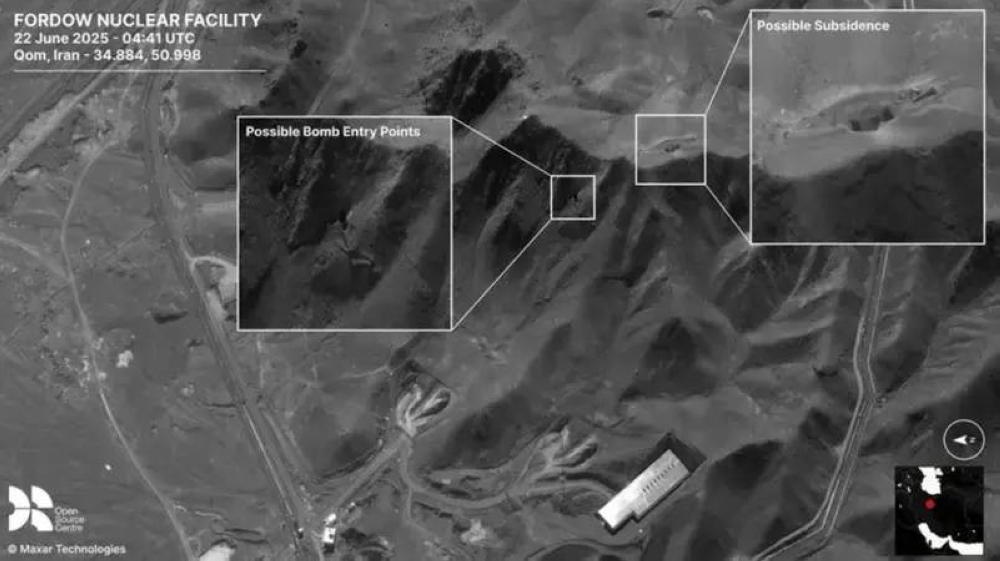
صور أقمار صناعية تظهر المواقع الإيرانية التي استهدفتها أمريكا.


تابع قناة عكاظ على الواتساب
«عكاظ» (جدة، عواصم) okaz_online@
Satellite images suggest that the U.S. targeting of the Iranian "Fordow" nuclear facility has caused significant damage and may have destroyed the site and the centrifuges for uranium enrichment it housed, although there are no confirmations. Former UN nuclear inspector David Albright confirmed that bunker-buster bombs penetrated the mountain, but Decker Eveleth, a research assistant at CNA specializing in satellite imagery, pointed out that the extent of the underground damage cannot be determined. He stated that the area containing hundreds of centrifuges is "buried too deeply for us to assess the level of damage using satellite images."
Satellite images show six holes that appear to have been created by bunker-buster bombs in the mountain.
Images captured by Maxar Technologies' satellites showed "unusual activity" at Fordow on Thursday and Friday, with a large number of vehicles waiting at the facility's entrance. A senior Iranian source stated yesterday (Sunday) that most of the highly enriched uranium nearing weapon-grade levels of 60% had been moved to another location before the U.S. attack.
Jeffrey Lewis from the Middlebury Institute of International Studies said, "I don't think you can confidently do anything other than delay their nuclear program perhaps for a few years... It's almost certain that there are facilities we don't know about."
Democratic Senator and member of the Senate Intelligence Committee Mark Kelly said, "My biggest fear right now is that they will hide the entire program, not literally underground, but away from prying eyes."
U.S. Joint Chiefs of Staff Chairman General Dan Keen told reporters, "Seven B-2 bombers dropped 14 GBU-57/B bunker-buster bombs, which are precision-guided munitions that a 2012 congressional report stated weigh 30,000 pounds and are designed to penetrate up to 200 feet into fortified underground facilities like Fordow." He added, "Initial assessments indicate that the sites were severely damaged, but he refrained from speculating on whether the nuclear facilities remain intact."
Maxar images indicate that B-2 bombers dropped an initial load of six bombs on Fordow, followed by a "double strike" with six more bombs at the same sites. The "Midnight Hammer" operation targeted the main uranium enrichment facility in Natanz and the Isfahan facility, which houses the largest nuclear research center in the country. There are other sites related to nuclear activities near the city.
Satellite images from Airbus Defence and Space showed that Tomahawk cruise missiles caused severe damage to a uranium facility in Isfahan, and a hole above the underground enrichment areas in Natanz is said to have been caused by a bunker-buster bomb, which "likely destroyed the facility."
Satellite images show six holes that appear to have been created by bunker-buster bombs in the mountain.
Images captured by Maxar Technologies' satellites showed "unusual activity" at Fordow on Thursday and Friday, with a large number of vehicles waiting at the facility's entrance. A senior Iranian source stated yesterday (Sunday) that most of the highly enriched uranium nearing weapon-grade levels of 60% had been moved to another location before the U.S. attack.
Jeffrey Lewis from the Middlebury Institute of International Studies said, "I don't think you can confidently do anything other than delay their nuclear program perhaps for a few years... It's almost certain that there are facilities we don't know about."
Democratic Senator and member of the Senate Intelligence Committee Mark Kelly said, "My biggest fear right now is that they will hide the entire program, not literally underground, but away from prying eyes."
U.S. Joint Chiefs of Staff Chairman General Dan Keen told reporters, "Seven B-2 bombers dropped 14 GBU-57/B bunker-buster bombs, which are precision-guided munitions that a 2012 congressional report stated weigh 30,000 pounds and are designed to penetrate up to 200 feet into fortified underground facilities like Fordow." He added, "Initial assessments indicate that the sites were severely damaged, but he refrained from speculating on whether the nuclear facilities remain intact."
Maxar images indicate that B-2 bombers dropped an initial load of six bombs on Fordow, followed by a "double strike" with six more bombs at the same sites. The "Midnight Hammer" operation targeted the main uranium enrichment facility in Natanz and the Isfahan facility, which houses the largest nuclear research center in the country. There are other sites related to nuclear activities near the city.
Satellite images from Airbus Defence and Space showed that Tomahawk cruise missiles caused severe damage to a uranium facility in Isfahan, and a hole above the underground enrichment areas in Natanz is said to have been caused by a bunker-buster bomb, which "likely destroyed the facility."


