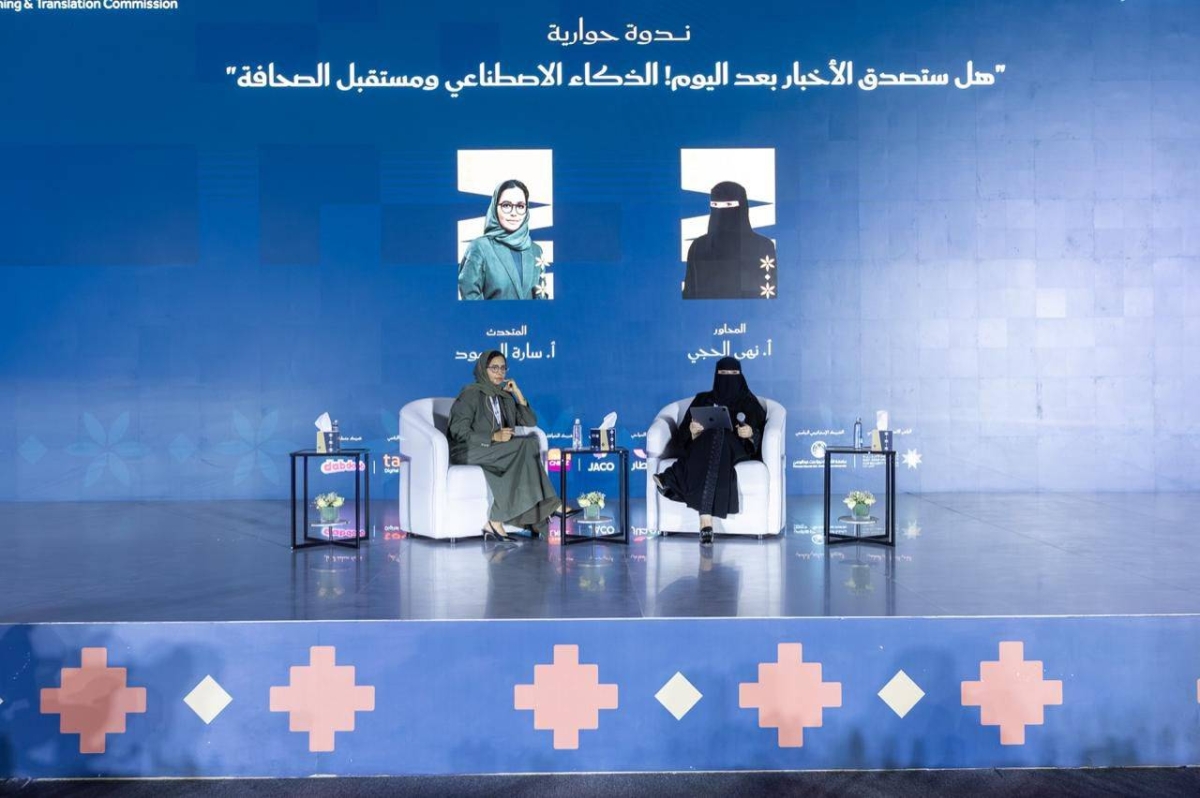
سلّطت ندوةٌ بعنوان «هل ستصدق الأخبار بعد اليوم؟ الذكاء الاصطناعي ومستقبل الصحافة» الضوء على التحولات العميقة التي يشهدها الإعلام المعاصر، وذلك ضمن فعاليات معرض الرياض الدولي للكتاب 2025، الذي تنظمه هيئة الأدب والنشر والترجمة في جامعة الأميرة نورة بنت عبدالرحمن.
وأدارت الندوة الإعلامية نهى الحجي، واستضافت الدكتورة سارة الحمود، أستاذة علوم الحاسب، التي تناولت تأثير الذكاء الاصطناعي في صناعة الأخبار وآليات إنتاج المحتوى، مشيرةً إلى دوره في تحليل البيانات الضخمة والتنبؤ بسلوك الجمهور وتسريع العمل الصحفي، إلى جانب ما يحمله من مخاطر أبرزها انتشار الأخبار المضللة وصعوبة التحقق من صحتها في ظل تطور تقنيات التزييف العميق.
وبيّنت الحمود أن مستقبل الصحافة مرتبطٌ بقدرة المؤسسات الإعلامية على توظيف الذكاء الاصطناعي بوعيٍ ومسؤولية، مع الحفاظ على المعايير المهنية والأخلاقية التي تصون ثقة الجمهور، مؤكدةً أهمية تأهيل الصحفيين وتطوير أدوات تحققٍ رقمية تواكب سرعة النشر وتضمن الدقة والمصداقية.
وشدّدت على ضرورة وضع أطُرٍ مهنية وتشريعية واضحة لتنظيم استخدام هذه التقنيات داخل المؤسسات الإعلامية، وتأسيس فِرَق بحثٍ وتطوير بالشراكة مع الجامعات ومراكز الأبحاث لتقنين الذكاء الاصطناعي في العمل الصحفي، بما يضمن استدامة المصداقية وجودة المحتوى في المستقبل الرقمي.
A seminar titled "Will You Trust the News from Now On? Artificial Intelligence and the Future of Journalism" highlighted the profound transformations occurring in contemporary media, as part of the events of the Riyadh International Book Fair 2025, organized by the Literature, Publishing, and Translation Commission at Princess Nourah bint Abdulrahman University.
The seminar was moderated by media figure Noha Al-Hajji, and featured Dr. Sara Al-Hamoud, a professor of computer science, who discussed the impact of artificial intelligence on news production and content creation mechanisms. She pointed out its role in analyzing big data, predicting audience behavior, and accelerating journalistic work, alongside the risks it poses, most notably the spread of misleading news and the difficulty of verifying its accuracy in light of the advancement of deepfake technologies.
Al-Hamoud indicated that the future of journalism is linked to the ability of media institutions to employ artificial intelligence with awareness and responsibility, while maintaining the professional and ethical standards that preserve public trust. She emphasized the importance of training journalists and developing digital verification tools that keep pace with the speed of publication and ensure accuracy and credibility.
She stressed the need to establish clear professional and legislative frameworks to regulate the use of these technologies within media institutions, and to create research and development teams in partnership with universities and research centers to regulate artificial intelligence in journalistic work, ensuring the sustainability of credibility and content quality in the digital future.