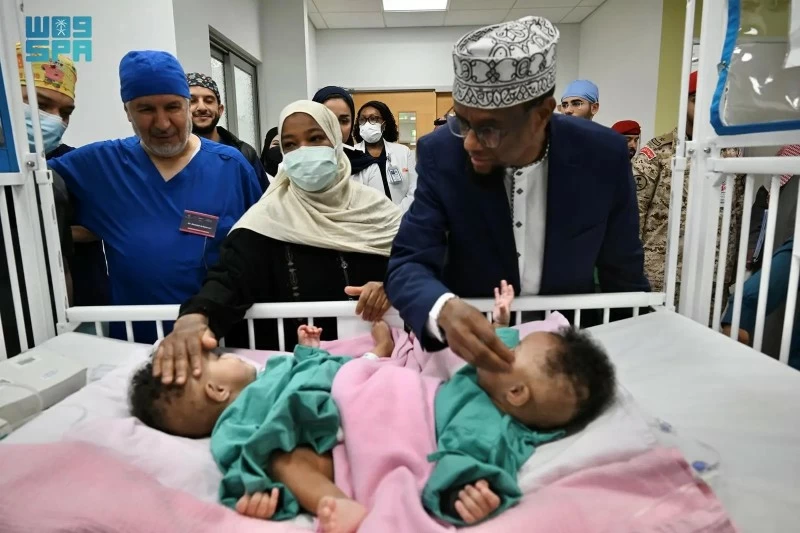
انطلقت اليوم (الخميس) في مستشفى الملك عبدالله التخصصي للأطفال بالرياض عملية فصل التوأم الصومالي الملتصق «رحمة ورملا»، تنفيذًا لتوجيهات خادم الحرمين الشريفين الملك سلمان بن عبدالعزيز، وولي العهد الأمير محمد بن سلمان.
وأوضح رئيس الفريق الطبي التابع للبرنامج السعودي للتوائم الملتصقة الدكتور عبدالله الربيعة أن التوأم تبلغان من العمر 13 شهرًا، وتلتصقان في أسفل البطن والحوض، مع اشتراكهما في القولون والمستقيم والجهازين البولي والتناسلي وعظمة الحوض.
وبيّن الدكتور الربيعة أن رملا تعاني من ضمور كامل في الكليتين وفشل كلوي تام، بينما رحمة لديها ضمور في الكلية اليسرى وتكيسات في اليمنى، ما يستدعي متابعة دقيقة بعد الفصل لضمان أداء الكلية الوظيفي.
وأضاف أن العملية مخططة على ثماني مراحل، ومن المتوقع أن تستغرق نحو 14 ساعة، ويشارك فيها 36 استشاريًا وأخصائيًا وكادر تمريضي وفني في تخصصات التخدير، وجراحة الأطفال، المسالك البولية، العظام، والتجميل، مع توقع نسبة خطورة تصل إلى 40% بسبب التحديات الطبية المعقدة.
يذكر أن البرنامج السعودي لفصل التوائم الملتصقة أجرى 68 فصلًا لتوائم من 28 دولة خلال 35 عامًا، ضمن دراسة وتقييم 156 حالة، مع إشادة الفريق الطبي بالدعم الكبير من القيادة الرشيدة للبرنامج. كما رفع الفريق الطبي والجراحي شكره لخادم الحرمين الشريفين وولي العهد، داعيًا الله أن تكلل العملية بالنجاح وأن يمنّ على التوأم بالصحة والعافية.
Today (Thursday), the separation operation for the conjoined Somali twins "Rahma and Ramla" commenced at King Abdullah Specialist Children's Hospital in Riyadh, in implementation of the directives of the Custodian of the Two Holy Mosques, King Salman bin Abdulaziz, and Crown Prince Mohammed bin Salman.
Dr. Abdullah Al-Rabeeah, head of the medical team from the Saudi program for conjoined twins, explained that the twins are 13 months old and are conjoined at the lower abdomen and pelvis, sharing the colon, rectum, urinary and reproductive systems, and the pelvic bone.
Dr. Al-Rabeeah indicated that Ramla suffers from complete atrophy of both kidneys and total kidney failure, while Rahma has atrophy in the left kidney and cysts in the right, necessitating careful monitoring after the separation to ensure the functional performance of the kidney.
He added that the operation is planned in eight stages and is expected to take about 14 hours, involving 36 consultants and specialists, as well as nursing and technical staff in the fields of anesthesia, pediatric surgery, urology, orthopedics, and plastic surgery, with an expected risk rate of up to 40% due to the complex medical challenges.
It is noteworthy that the Saudi program for the separation of conjoined twins has performed 68 separations for twins from 28 countries over 35 years, as part of a study and evaluation of 156 cases, with the medical team praising the significant support from the wise leadership for the program. The medical and surgical team also expressed their gratitude to the Custodian of the Two Holy Mosques and the Crown Prince, praying to God for the operation's success and for the twins to be granted health and wellness.