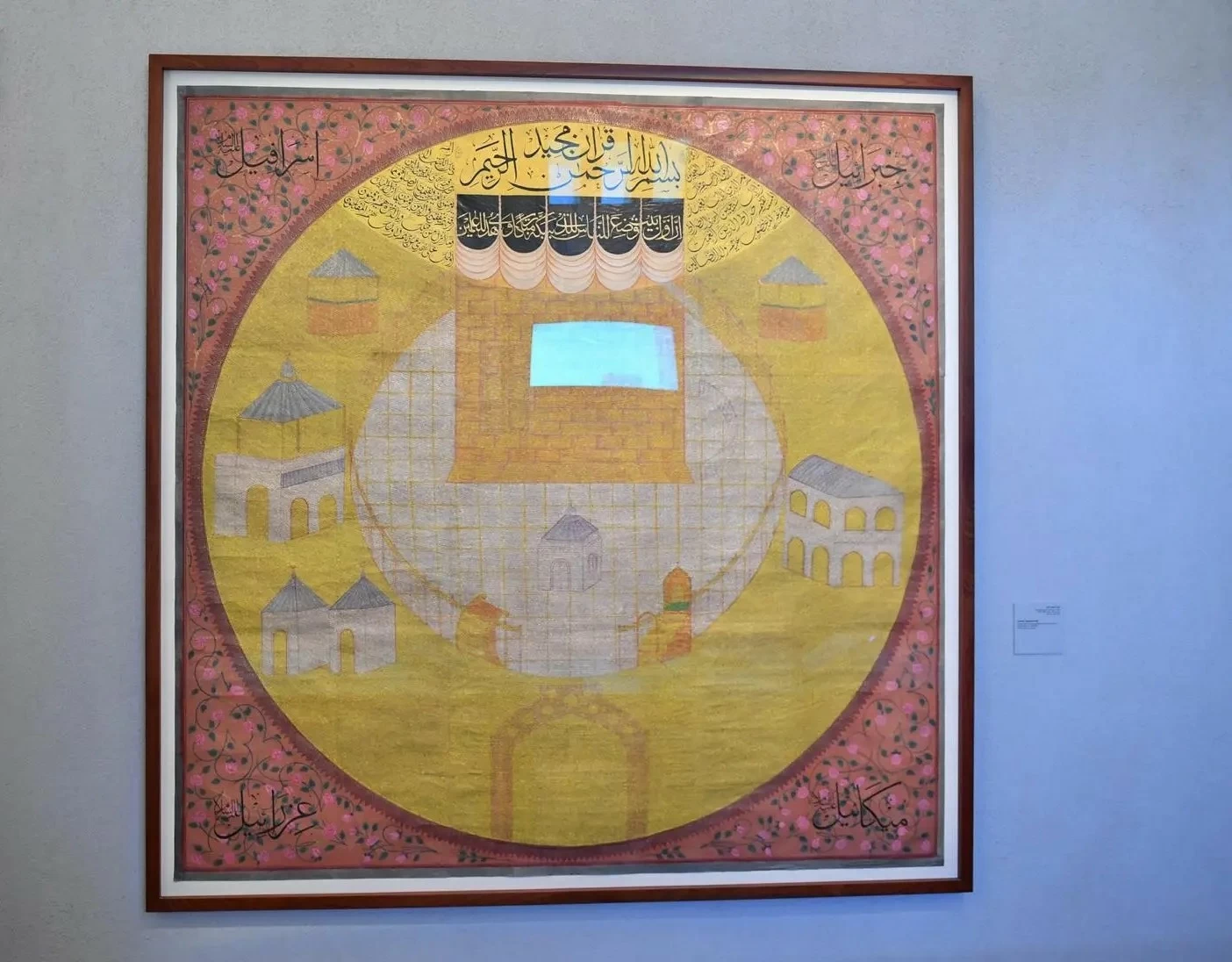
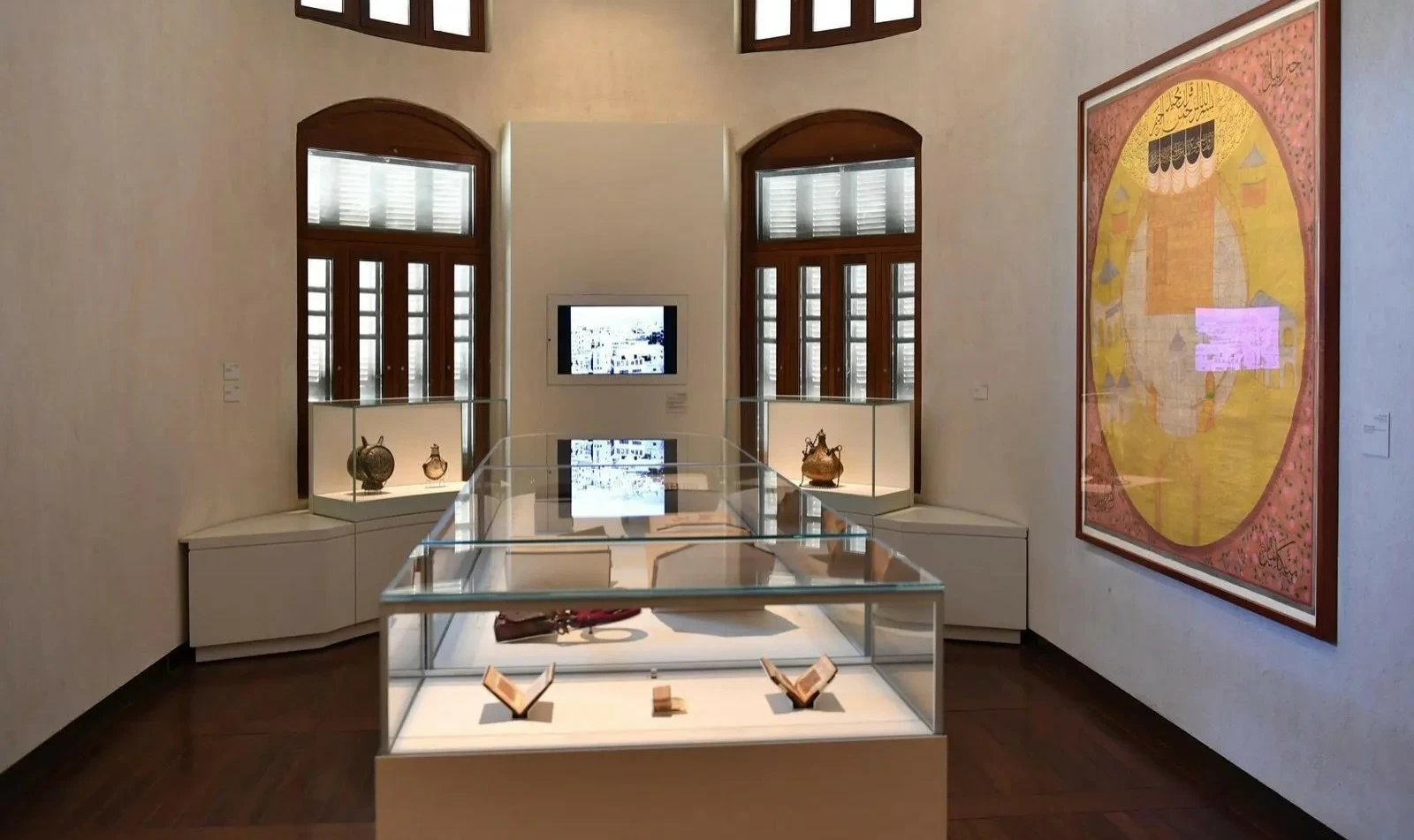
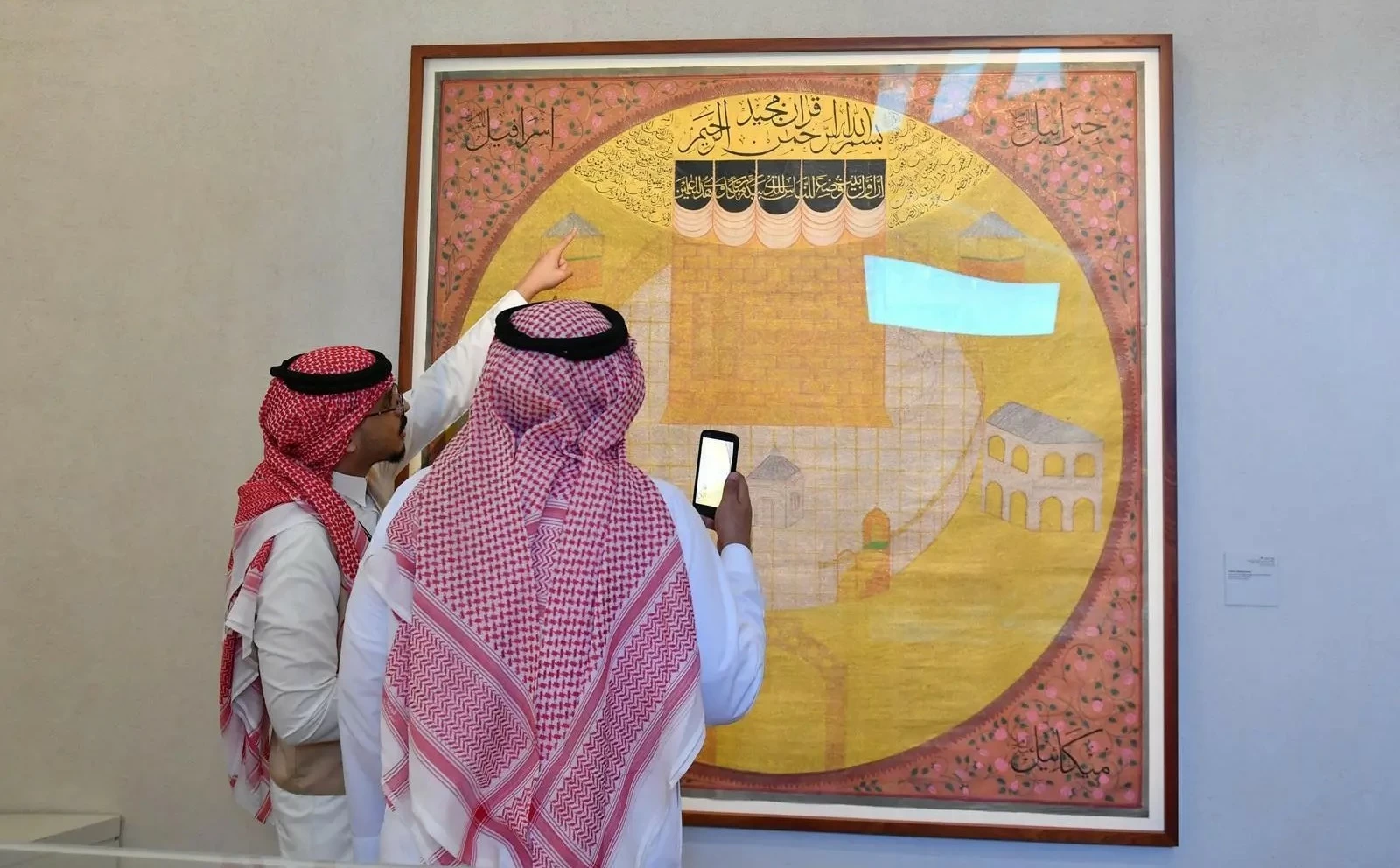
تستوقف لوحة خطية قرآنية نادرة زوار متحف البحر الأحمر بجدة التاريخية، إذ تجمع سور القرآن الكريم كاملة داخل رسم تفصيلي للحرم المكي، في عمل فني استغرق إنجازه عامًا كاملًا، وجمع بين دقة الخط وروحانية النص القرآني وجمال التكوين البصري.
وتحمل المخطوطة القرآنية، قصةً تختزل جانبًا من رحلة الحجاج عبر البحر الأحمر إلى مكة المكرمة، إذ جمعت بين قدسية القرآن الكريم، وجماليات الخط العربي، وصورة للحرم المكي، لتغدو شاهدًا فنيًا على ارتباط الفن الإسلامي بمسارات الحج عبر العصور.
وتعود المخطوطة إلى ميسور بالهند، وأنجزها غوث محبوب غالب نحو عامي 1859–1860، بالخط الديواني باستخدام الحبر الأسود والتذهيب على ورق سميك، فيما تتوسطها الكعبة المشرفة ضمن تكوين دائري يستحضر معالم الحرم المكي وتفاصيله المعمارية، في عمل يعكس المكانة الروحية التي احتلتها مكة المكرمة في وجدان المسلمين.
وتتجلى فرادة العمل في احتوائه على سور القرآن الكريم كاملة بخط بالغ الدقة داخل عناصر اللوحة وتفاصيلها، إذ تبدأ الكتابة بسورة الفاتحة في أعلاها، ثم تتتابع السور وصولًا إلى سورة الناس، في إنجاز فني يجمع بين براعة الخطاطين المسلمين ودقة فنون نسخ المصحف الشريف، ويبرز مستوى الإتقان الذي بلغته المخطوطات الإسلامية في القرن التاسع عشر.
ويعزز التكوين البصري للوحة قيمتها الفنية؛ إذ تتصدر الكعبة المشرفة مركز المشهد، وتحيط بها معالم الحرم المكي، بينما تتداخل الكتابة القرآنية مع الزخارف والتفاصيل المعمارية، في تناغم يجمع بين الحرف والصورة، ويحول الصفحة الواحدة إلى مشهد إيماني متكامل.
ولا تقتصر قيمة المخطوطة القرآنية على جمالها الفني، بل توثق جانبًا من الإرث الثقافي الذي حمله الحجاج معهم في رحلاتهم البحرية إلى الديار المقدسة، حيث شكلت هذه الأعمال وسيلة للتعبير عن المحبة والتوق إلى الحرمين الشريفين، وأسهمت في نقل الفنون الإسلامية بين أقاليم العالم الإسلامي عبر موانئ البحر الأحمر.
A rare Quranic calligraphic panel captures the attention of visitors at the Red Sea Museum in historic Jeddah, as it contains the complete verses of the Holy Quran within a detailed depiction of the Holy Mosque in Mecca. This artistic work took a full year to complete, combining the precision of calligraphy, the spirituality of the Quranic text, and the beauty of visual composition.
The Quranic manuscript carries a story that encapsulates a part of the pilgrims' journey across the Red Sea to Mecca, as it merges the sanctity of the Holy Quran, the aesthetics of Arabic calligraphy, and an image of the Holy Mosque, becoming an artistic witness to the connection between Islamic art and the paths of pilgrimage throughout the ages.
The manuscript dates back to a wealthy individual in India and was completed by Ghaus Mahboob Ghalib around the years 1859–1860, using Diwani script with black ink and gilding on thick paper. The Kaaba is centrally featured within a circular composition that evokes the landmarks and architectural details of the Holy Mosque, reflecting the spiritual significance that Mecca holds in the hearts of Muslims.
The uniqueness of the work is evident in its inclusion of the complete verses of the Holy Quran, written with extreme precision within the elements and details of the panel. The writing begins with Surah Al-Fatiha at the top, followed by the subsequent surahs leading to Surah An-Nas, in an artistic achievement that showcases the skill of Muslim calligraphers and the precision of Quranic manuscript copying, highlighting the level of craftsmanship reached by Islamic manuscripts in the 19th century.
The visual composition of the panel enhances its artistic value; the Kaaba occupies the center of the scene, surrounded by the features of the Holy Mosque, while the Quranic writing intertwines with the decorations and architectural details, in a harmony that brings together letters and images, transforming a single page into a complete spiritual scene.
The value of the Quranic manuscript is not limited to its artistic beauty; it also documents a part of the cultural heritage that pilgrims carried with them on their maritime journeys to the holy lands. These works served as a means of expressing love and longing for the two holy mosques and contributed to the transmission of Islamic arts across the regions of the Islamic world through the ports of the Red Sea.