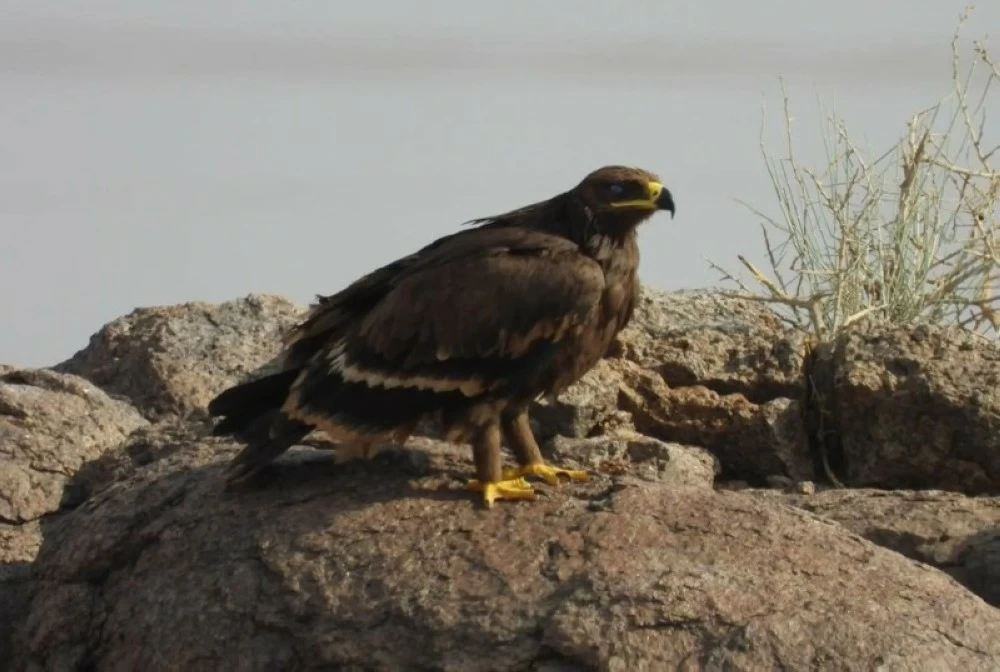
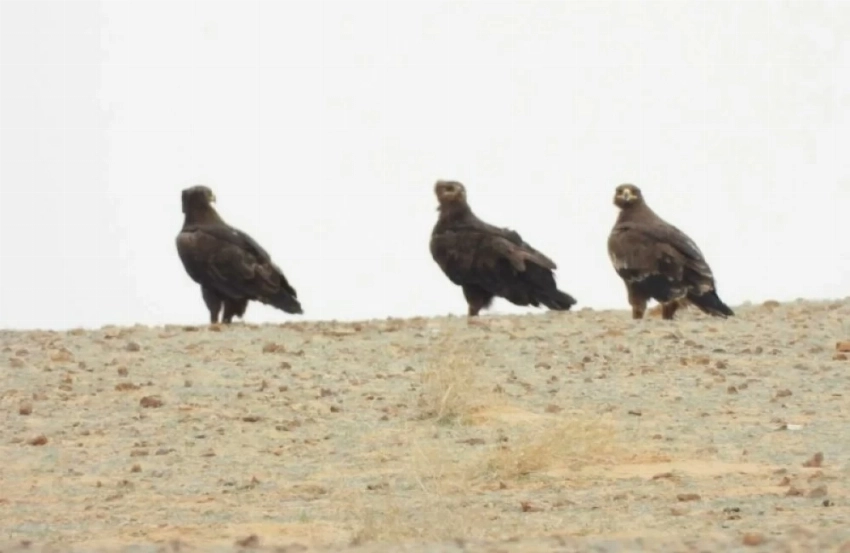
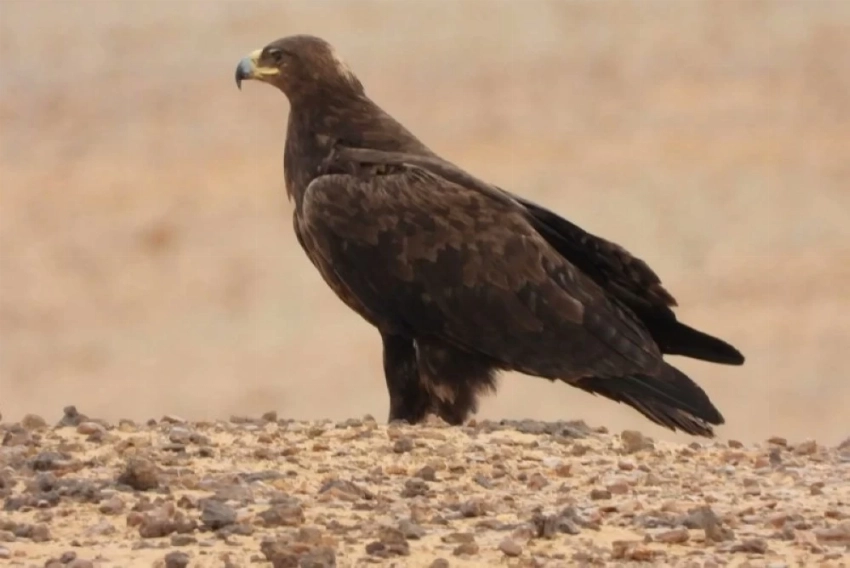
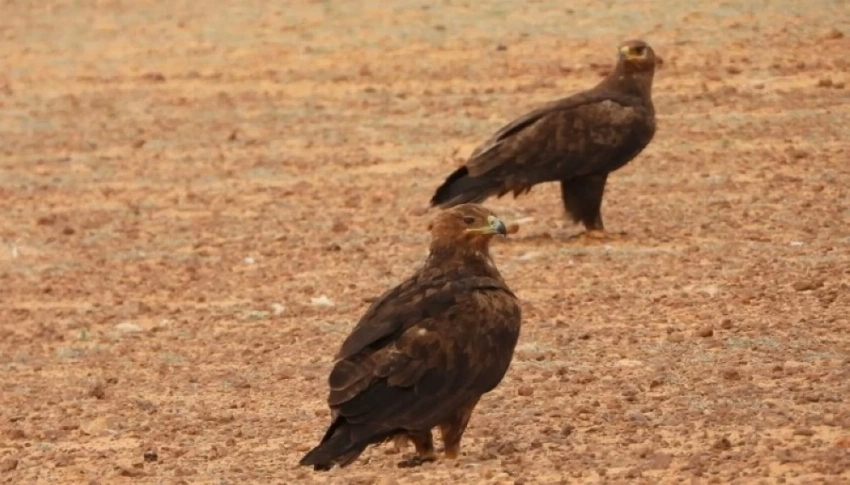
رصدت هيئة تطوير محمية الملك سلمان بن عبدالعزيز الملكية أكثر من 2850 طائرًا جارحًا نادرًا تمضي رحلتها الشتوية داخل نطاق المحمية؛ مما يعكس مكانة المحمية بوصفها وجهة للأنواع المهددة بالانقراض.
وشاركت الهيئة في تنفيذ البرنامج الوطني لرصد أعداد ومواقع تشتية طائر عقاب السهول المهدد بالانقراض عالميًا، وهو برنامج وطني مشترك يجمع المحمية مع جمعية حماية الطيور السعودية، والمركز الوطني لتنمية الحياة الفطرية، وشركة تلاد، ومنظمة بيردلايف إنترناشونال؛ ويهدف إلى توثيق أعداد ومواقع تشتية هذا النوع على مستوى المملكة.
وانطلقت أعمال المسوحات المتزامنة على مستوى المملكة خلال الفترة من 16 إلى 26 يناير الماضي؛ بما يضمن دقة النتائج وعدم تكرار احتساب الأفراد بين المواقع المختلفة، حيث نُفذت عمليات الرصد خلال فترات الصباح الباكر وما بعد العصر بوصفها الأوقات الأنسب لمتابعة نشاط الطيور الجارحة.
وخلال تنفيذ البرنامج داخل نطاق المحمية، رصدت الفرق الميدانية ما يزيد على 1600 فرد من عقاب السهول، إضافةً إلى تسجيل أكثر من 1200 فرد من طائر الحداءة السوداء، و35 فردًا من النسر الأسود، و25 فردًا من العقاب الملكي الشرقي؛ مما يعكس الأهمية البيئية لمواقع المحمية بوصفها مناطق تجمع رئيسة للطيور الجارحة.
وفي إطار الحد من أخطار التكهرب، جرى خلال عام 2024 بالتعاون مع المركز الوطني لتنمية الحياة الفطرية عزل أبراج وخطوط نقل الطاقة ذات الجهد المتوسط المحيطة داخل نطاق المحمية، كما جرى خلال المسح الحالي تقييم كفاءة إجراءات العزل، حيث لم تُسجّل أي حالات نفوق للطيور أسفل هذه الخطوط، الأمر الذي يؤكد فاعلية التدابير المتخذة في حماية الطيور الجارحة المهددة وتعزيز سلامة موائلها الطبيعية.
يذكر أن المحمية تضم 5 مناطق معلنة بوصفها مناطق مهمة عالميًا للطيور (IBAs) ومنطقة رئيسية للتنوع البيولوجي (KBA) معترف بها عالميًا وفق المعاير الخاصة بالطيور، وتشكل الطيور المهاجرة نحو 88% من إجمالي الأنواع المسجلة في المحمية، في حين تمثل الطيور المقيمة 12%.
The King Salman bin Abdulaziz Royal Reserve Development Authority has recorded more than 2,850 rare raptors spending their winter journey within the reserve; reflecting the reserve's status as a destination for endangered species.
The authority participated in implementing the national program to monitor the numbers and locations of wintering populations of the globally endangered Eastern Imperial Eagle, a joint national program that brings together the reserve with the Saudi Bird Conservation Society, the National Center for Wildlife Development, Talad Company, and BirdLife International; aiming to document the numbers and wintering locations of this species across the Kingdom.
Simultaneous surveys were conducted across the Kingdom from January 16 to 26; ensuring the accuracy of results and preventing the double counting of individuals between different locations, as monitoring operations were carried out during early morning and late afternoon, which are the most suitable times to observe raptor activity.
During the implementation of the program within the reserve, field teams recorded more than 1,600 individuals of the Eastern Imperial Eagle, in addition to noting over 1,200 individuals of the Black Kite, 35 individuals of the Black Vulture, and 25 individuals of the Eastern Imperial Eagle; reflecting the ecological importance of the reserve's sites as major gathering areas for raptors.
As part of efforts to reduce electrocution risks, in 2024, in collaboration with the National Center for Wildlife Development, medium-voltage power transmission towers and lines surrounding the reserve were insulated. Additionally, during the current survey, the effectiveness of the insulation measures was evaluated, as no bird fatalities were recorded beneath these lines, confirming the effectiveness of the measures taken to protect threatened raptors and enhance the safety of their natural habitats.
It is worth noting that the reserve includes 5 areas designated as Important Bird Areas (IBAs) and a Key Biodiversity Area (KBA) recognized globally according to bird-specific criteria, with migratory birds constituting about 88% of the total species recorded in the reserve, while resident birds represent 12%.