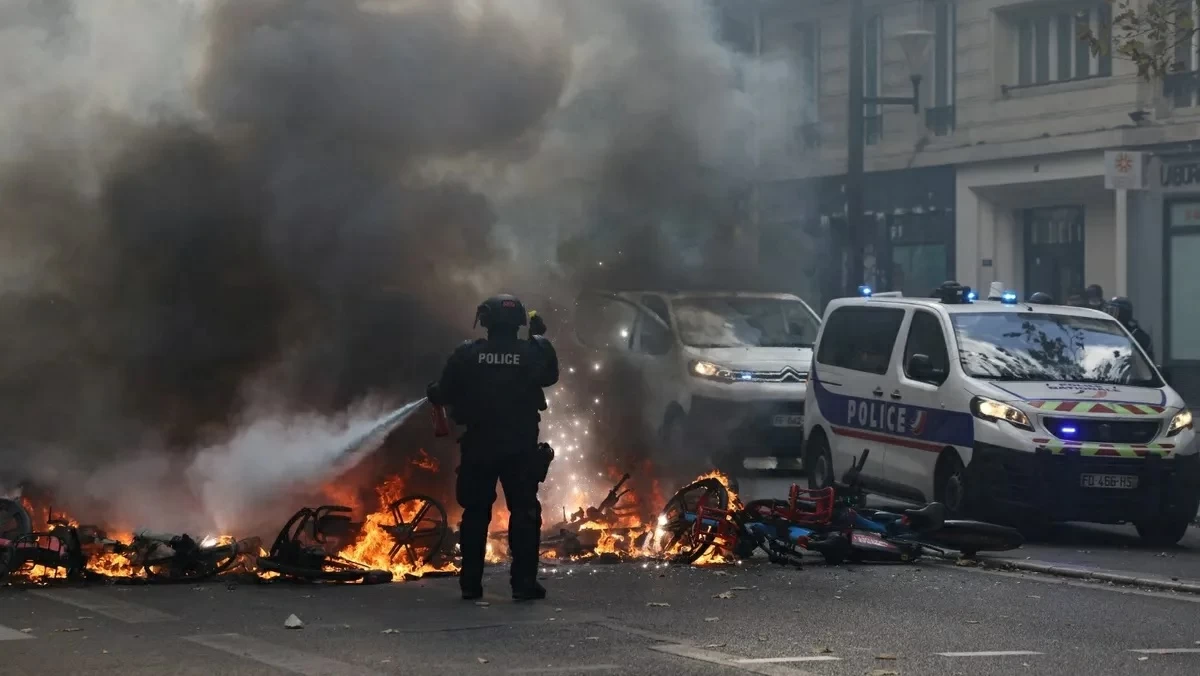
وسط مخاوف من تكرار أعمال الشغب والنهب، تستعد الحكومة الفرنسية لموجة جديدة من الاحتجاجات، (السبت)، عبر تشديد الإجراءات الأمنية وزيادة أعداد القوات المنتشرة، مع الاستعانة بالجيش لتأمين المنشآت، ودراسة فرض قيود إضافية على التجمعات وحظر التجول في عددٍ من المدن.
ونقلت شبكة «BFMTV» أن حكومة رئيس الوزراء سيباستيان لوكورنو تعتزم مراجعة خطتها الأمنية، بعد إقراره بأن الانتشار خلال احتجاجات 17 أكتوبر لم يكن متحركاً بالقدر الكافي، ما أتاح لمجموعاتٍ صغيرةٍ تنفيذ أعمال تخريب ومباغتة قوات الأمن.
تعزيزات أمنية ومعدات للتدخل السريع
وقال وزير الداخلية لوران نونيز أمام الجمعية الوطنية إن السلطات ستزيد أعداد القوات وستعزز قدرتها على التحرك والاستجابة السريعة، مع التركيز على ملاحقة المجموعات المتنقلة المتورطة في أعمال العنف.
وتدرس الحكومة استدعاء عناصر من شركات الأمن الجمهوري، والاستعانة بعناصر احتياط وطلاب شرطة في المراحل الأخيرة من التدريب، لرفع حجم الانتشار الأمني، بعدما شارك نحو ستين ألف عنصر في تأمين الاحتجاجات السابقة.
وتشمل الخطة تعزيز وحدات التدخل السريع ومكافحة الجريمة والعنف، والاستعانة بالمروحيات والمدرعات وآليات إطلاق المياه، إلى جانب وحداتٍ متخصصةٍ من الشرطة والدرك.
تأمين المنشآت وحظر تجول
وفي إطار إعادة توزيع المهام، أعلن نونيز الاستعانة بقوات «سانتينيل» العسكرية لحراسة المباني والمنشآت، بما سيتيح تحرير مزيدٍ من أفراد الشرطة والدرك للمشاركة في التعامل مع الاحتجاجات. وأكد أن دور الجيش سيقتصر على التأمين الثابت، دون التدخل مباشرةً في حفظ النظام داخل المظاهرات.
وتتواصل إجراءات حظر التجول الجزئي في مدنٍ بينها باريس وليل وليون ونيس، مع فرض قيودٍ على حركة القاصرين في مناطق أخرى. كما تشمل التدابير حظر نقل الوقود والمواد القابلة للاشتعال، وحيازة بعض معدات الحماية والألعاب النارية قرب المؤسسات التعليمية.
وتدرس السلطات حظر المظاهرات غير المعلن عنها مسبقاً إذا شكلت تهديداً للنظام العام، إلى جانب تحديد مساراتٍ خاصةٍ للتحركات الاحتجاجية.
حوار سياسي وسط اتهامات بالقمع
وبالتوازي مع الاستعدادات الأمنية، سيستقبل لوكورنو ممثلي النقابات العمالية لبحث تأمين المسيرات وضمان حرية التظاهر، والاستماع إلى مطالب المحتجين. وحذرت نقابة «الكونفدرالية الفرنسية الديمقراطية للعمل» من اختزال الحوار في تنظيم الاحتجاجات أو تحميل المشاركين مسؤولية أعمال العنف.
في المقابل، وصف منسق حركة «السترات الصفراء» بنيامين بال الوضع بأنه «لحظة خطيرة»، منتقداً ما اعتبره تشديداً أمنياً وقمعاً للاحتجاجات، فيما أعلن زعيم حزب «فرنسا الأبية» جان لوك ميلانشون مشاركته في اجتماعٍ سياسيٍ دعا إليه لوكورنو، مع انتقاده تعامل الحكومة مع الأزمة.
مشروع «المخربون يدفعون»
وفي مسارٍ تشريعيٍ موازٍ، سيبدأ مجلس الشيوخ مناقشة مشروع قانون «المخربون يدفعون»، الذي يستهدف تحميل المسؤولية المدنية عن الأضرار الناجمة عن أعمال التخريب خلال التجمعات، بما قد يتيح مساءلة أفرادٍ ينتمون إلى مجموعةٍ تسببت في أضرار، حتى دون إثبات ارتكاب كلٍ منهم الأفعال بصورةٍ مباشرةٍ.
وتدافع الحكومة عن المشروع باعتباره أداةً لمحاسبة المتسببين في الخسائر، فيما تتجه الأنظار إلى قدرة الإجراءات الأمنية والحوار السياسي على احتواء التوتر، ومنع تجدد أعمال الشغب خلال الاحتجاجات القادمة.
Amid fears of a repeat of riots and looting, the French government is preparing for a new wave of protests on Saturday by tightening security measures and increasing the number of deployed forces, with the military being called in to secure facilities and considering additional restrictions on gatherings and curfews in several cities.
BFMTV reported that Prime Minister Sébastien Lecornu's government intends to review its security plan after acknowledging that the deployment during the protests on October 17 was not mobile enough, allowing small groups to carry out acts of vandalism and surprise security forces.
Security reinforcements and rapid intervention equipment
Interior Minister Laurent Nuñez stated before the National Assembly that authorities will increase the number of forces and enhance their ability to move and respond quickly, focusing on tracking mobile groups involved in violence.
The government is considering calling in personnel from the Republican Security Companies and utilizing reservists and police trainees in the final stages of training to increase the security presence, after approximately sixty thousand personnel participated in securing previous protests.
The plan includes strengthening rapid intervention units and crime and violence prevention, as well as employing helicopters, armored vehicles, and water cannons, alongside specialized units from the police and gendarmerie.
Securing facilities and curfews
As part of the redistribution of tasks, Nuñez announced the involvement of the military "Sentinelle" forces to guard buildings and facilities, which will allow more police and gendarmerie personnel to participate in managing the protests. He confirmed that the military's role would be limited to static security, without directly intervening in maintaining order within the demonstrations.
Partial curfews continue in cities including Paris, Lille, Lyon, and Nice, with restrictions on the movement of minors in other areas. Measures also include a ban on transporting fuel and flammable materials, as well as possessing certain protective equipment and fireworks near educational institutions.
Authorities are considering banning unannounced demonstrations if they pose a threat to public order, along with designating specific routes for protest movements.
Political dialogue amid accusations of repression
In parallel with security preparations, Lecornu will meet with labor union representatives to discuss securing marches and ensuring the freedom to protest, as well as listening to the demands of protesters. The "Confédération Française Démocratique du Travail" union warned against reducing dialogue to organizing protests or placing responsibility for acts of violence on participants.
In contrast, Benjamin Ball, coordinator of the "Yellow Vests" movement, described the situation as a "dangerous moment," criticizing what he sees as heightened security and repression of protests, while Jean-Luc Mélenchon, leader of the "La France Insoumise" party, announced his participation in a political meeting called by Lecornu, criticizing the government's handling of the crisis.
The "Vandals Pay" bill
In a parallel legislative move, the Senate will begin discussing the "Vandals Pay" bill, which aims to hold individuals accountable for civil damages resulting from acts of vandalism during gatherings, potentially allowing for the accountability of members of a group that caused damage, even without proving that each of them directly committed the acts.
The government defends the bill as a tool for holding those responsible for losses accountable, while attention turns to the ability of security measures and political dialogue to contain tensions and prevent a resurgence of riots during upcoming protests.