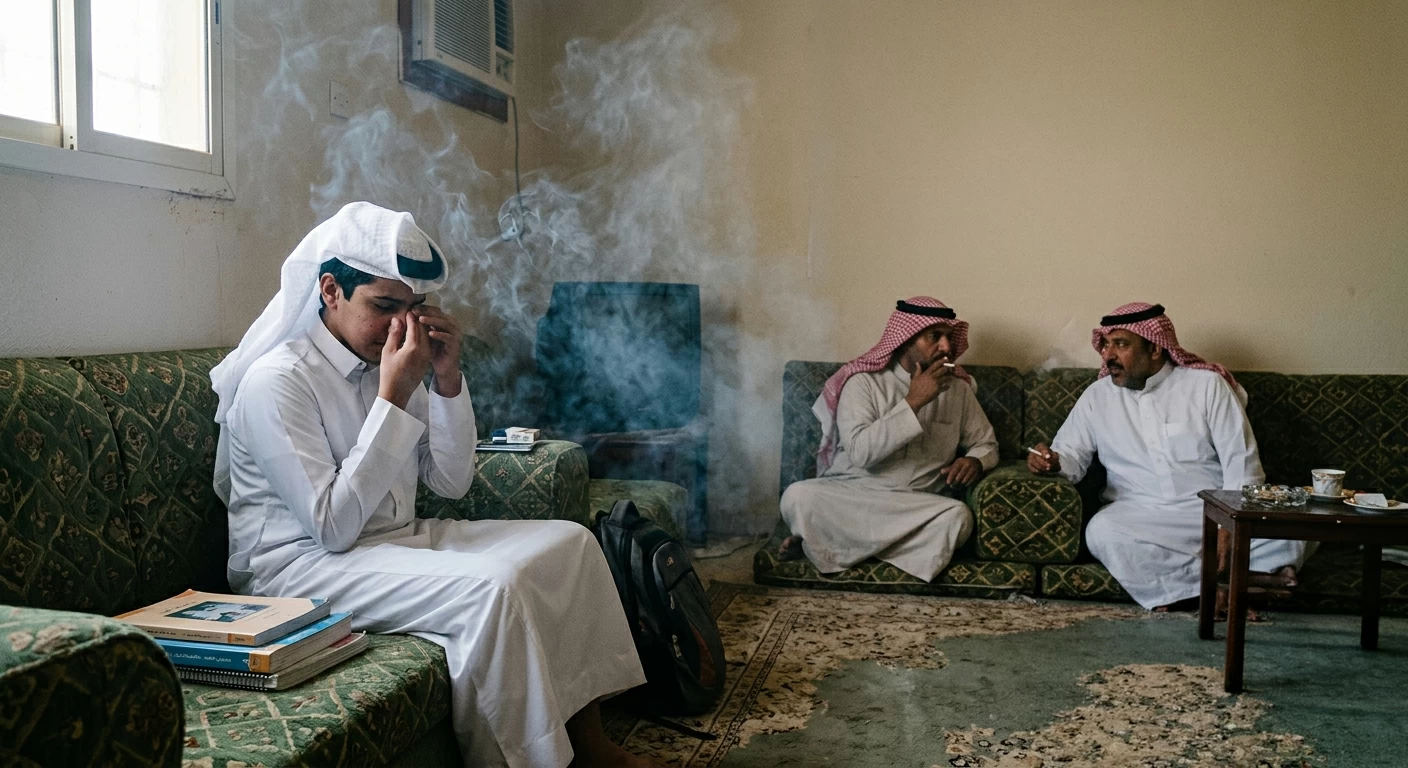
كشفت دراسة سعودية حديثة، أن 18.3% من المراهقين في السعودية تعرضوا لدخان التبغ داخل منازلهم خلال الأيام السبعة السابقة للمسح، في مؤشر يربط بين البيئة الأسرية وسلوك استخدام منتجات التبغ والنيكوتين بين اليافعين.
ونشرت الدراسة في يونيو 2026، في مجلة علمية حملت عنوان «التعرض للتدخين السلبي في المنزل وارتباطه باستخدام التبغ بين المراهقين في السعودية: نتائج من المسح العالمي لتبغ اليافعين».
وأعدت الدراسة الباحثة مروج عبدالله الدرماسي من قسم الطب الوقائي والصحة العامة بكلية الطب في جامعة الملك عبدالعزيز بجدة، ووحدة الطب الوقائي في مستشفى جامعة الملك عبدالعزيز. واعتمدت على تحليل ثانوي لبيانات وطنية من المسح العالمي لتبغ اليافعين في السعودية لعام 2022، وشملت 6,983 طالباً وطالبة من عمر 11 إلى 17 عاماً.
وعرّفت الدراسة التعرض المنزلي بأنه تعرض المراهق لدخان التبغ داخل البيت لمدة يوم واحد على الأقل خلال الأسبوع السابق للمسح. وأظهرت النتائج، أن التعرض كان أعلى بين الإناث بنسبة 21.8%، مقارنة بالذكور 14.9%.
وجاءت الأرقام الأهم في علاقة الدخان المنزلي بسلوك الاستخدام؛ إذ ارتبط التعرض داخل المنزل بزيادة احتمالات استخدام السجائر 1.78 مرة، والشيشة 1.69 مرة، والسجائر الإلكترونية 1.74 مرة، وأي منتج تبغي أو نيكوتيني 1.66 مرة، مقارنة بالمراهقين غير المعرضين للدخان داخل المنزل.
وتشير الدراسة إلى أن تدخين الوالدين، ووجود أصدقاء مدخنين، عوامل ارتبطت بصورة مستقلة بالتعرض المنزلي. ومن هنا، تتحول القضية من سلوك فردي للمدخن إلى بيئة يومية قد تزيد قابلية الأبناء لتجربة التبغ والنيكوتين.
وأوصت الدراسة بتدخلات موجهة للأسرة، وتعزيز المنازل الخالية من التدخين، وتوسيع برامج الوقاية بين اليافعين.
A recent Saudi study revealed that 18.3% of adolescents in Saudi Arabia were exposed to tobacco smoke inside their homes during the seven days prior to the survey, indicating a link between the family environment and the use of tobacco and nicotine products among youth.
The study was published in June 2026 in a scientific journal titled "Exposure to Secondhand Smoke at Home and Its Association with Tobacco Use Among Adolescents in Saudi Arabia: Results from the Global Youth Tobacco Survey."
The study was conducted by researcher Marouj Abdullah Al-Darmasi from the Department of Preventive Medicine and Public Health at King Abdulaziz University in Jeddah, and the Preventive Medicine Unit at King Abdulaziz University Hospital. It relied on secondary analysis of national data from the Global Youth Tobacco Survey in Saudi Arabia for 2022, which included 6,983 students aged 11 to 17 years.
The study defined home exposure as the adolescent's exposure to tobacco smoke inside the house for at least one day during the week prior to the survey. The results showed that exposure was higher among females at 21.8%, compared to males at 14.9%.
The most significant figures emerged regarding the relationship between home smoke exposure and usage behavior; exposure inside the home was associated with a 1.78 times increase in the likelihood of using cigarettes, 1.69 times for shisha, 1.74 times for electronic cigarettes, and 1.66 times for any tobacco or nicotine product, compared to adolescents who were not exposed to smoke inside the home.
The study indicates that parental smoking and having smoking friends are factors that were independently associated with home exposure. Thus, the issue shifts from being an individual behavior of the smoker to a daily environment that may increase the likelihood of children experimenting with tobacco and nicotine.
The study recommended family-targeted interventions, promoting smoke-free homes, and expanding prevention programs among youth.