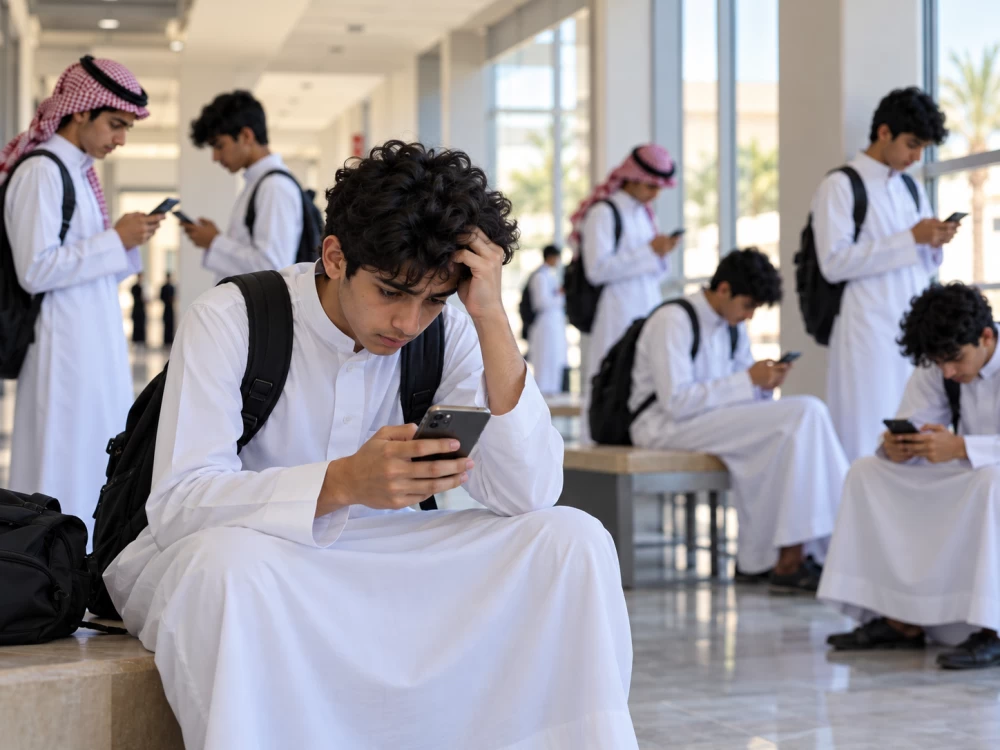
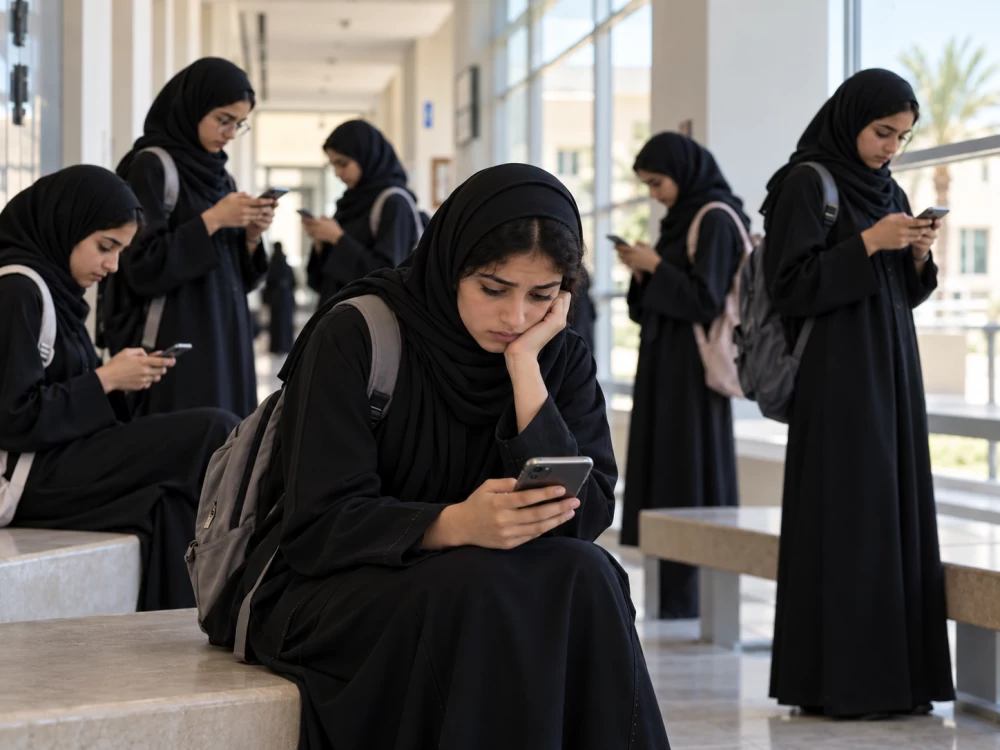
تتنافس منصات التواصل الاجتماعي اليوم على انتزاع انتباه المراهقين واستحواذ أكبر قدر من وقتهم، حتى لم تعد المسألة تقتصر على ساعات طويلة تقضى أمام الشاشات، بل تحوّلت إلى معركة صامتة على تشكيل الوعي والقيم والسلوك والصحة النفسية. وبين إشعار متواصل، ومقطع لا ينتهي، وخوارزمية تقرأ اهتمامات المستخدم وتوجّه خياراته، يجد كثير من المراهقين أنفسهم داخل عالم رقمي متسارع أصبح جزءاً من تفاصيل حياتهم اليومية ومؤثراً مباشراً في قراراتهم ومشاعرهم وعلاقاتهم الاجتماعية.
تدق نتائج دراسة حديثة ناقوس الخطر بشأن العلاقة المتنامية بين المراهقين والمنصات الرقمية، بعدما كشفت مؤشرات تفرض التوقف والتأمل في طبيعة الاستخدام وآثاره النفسية والاجتماعية. فقد سجل 115 مراهقاً من أصل 330 استخداماً إشكالياً لوسائل التواصل الاجتماعي بنسبة بلغت 34.8%، فيما وصل متوسط الاستخدام اليومي إلى 5.8 ساعة، ما يعكس حجم الحضور الذي باتت تحتله هذه المنصات في حياة النشء. كما تصدّر «سناب شات» قائمة التطبيقات الأكثر استخداماً بنسبة 92.4%، تلاه «إنستغرام» بنسبة 87.6%، ثم «تيك توك» بنسبة 79.1%، فيما بلغت نسبة استخدام منصة «إكس» 65.5%.
الفتيات في الصدارة إشكالياً
لم تتوقف المؤشرات عند حدود كثافة الاستخدام، بل أظهرت تفاوتاً لافتاً بين الجنسين، إذ ارتفعت نسبة الاستخدام الإشكالي بين الفتيات إلى 41.9% مقابل 28.2% لدى الذكور، الأمر الذي يفتح باب التساؤلات حول العوامل النفسية والاجتماعية المرتبطة بهذه الفئة العمرية، ومدى تأثير البيئة الرقمية في أنماط السلوك والتفاعل والتقدير الذاتي لدى المراهقين.
وجاءت النتائج ضمن دراسة أعدها الباحث الدكتور خالد شحات، ونشرتها مجلة «فرونتيرز في الصحة العامة»، وشملت طلاباً وطالبات تتراوح أعمارهم بين 13 و18 عاماً.
وكشفت الدراسة عن ارتباط الاستخدام الإشكالي لوسائل التواصل الاجتماعي بارتفاع أرجحية ظهور أعراض الاكتئاب المتوسطة إلى الشديدة بمقدار 3.18 مرات، والقلق بمقدار 2.90 مرة، والضغط النفسي بمقدار 2.64 مرة.كما أظهرت أن انخفاض مستوى الثقافة الصحية الرقمية يرفع أرجحية الاستخدام الإشكالي بمقدار 2.79 مرة، فيما ترتفع هذه الأرجحية إلى 2.38 مرة لدى من يستخدمون المنصات لمدة ست ساعات يومياً أو أكثر.
تعزيز آليات التحقق العمري
يفرض هذا الواقع المتسارع مشهداً أكثر تعقيداً تتداخل فيه أدوار الأسرة والمدرسة والجهات الصحية وشركات التقنية، في ظل تزايد تأثير المجتمعات الافتراضية والمؤثرين على تشكيل اهتمامات المراهقين وقيمهم وتصوراتهم فبينما يرى مختصون أن بعض وظائف التنشئة الاجتماعية بدأت تنتقل تدريجياً من محيطها التقليدي إلى الفضاء الرقمي، يؤكد آخرون، أن التحدي لا يكمن في التقنية ذاتها، بل في كيفية استخدامها ومدى امتلاك النشء للوعي والمهارات التي تمكنهم من التعامل معها بصورة متوازنة وآمنة.
وفي المقابل، تتصاعد المطالبات بمسؤولية أكبر من شركات التقنية لتطوير أدوات حماية أكثر فاعلية، وتعزيز آليات التحقق العمري والخصوصية الرقمية، والحد من الممارسات والخوارزميات التي تدفع المستخدمين، خصوصاً صغار السن، إلى قضاء فترات أطول داخل التطبيقات. كما تتزايد الدعوات إلى إدراج الثقافة الصحية الرقمية في المناهج التعليمية، وتعزيز برامج التوعية والكشف المبكر عن الضغوط النفسية المرتبطة بالاستخدام المفرط للمنصات.
استغلال وابتزاز وتنمر
من زاوية قانونية، ترى المتخصصة القانونية هيا السليمان في حديثها لـ«عكاظ» أن التعامل مع القضية لا ينبغي أن يقتصر على الرقابة الأسرية فقط، بل يجب أن يشمل حقوق الطفل الرقمية والمسؤوليات النظامية الواقعة على عاتق المنصات والشركات التقنية.
وتقول: إن حماية المراهق لا تتوقف عند الرقابة الأسرية، فهناك التزامات نظامية تتعلق بمعالجة البيانات الشخصية، ومنع الاستغلال والابتزاز والتنمر الإلكتروني، وتوفير وسائل فعالة للإبلاغ عن الانتهاكات.
وتشير إلى أن الأنظمة ذات العلاقة، مثل نظام حماية الطفل، ونظام حماية البيانات الشخصية، ونظام مكافحة جرائم المعلوماتية، تشكل أطراً مهماً لتعزيز سلامة القاصرين في البيئة الرقمية، مؤكدة في الوقت ذاته ضرورة التمييز بين الاستخدام المفرط باعتباره سلوكاً يحتاج إلى توعية ومعالجة، وبين الأفعال الرقمية التي تشكل مخالفات أو جرائم تستوجب المساءلة القانونية.
وتدعو السليمان، إلى تطوير وسائل أكثر دقة للتحقق من الأعمار، ورفع مستوى الشفافية في سياسات الخصوصية، وتبسيط إجراءات الإبلاغ عن الانتهاكات والشكاوى، بما يحقق التوازن بين حماية الأطفال والمراهقين وضمان حقوقهم في الخصوصية.
الخطورة في الإعجابات لا الساعات!
ويضع استشاري علم الاجتماع عبدالله البقعاوي، القضية في سياق التحولات الاجتماعية التي فرضها العصر الرقمي، مشيراً إلى أن التأثير لم يعد محصوراً في الوقت الذي يقضيه المراهق أمام الشاشة، بل امتد إلى أدوار كانت تؤديها الأسرة والمدرسة لعقود طويلة. ويرى أن جزءاً من وظائف التنشئة الاجتماعية بات ينتقل تدريجياً إلى جماعات افتراضية تتشكل حول المؤثرين وصناع المحتوى، إذ يجد المراهق نفسه منتمياً إلى مجتمعات رقمية تؤثر في أفكاره وسلوكياته وتوجهاته.
ويقول البقعاوي لـ«عكاظ»: إن الخطورة لا تكمن في عدد ساعات الاستخدام وحده، وإنما في تحول الإعجابات والمشاهدات إلى معايير للتقدير الاجتماعي، وانتقال المرجعية القيمية من الأسرة إلى مجتمعات رقمية عابرة للحدود. فعندما يصبح المؤثر مرجعاً لسلوك المراهق، تتعرض منظومة التنشئة التقليدية للمنافسة
البقعاوي، يؤكد أن مواجهة هذه التحولات لا تبدأ بمنع التقنية أو شيطنتها، وإنما عبر استعادة دور الأسرة بوصفها الحاضنة الأولى للحوار والتوجيه وبناء الثقة، إلى جانب تعزيز ارتباط المراهق بالمجتمعات الواقعية والأنشطة الاجتماعية المباشرة. كما يحذر من أن الأساليب القائمة على المصادرة والعقاب قد تفضي إلى نتائج عكسية، من خلال إضعاف الثقة بين الأبناء وذويهم ودفع المراهقين إلى إنشاء مساحات رقمية خفية بعيداً عن أعين الأسرة.
هروب من القلق والضغوط
أخصائي علم النفس ماجد الطريفي، يفسر العلاقة التي كشفتها الدراسة بين الاستخدام الإشكالي للمنصات الرقمية والاضطرابات النفسية من منظور التنظيم الانفعالي، موضحاً لـ«عكاظ»: أن وسائل التواصل قد تتحول لدى بعض المراهقين إلى وسيلة للهروب من الضغوط والمشاعر السلبية أكثر من كونها مجرد أداة للتواصل أو الترفيه.
ويقول: «قد يلجأ المراهق إلى المنصات للهروب من القلق والوحدة والضغوط، ثم يدخل في دائرة من التعزيز السلوكي المتكرر، خصوصاً مع الإشعارات والمكافآت الرقمية والمقارنة الاجتماعية».
ويضيف أن ما يعرف بـ«الخوف من فوات الأحداث» يمثل أحد العوامل التي تعزز الارتباط المفرط بالمنصات، إذ يشعر المراهق بالحاجة إلى المتابعة المستمرة خوفاً من فقدان حدث أو معلومة أو تفاعل اجتماعي. ويرى أن من المهم التفريق بين الاستخدام المكثف والاستخدام المرضي، فليس كل مراهق يقضي ساعات طويلة على المنصات يعاني بالضرورة اضطراباً نفسياً.ويشير الطريفي، إلى أن هناك مؤشرات تستوجب الانتباه والتقييم المهني، من أبرزها اضطرابات النوم، والتراجع الأكاديمي، والعزلة الاجتماعية، وصعوبة السيطرة على وقت الاستخدام رغم المحاولات المتكررة. ويؤكد أن العلاج لا يقتصر على خفض ساعات الاستخدام، بل يبدأ بفهم الدوافع النفسية الكامنة خلف هذا السلوك، والعمل على تعزيز مهارات التنظيم الانفعالي وضبط الذات وبناء البدائل الصحية.
كيف تجذب الخوارزميات الانتباه؟
في الجانب التقني، يوضح الأكاديمي المتخصص في الذكاء الاصطناعي الدكتور مشاري العازمي لـ«عكاظ» أن خوارزميات التوصية أصبحت جزءاً أساسياً من تجربة المستخدم داخل المنصات الرقمية، إذ تعمل باستمرار على تحليل أنماط السلوك والتفاعل لتقديم محتوى يتوافق مع اهتمامات المستخدم ويزيد من مدة بقائه داخل التطبيق.
ويقول: تعمل خوارزميات التوصية على توقع المحتوى الأكثر قدرة على جذب المستخدم، اعتماداً على مدة المشاهدة والتفاعل والاهتمامات السابقة، وقد تؤدي خصائص التمرير المستمر والتشغيل التلقائي إلى إطالة جلسات الاستخدام.
ويشدد العازمي، على أن الدراسة لم تختبر مباشرة أثر الخوارزميات في الاستخدام الإشكالي، وبالتالي فإن تحميلها المسؤولية كاملة يحتاج إلى أدلة وتجارب علمية إضافية. إلا أنه يؤكد أهمية تبني مبدأ «السلامة منذ التصميم» في تطوير التطبيقات الرقمية، عبر توفير أدوات تمنح المستخدمين وأسرهم قدرة أكبر على التحكم في الإشعارات والتوصيات ووقت الشاشة، إلى جانب تطبيق معايير حماية عمرية تراعي خصوصية الأطفال والمراهقين.
الخلاصة مسؤولية تتجاوز حدود الأسرة
بعيداً عن تحميل المسؤولية لطرف واحد، تكشف نتائج الدراسة لهذا التحقيق، أن التعامل مع الاستخدام الإشكالي لوسائل التواصل الاجتماعي يتطلب مقاربة شاملة تتقاسمها الأسرة والمدرسة والقطاع الصحي والجهات التنظيمية وشركات التقنية. فتعزيز الثقافة الصحية الرقمية، والكشف المبكر عن الضغوط والاضطرابات النفسية، وتطوير أدوات حماية تتناسب مع الفئات العمرية المختلفة، لم تعد خيارات إضافية بقدر ما أصبحت متطلبات أساسية في عالم يتزايد فيه الحضور الرقمي يوماً بعد آخر.
وفي ظل عالم تتنافس فيه الأسرة والمدرسة والمؤثرون والخوارزميات على جذب انتباه المراهق وتشكيل وعيه، يبقى السؤال الذي تطرحه الدراسة ويثيره هذا التحقيق أكثر إلحاحاً من أي وقت مضى: من يتحكم في وقت المراهق ؟ أسرته، أم إرادته، أم الخوارزمية.
الثقة أهم من التفتيش
من واقع التجربة الأسرية، يرى شهيل عبدالله السبر وهو أحد الآباء، أن التحدي الحقيقي لا يتمثل في مراقبة كل ما يفعله الأبناء داخل أجهزتهم، بل في بناء رقابة ذاتية نابعة من القناعة والثقة.ويقول: التحدي الحقيقي أن نربي أبناءنا على الرقابة الذاتية، بدل تحويل المنزل إلى بيئة تفتيش ومصادرة نحتاج اتفاقاً أسرياً واضحاً يحدد أوقات الاستخدام، ويشارك الأبناء في وضع قواعده
ويضيف أن المنع الكامل أو الحرمان المطلق من التقنية قد يوسع الفجوة بين الآباء والأبناء، في حين يمنح الحوار المستمر والتواصل المفتوح فرصة لاكتشاف المشكلات مبكراً والتعامل معها قبل تفاقمها.
يزاحم النوم والواجبات
يربط ولي الأمر طلال الحربي، خطورة الاستخدام الإشكالي بمدى تأثيره على المسؤوليات اليومية والالتزامات الأساسية للمراهق. ويقول: عندما يبدأ الهاتف بمزاحمة النوم والواجبات المدرسية والرياضة، تصبح المشكلة قابلة للملاحظة. المطلوب تنظيم الوقت وقياس أثر الاستخدام على الأداء الدراسي، لا الاكتفاء بعد الساعات.
ويؤكد أن الحكم على طبيعة الاستخدام يجب أن يستند إلى نتائجه وانعكاساته العملية، مطالباً بتعاون أكبر بين الأسرة والمدرسة لتقديم برامج متخصصة في التربية الرقمية، وتشجيع الأنشطة الرياضية والاجتماعية والثقافية بوصفها بدائل واقعية تسهم في تحقيق التوازن، إضافة إلى وضع ضوابط تقلل من استخدام الأجهزة الإلكترونية خلال الساعات التي تسبق النوم.
لا تجعلوا العقاب هو الحل
تسلط نجلاء التميمي الضوء على جانب آخر من القضية يرتبط بالضغوط النفسية الناتجة عن المقارنات الاجتماعية والصور المثالية التي تروج لها المنصات الرقمية.
وتقول: «يحتاج المراهق إلى أمٍّ تسمعه قبل أن تحاسبه، خصوصاً عند تعرّضه للتنمر أو الرسائل المزعجة. والخوف من مصادرة الهاتف قد يدفعه إلى إخفاء المشكلة حتى تتفاقم».
وترى أن بناء الثقة بين الأسرة والأبناء يمثل خط الدفاع الأول أمام المخاطر الرقمية، مؤكدة أهمية توعية المراهقين بآليات حماية الصور والبيانات الشخصية، وتعزيز وعيهم بالفارق بين الواقع الحقيقي والصورة المثالية المصطنعة التي يتم تسويقها عبر المنصات الاجتماعية.
Today, social media platforms compete to capture the attention of teenagers and seize as much of their time as possible. The issue has evolved from spending long hours in front of screens to a silent battle over shaping awareness, values, behavior, and mental health. Amid continuous notifications, endless clips, and algorithms that read user interests and direct their choices, many teenagers find themselves in a fast-paced digital world that has become part of their daily lives and a direct influence on their decisions, feelings, and social relationships.
Recent study results sound the alarm regarding the growing relationship between teenagers and digital platforms, revealing indicators that necessitate reflection on the nature of usage and its psychological and social effects. The study recorded problematic social media use among 115 teenagers out of 330, representing 34.8%, while the average daily usage reached 5.8 hours, reflecting the significant presence these platforms have in the lives of youth. "Snapchat" topped the list of most used applications at 92.4%, followed by "Instagram" at 87.6%, then "TikTok" at 79.1%, while the usage rate of the "X" platform was 65.5%.
Girls Lead in Problematic Usage
The indicators did not stop at the intensity of usage; they also showed a notable disparity between genders, with the rate of problematic usage among girls rising to 41.9% compared to 28.2% among boys. This raises questions about the psychological and social factors associated with this age group and the extent to which the digital environment influences behavior patterns, interaction, and self-esteem among teenagers.
The results came from a study conducted by researcher Dr. Khaled Shehat, published in the journal "Frontiers in Public Health," which included male and female students aged between 13 and 18.
The study revealed that problematic social media use is linked to a 3.18 times higher likelihood of experiencing moderate to severe depression symptoms, 2.90 times for anxiety, and 2.64 times for psychological stress. It also showed that a lower level of digital health literacy increases the likelihood of problematic usage by 2.79 times, while this likelihood rises to 2.38 times among those who use platforms for six hours a day or more.
Enhancing Age Verification Mechanisms
This accelerating reality imposes a more complex scene where the roles of family, school, health authorities, and tech companies intertwine, amid the increasing influence of virtual communities and influencers on shaping teenagers' interests, values, and perceptions. While some specialists see that some functions of socialization are gradually shifting from their traditional settings to the digital space, others emphasize that the challenge lies not in the technology itself but in how it is used and the extent to which youth possess the awareness and skills to engage with it in a balanced and safe manner.
In contrast, demands are rising for greater responsibility from tech companies to develop more effective protective tools, enhance age verification and digital privacy mechanisms, and limit practices and algorithms that push users, especially minors, to spend longer periods within applications. There are also increasing calls to incorporate digital health literacy into educational curricula and enhance awareness programs for early detection of psychological pressures associated with excessive platform use.
Exploitation, Blackmail, and Bullying
From a legal perspective, legal specialist Haya Al-Sulaiman, in her conversation with "Okaz," believes that addressing the issue should not be limited to family supervision alone but must also include children's digital rights and the legal responsibilities of platforms and tech companies.
She states that protecting teenagers does not stop at family supervision; there are legal obligations related to processing personal data, preventing exploitation, blackmail, and cyberbullying, and providing effective means to report violations.
She points out that related regulations, such as the Child Protection Law, the Personal Data Protection Law, and the Cybercrime Law, form important frameworks for enhancing the safety of minors in the digital environment, while emphasizing the need to distinguish between excessive use as a behavior that requires awareness and intervention, and digital acts that constitute violations or crimes warranting legal accountability.
Al-Sulaiman calls for developing more precise means of age verification, raising transparency in privacy policies, and simplifying reporting procedures for violations and complaints, achieving a balance between protecting children and teenagers and ensuring their rights to privacy.
The Danger Lies in Likes, Not Hours!
Sociology consultant Abdullah Al-Buqai places the issue within the context of social transformations imposed by the digital age, pointing out that the impact is no longer limited to the time a teenager spends in front of the screen but has extended to roles traditionally performed by family and school for decades. He believes that part of the functions of socialization is gradually shifting to virtual groups formed around influencers and content creators, where the teenager finds themselves belonging to digital communities that influence their thoughts, behaviors, and orientations.
Al-Buqai tells "Okaz" that the danger does not lie solely in the number of hours of usage but in the transformation of likes and views into criteria for social valuation, and the shift of value references from family to borderless digital communities. When an influencer becomes a reference for a teenager's behavior, the traditional socialization system faces competition.
Al-Buqai emphasizes that confronting these transformations does not begin with banning technology or demonizing it, but rather through restoring the family's role as the primary incubator for dialogue, guidance, and trust-building, alongside enhancing the teenager's connection to real communities and direct social activities. He also warns that methods based on confiscation and punishment may lead to counterproductive results by weakening trust between children and their parents and pushing teenagers to create hidden digital spaces away from family scrutiny.
A Escape from Anxiety and Pressure
Psychologist Majid Al-Turaifi explains the relationship revealed by the study between problematic usage of digital platforms and psychological disorders from the perspective of emotional regulation, clarifying to "Okaz" that social media may become a means for some teenagers to escape from pressures and negative feelings rather than just a tool for communication or entertainment.
He states, "A teenager may resort to platforms to escape from anxiety, loneliness, and pressures, then enter a cycle of repeated behavioral reinforcement, especially with notifications, digital rewards, and social comparison."
He adds that what is known as "fear of missing out" represents one of the factors that enhance excessive attachment to platforms, as the teenager feels the need for continuous monitoring for fear of missing an event, information, or social interaction. He believes it is important to differentiate between intensive use and pathological use, as not every teenager spending long hours on platforms necessarily suffers from a psychological disorder. Al-Turaifi points out that there are indicators that require attention and professional evaluation, the most prominent of which are sleep disorders, academic decline, social isolation, and difficulty controlling usage time despite repeated attempts. He emphasizes that treatment does not solely involve reducing usage hours but begins with understanding the underlying psychological motivations behind this behavior and working to enhance emotional regulation skills, self-control, and building healthy alternatives.
How Do Algorithms Capture Attention?
On the technical side, academic specialist in artificial intelligence Dr. Mishari Al-Azmi explains to "Okaz" that recommendation algorithms have become an essential part of the user experience within digital platforms, continuously analyzing behavior patterns and interactions to provide content that aligns with user interests and increases their time spent within the application.
He states that recommendation algorithms predict the content most likely to attract the user, based on viewing duration, interaction, and previous interests, and features like continuous scrolling and autoplay may prolong usage sessions.
Al-Azmi stresses that the study did not directly test the impact of algorithms on problematic usage, and thus holding them fully responsible requires additional evidence and scientific experiments. However, he affirms the importance of adopting the principle of "safety by design" in developing digital applications by providing tools that give users and their families greater control over notifications, recommendations, and screen time, alongside applying age protection standards that respect the privacy of children and teenagers.
Conclusion: Responsibility Beyond Family Boundaries
Apart from placing responsibility on a single party, the results of this study reveal that addressing problematic social media usage requires a comprehensive approach shared by families, schools, the health sector, regulatory bodies, and tech companies. Enhancing digital health literacy, early detection of psychological pressures and disorders, and developing protective tools suitable for different age groups are no longer optional but essential requirements in a world where digital presence is increasing day by day.
In a world where families, schools, influencers, and algorithms compete for the attention of teenagers and shape their awareness, the question posed by the study and raised by this investigation becomes more urgent than ever: Who controls a teenager's time? Their family, their will, or the algorithm?
Trust is More Important than Surveillance
From the perspective of family experience, Shahil Abdullah Al-Sabr, one of the parents, believes that the real challenge lies not in monitoring everything children do on their devices but in building self-regulation based on conviction and trust. He states, "The real challenge is to raise our children with self-regulation instead of turning the home into an environment of inspection and confiscation. We need a clear family agreement that defines usage times and involves children in setting its rules."
He adds that complete prohibition or absolute deprivation of technology may widen the gap between parents and children, while continuous dialogue and open communication provide an opportunity to discover problems early and address them before they escalate.
Competing with Sleep and Responsibilities
Guardian Talal Al-Harbi links the danger of problematic usage to its impact on daily responsibilities and essential commitments of the teenager. He states, "When the phone starts to compete with sleep, school assignments, and sports, the problem becomes noticeable. What is needed is time management and measuring the impact of usage on academic performance, not just counting hours."
He emphasizes that judging the nature of usage should be based on its results and practical implications, calling for greater collaboration between families and schools to provide specialized programs in digital education and encourage sports, social, and cultural activities as realistic alternatives that contribute to achieving balance, in addition to setting controls that reduce electronic device usage during the hours leading up to sleep.
Don't Make Punishment the Solution
Najlaa Al-Tamimi highlights another aspect of the issue related to the psychological pressures resulting from social comparisons and the idealized images promoted by digital platforms.
She states, "A teenager needs a mother who listens to them before holding them accountable, especially when they are subjected to bullying or annoying messages. The fear of confiscation of the phone may drive them to hide the problem until it escalates."
She believes that building trust between families and children represents the first line of defense against digital risks, emphasizing the importance of educating teenagers about protecting images and personal data, and enhancing their awareness of the difference between real life and the idealized images marketed through social platforms.